

One of the great things about living in Seattle is being able to see both the ocean and snow-covered mountains at the same time.
On nice days, I walk along the shores of Puget Sound while gazing at the distant Olympic Mountains, and on weekends, I drive out toward Mount Rainier.
However, as I get older, I find myself increasingly concerned about eye health.
In fact, no matter how strong the sunlight is, I used to find it bothersome to wear sunglasses and would just go without them. Even while driving, if my eyes felt a bit bright, I would just lower the car's sun visor.
Recently, while reading about cataracts, I learned that the ocean and snow-covered mountains can negatively impact eye health.
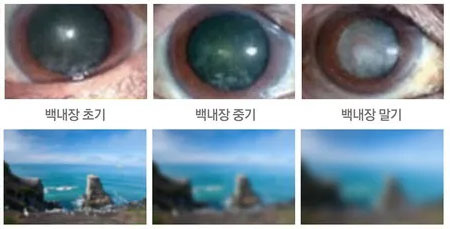
Cataracts are a condition where the lens of the eye, which acts like a camera lens, becomes cloudy.
While they can naturally occur with age, prolonged exposure to ultraviolet (UV) light is also a major risk factor.
The problem is that Seattle is an environment where you need to be more cautious about UV rays than you might think.
When people think of Seattle, they often picture rainy and cloudy weather.
I, too, didn't worry much about UV rays unless it was summer. But just because it's cloudy doesn't mean UV rays disappear.
Especially at the beach, you are exposed not only to UV rays coming from the sky but also to those reflected off the water's surface.
If you're someone who spends hours on the water fishing or boating, you need to be even more careful.
The situation worsens in the snow-covered mountains. Clean snow can reflect up to about 80% of UV rays.
Moreover, the higher you go in the mountains, the stronger the UV rays become. You receive sunlight from above while also being exposed to UV rays reflected off the snow below.
When skiing or hiking in the snow, you might experience stinging eyes and tearing, and in severe cases, you could suffer from snow blindness, which is damage to the cornea caused by UV rays.
Thinking back, I realized that while I was careful about applying sunscreen to my skin, I hadn't given much thought to protecting my eyes.
The scary thing about cataracts is that they don't develop overnight.
They can progress slowly over many years, so it's important to take care of your eyes from a young age.
Not all sunglasses are good just because they are dark; you should choose products that are labeled UV400 or that block 100% of UVA and UVB rays.
There's no need to buy expensive designer sunglasses. The brand on the frame doesn't protect your eyes if the UV-blocking performance isn't there.
On days when you're walking along the beach for a long time, it's also a good idea to wear a hat with a brim.
As I get older, I've come to realize that maintaining health when you're well is the most cost-effective approach.
Once your vision starts to deteriorate and you begin visiting the doctor, it becomes not only costly but also quite bothersome.
No matter how many times I see the ocean and snow-covered mountains of Seattle, I never tire of them. They are a landscape I want to enjoy for a long time to come.
To do that, I need to start taking care of my eyes now.
 PuddingLover





 crystalx |

 compass |

 forward |

 harvest |











 venture |
 Cool Beach Freeway |

 Sammy Beach |

 molten |

 Joyce 77 |
 DOCTOR MED |
 Mia Flori |
 zorvik79 |
 There Are Such Things in the World |
 liquid asset |
 Banana |
 nova nova |
 Cahty Chung |
 NFL Forever |
 denvik37 |
 Choco Choco Star |
 Entering Art Directly |
 Mini Mee |
 Exciting chichichi |
 My Circle |
 Fun Flex Life |
 dermoon |
 Starbucks Reserve Roastery Closure |
 Noodle Noodle |