
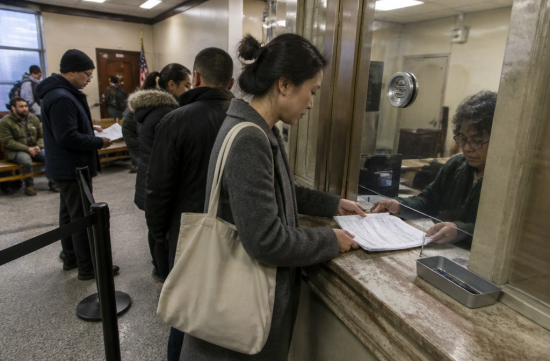
A graphic designer in New York reported not receiving payment for work and sent an email after receiving a response from the company. The email stated that if the remaining payment was not made, they would claim double damages in small claims court.
The outcome is interesting. The company sent the overdue payment via electronic transfer within an hour.
This isn't a made-up story; it's a case included in a report released by the New York City Department of Consumer and Worker Protection (DCWP) in 2023. The Freelance Isn't Free Act gave strength to this email.
This law has been in effect since May 15, 2017. It is a New York City law that ensures individuals working as independent contractors receive their full payment on time.
So, does this apply to me? There are no restrictions on industries like translation, design, video, or writing, and you can operate under a business name or entity if you work alone.
Your immigration status is not a factor. According to the DCWP guide, threatening someone based on their status can itself be considered retaliation.
However, there are exceptions. Sales agents, attorneys performing legal work under contract, licensed medical professionals, and work received from government agencies are not covered.
The most confusing aspect is the $800 threshold. If you receive work from the same place that totals over $800, either as a single job or combined over 120 days, you must have a written contract.
However, the obligation to pay in full on time applies to jobs under $800 and verbal contracts as well. I was a bit surprised by this point.
So don't give up just because you don't have a contract. This law can still apply without written documentation.
The payment deadline is straightforward. If the contract has a date, payment is due by that date; if not, it must be paid within 30 days after the work is completed.
Some companies might say, "If you lower the price, I'll pay you quickly." Demanding a reduction in exchange for timely payment is also prohibited.
Now, let's look at the steps. The first step is to gather evidence.
Organize contracts, emails or texts that define the scope of work and payment, screenshots of completed work, and replies confirming receipt in chronological order. Make a note of any agreements made over the phone.
Second, you need to formally request payment from the company. Write down the amount, completion date, payment deadline, and the date you expect a response, including the name of the law in one line.
The third step is to file a DCWP complaint. You can submit it online or call 311, and inquiries can be sent to [email protected].
Once a complaint is filed, the city sends documents to the company, which must respond within 20 days. If there's no news after 10 weeks, they advise you to follow up.
If the company does not respond, it can actually work in your favor. The court will initially presume there was a legal violation, meaning the company must prove otherwise.
One important order to remember is that if you file a lawsuit in court first, you cannot file a DCWP complaint.
The deadlines also differ. A DCWP complaint must be filed within 2 years from the date of violation, while lawsuits for unpaid wages and retaliation have a 6-year limit, and written contract violation lawsuits have a 2-year limit.
The fourth step is court. New York City small claims court handles cases up to $10,000, excluding interest and costs, with filing fees of $15 for claims up to $1,000 and $20 for claims over that amount.
If you worked under a business name, you need to use a different form for commercial claims. If you think your claim might exceed $10,000 when doubled, check which court is appropriate first.
If you win, how much can you receive? For unpaid or delayed payments, you can receive up to double the overdue amount, and you can also claim attorney fees and court costs.
If the only issue is that a contract wasn't provided, the amount is $250, but you must have evidence that you requested a contract before starting work. If unpaid wages overlap, you can claim the contract amount additionally.
It's fair to mention the limitations as well. The DCWP does not act as an attorney and does not file lawsuits on behalf of individuals.
From fiscal years 2019 to 2023, 773 people reported receiving money after filing complaints, totaling $2.9 million. In contrast, among 263 survey respondents, only 40% received full payment, while 49% received nothing.
However, if many people have been affected by the same company, the city will take action. The DCWP worked with BuzzFeed to help 16 freelancers recover over $45,000.
If the place you worked or the company is outside New York City, the situation may vary. Starting August 28, 2024, there will also be state laws, so check for complaints with the state attorney general's office.
If it were me, I would start with an email, then file a DCWP complaint, and finally go to small claims court. For specific cases, consult the DCWP navigator or an attorney.
And for future work, make sure to include a payment date in the contract, even for small jobs. I no longer want to see someone apologizing while asking for payment for work done.
 GimSub





 shinramen wang |
 newyorker 101 |

 Encyclopedia of New York and Surrounding Areas |

 USA East News, Information |

 Things to Do to Buy a House |








 United States National Administrative Organization Stories |
 Victory 1988 |

 Atlanta Business Information |

 Exploring American Life Information |

 Franco Family |
 NFL Forever |
 denvik37 |
 Choco Choco Star |
 Entering Art Directly |
 Mini Mee |
 Exciting chichichi |
 My Circle |
 Fun Flex Life |
 dermoon |
 Starbucks Reserve Roastery Closure |
 Noodle Noodle |
 Round and Round Children's Song Kingdom |
 Exciting FM Radio |
 vexon87 |
 Helpful Life Stories |
 leaves |
 glenview 89 |
 Wang Ga Nae |
 Life in the US |
 Alright Twain |