

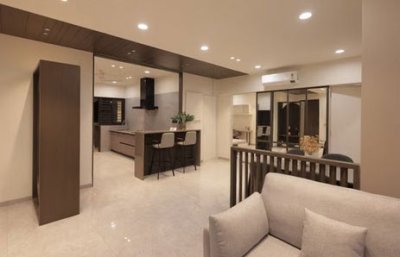
Tennessee is known as a state without income tax, giving the impression of overall lower tax burdens, but Memphis is an exception with particularly high property taxes. The structure combines the Shelby County tax rate with the Memphis city tax rate, resulting in an effective tax rate of 1.4% to 1.5%, compared to the Tennessee state average of around 0.5%. Compared to other cities in Tennessee, Memphis ranks among the highest, so this difference must be considered when budgeting. As someone who has observed the local market for nearly 20 years, I always emphasize this point to those who approach the market by only looking at sale prices.
Assuming the median home price in Memphis is around $190,000 and applying an effective tax rate of 1.45%, the annual property tax would be approximately $2,750. Although the sale price itself is much lower than the national average, the high tax rate can lead to situations where buyers are surprised by a larger-than-expected amount on their property tax bill. Shelby County conducts re-evaluations every few years, and areas that saw significant increases in the recent assessment may see noticeable tax hikes on the next bill.
Even within Shelby County, unclassified areas outside city boundaries or nearby small towns like Collierville and Germantown often have similar market values and school districts but lower effective tax rates due to the absence of city property taxes. It is advisable to consider both school districts and commuting conditions while also comparing tax rate differences. If the reputation of the school districts in the two areas is not significantly different, the tax rate disparity alone may warrant considering a move. If the commuting distance does not increase significantly, I recommend comparing nearby small towns as well.
Home insurance premiums are realistically expected to be in the range of $2,300 to $2,800 per year. Memphis is prone to spring thunderstorms, tornadoes, and hail damage, resulting in higher insurance costs compared to other Southern cities. Homes with roofs older than 15 years may face challenges in obtaining insurance, so it is essential to check the roof's condition during property inspections. It is also advisable to review flood risk maps for low-lying areas near rivers.
Maintenance costs can be estimated at 1.3% to 1.5% of the home price, which translates to around $2,500 per year for a home priced at $190,000. Adding the property tax of $2,750, insurance of $2,500, and maintenance of $2,500, the total annual ownership cost comes to about $7,750. In terms of the ratio of ownership costs to sale price, this is not a low level. For older homes, it is wise to check the condition of plumbing and electrical systems in advance to reduce unexpected expenses.
Tennessee offers property tax exemption and deferral programs for low-income seniors over 65, disabled individuals, and veterans. While there are income criteria that not all households will meet, seniors approaching retirement should check the eligibility requirements with the Shelby County Trustee's office. Since the income threshold is adjusted annually, it is advisable to verify eligibility even if one did not qualify last year.
Ultimately, Memphis is a place where it is easy to underestimate total ownership costs if one only considers sale prices. It is safer from a budget management perspective to calculate the actual monthly burden by combining property taxes and insurance premiums, and then compare tax rates with nearby small towns before making a decision. Rather than rushing into a contract due to a low sale price, I recommend preparing a total ownership cost calculation sheet in advance.
There is a growing number of Korean investors looking at properties in Memphis for investment purposes, and it is essential to factor in that property taxes and insurance premiums are higher than in other Southern cities when calculating rental yields. Rather than making decisions based solely on surface yields, it is safer to compare actual yields after accounting for ownership costs.
 SbuxFake
 VelvetStone97





 |
| 
 Premium Gas Camp |
 CA Real Estate |
 cheesepup |
 breezem |
 greenloop |
 lunarpath |
 Goroke Geureoke News |
  Banana Style Life |
  Tesla X |
  Old English |
  urbanmint |
  forestcloud |
  forever young |
  Arlington house |
  liquid asset |
  Who's watching? |
  eclipse |
  quietwave |
  Hajiwon Blog Hair Salon |
  hoosierdaddy |
  saffronroute |
  korvex93 |
  Mini Mee |
  Darnignac |
  vanilla |
  selvon |
  brownie |