
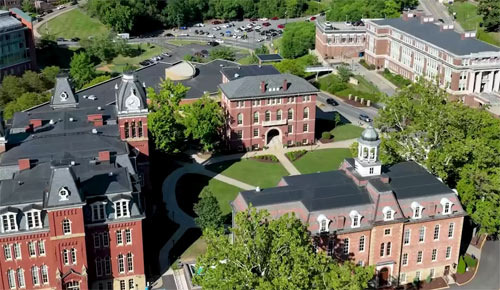
Most people visiting West Virginia for the first time ask if Morgantown is really a place worth living.
Every time I hear that, I can't help but smile. To be honest, Morgantown, WV is a hidden gem of a city. Nestled at the foot of the Appalachian Mountains and along the Monongahela River, this small town may seem quiet on the surface, but it is bursting with energy once you step inside. The unique vibrancy of a college town, the natural scenery created by the mountains and rivers, and the layers of rich history all define Morgantown.
The city's history dates back to 1785. Founder Colonel Zackquill Morgan established the city on about 400 acres of land, and it was officially incorporated with the approval of the Virginia General Assembly. Colonel Morgan, who fought in both the French and Indian War and the American Revolutionary War, had the city named Morgantown in his honor. As the county seat of Monongalia County, Morgantown is the third most populous city in West Virginia, with a population of 30,347 according to the 2020 census. The greater Morgantown area, which has expanded around the downtown, is home to nearly 140,000 residents.
When talking about Morgantown, one cannot overlook West Virginia University (WVU). Established on February 7, 1867, by an act of the West Virginia General Assembly, WVU opened its doors on September 2 of the same year and is a large public research university with a main campus enrollment of 23,667 students for the 2024-2025 academic year.
It has a full range of professional schools, including a medical school, dental school, and law school, and in 1957, the WVU Medical Center and West Virginia's first dental school were established. A significant portion of the city's population consists of students, giving Morgantown a quintessential college town atmosphere. During football season, the entire city buzzes with support for the WVU Mountaineers, and vibrant cafes and restaurants abound throughout the campus.
Geographically, it is just a 20-minute drive from the Pennsylvania border. A little over an hour on I-79 will take you to Pittsburgh. With a relatively high elevation, it receives a good amount of snow in winter, which helps preserve outdoor attractions like Coopers Rock State Forest.
The fall foliage viewed from the Cheat River Canyon attracts many visitors each year. The PRT (Personal Rapid Transit) system, which connects the campus and downtown, is a unique transportation system operated by WVU. It is the only university in the U.S. with an automated rail transit system consisting of 5 lines and 8 stations.
Key locations in the city include the Suncrest Towne Centre shopping mall, WVU Medical Center, Wharf District, and Star City. According to the 2020 census, the population composition is 83% white, 4.5% black, and 4.3% Hispanic, with a foreign-born resident rate of 6.67%. Housing prices are much more affordable compared to Pittsburgh or Washington D.C., and the overall cost of living is lower, leading many graduates of WVU to settle in Morgantown.
The land area of this city is 9.80 square miles, with a population density of 3,112 people per square mile. Morgantown, WV, is a place where the nature of the Appalachians and the vibrancy of a college town coexist in a fascinating way. It's hard to appreciate the true value of this city until you visit it yourself.
 midnightcitywalker1942







 morvex37 |
 Ari Songhan American Immigration Life |
 Bearded Strawberry Smoothie |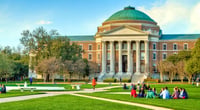
 Heart Ticker |
 Duck Duck Go |
 silver |
 Freedom Yea |
  Gomex Korea |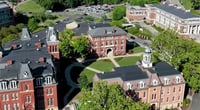
 Bridgo |
 Market K |
  intact |
  Always Dreaming of Big Success |
  happy 9 |
  Park M.Y. |
  tredon |
  Poppin News |
  metsoo |
  dewyo |
  Casa Mia |
  Asparagus Blog |
  dorange |
  hiddenkong |
  some fame |
  Godory Life |
  Lime Juice |
  French fries |
  Rynex |
  Caribbean |
  Let's Be Like a Salt-like City Person |
  Belgray Miscellany |