
History
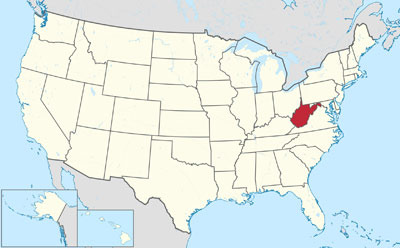
West Virginia is a state located in the eastern part of the United States, which became an independent state in 1863. This separation occurred because Virginia supported the Confederacy during the Civil War, while West Virginia supported the Union. West Virginia established itself as an independent state after separating from Virginia, with Charleston as its capital.
Population
The population of West Virginia is approximately 1,800,000 as of 2020. This makes it one of the least populated states in the U.S., and the population is on a declining trend. Since the mid-20th century, many residents have migrated to other states due to changes in the industrial structure and economic difficulties. The main demographic group in the state is white, with lower percentages of African Americans, Hispanics, and Asians.
Median Income
As of 2023, the median household income in West Virginia is about $49,000, which is lower than the national average of $70,000. West Virginia's primary industries have included agriculture, mining, and manufacturing; however, in recent years, the state has faced economic challenges, including job shortages, health issues, and lack of infrastructure. As a result, West Virginia is one of the regions in the U.S. with relatively low economic indicators.
Despite this, West Virginia is known for its beautiful natural scenery and active recreational activities in mountainous areas, making it a popular destination for many tourists.
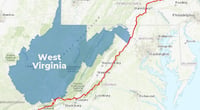
Harpers Ferry, located in the eastern part of West Virginia, is a historically significant town, especially during the Civil War era. It was the site of John Brown's raid on Harpers Ferry in 1859, where abolitionist John Brown and his followers attempted to seize a federal armory to incite an armed slave revolt. Although the raid was unsuccessful, it heightened tensions between the North and South, contributing to the outbreak of the Civil War.
Today, Harpers Ferry National Historical Park preserves the town and its surrounding areas, offering visitors a chance to experience the history of the town as it appeared in the 19th century. The park includes many of the original buildings, which have been turned into living-history museums, showcasing the diverse history of the region—from its role in the Civil War to its industrial past, including the thriving armory and the development of the railroad.
Harpers Ferry is also surrounded by breathtaking natural landscapes, as it sits at the confluence of the Shenandoah and Potomac Rivers, making it a popular spot for both history buffs and outdoor enthusiasts. Hiking, rafting, and scenic views make it a destination for those interested in both history and nature.






 Gomex Korea |
 silver |
 Oz's Wow Company |
 diamondo |
  Atlanta Mama |
  Baguette Blog |
  US Embassy |
  Korean Mom |
  My NYC |
  moo moo |
  Mr Oh |
  forevergee |
  festival |
  manchester |
  constant |
  Leapfrog Move |
  vibranto |
  Tora Tora |
  yellowbutter |
  Dolly |
  NYC saladbar |
  Finding Superfoods |
  lightyear |
  song bang |