

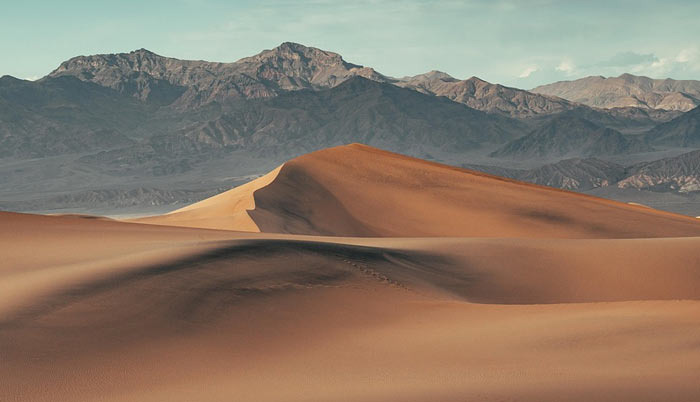
When you think of America, it's easy to picture the skyscrapers of New York or the beaches of California, but did you know that a significant portion of the American land is desert?
I remember being surprised when I first traveled to the western United States. "I thought deserts were only in Africa, like the Sahara, but there are such barren landscapes in America too?" I wondered. However, when you get closer, the American desert has a different charm compared to the African deserts.
When you think of the African desert, you imagine endless sand dunes and images of sandstorms blowing in the wind. The Sahara Desert, seen in movies or textbook photos, is literally like a "sea of sand." But the deserts in America are not just like that.
Famous American deserts like the Mojave Desert, Sonoran Desert, Great Basin Desert, and Chihuahua Desert mostly showcase landscapes filled with rocks, stones, and spiky cacti. Instead of endless sand dunes, rugged mountains, dry soil, and uniquely growing plants take center stage.
What impressed me the most was the Mojave Desert. You can reach it in just a few hours by car from Los Angeles, and the fascinating Joshua Trees lining the road are overwhelming.
It feels like you are on an alien planet. Standing in Joshua Tree National Park at sunset, the oddly shaped cactus trees cast shadows under the red sky, and for that moment, it feels like you are in another world, not somewhere on Earth. It's a sight hard to find in the African desert.
We can't forget the Sonoran Desert either. This vast desert stretches along the border between the United States and Mexico, home to the giant cacti, Saguaro, often seen in movies and animations. These cacti, over 10 meters tall, look like they are greeting the sky with their arms raised, bringing smiles to everyone who sees them. It's hard to imagine such "cartoon-like cactus landscapes" in the African desert. So, while the American desert may seem puzzling, it also feels strangely familiar.
Another characteristic of the American desert is its "color." While the African desert has monotonous yellow sand stretching endlessly, the American desert boasts a variety of colors, including red, brown, and even purple rocks.
Especially Arizona's "Painted Desert" looks just like a giant canvas that someone has painted on. From a distance, the layers of red rocks and soil change color in the sunlight, making it feel like you are looking at a living painting. Such a vibrant display of colors is hard to find in the African desert.
Not all deserts are equally hot and barren. In the American desert, temperatures drop significantly at night, and the sky is filled with a shower of stars. Thanks to the absence of city lights, the Milky Way seen in the desert is truly spectacular.
I once saw stars in the middle of the Nevada desert, and the emotion from that moment is still unforgettable. The starlight in the African desert may be beautiful, but the Milky Way encountered in the American desert offers a different kind of romance.
In fact, the puzzlement of the American desert compared to Africa seems to break the stereotype of "desert = sand." The American desert has more plants, rocks, and diverse colors than you might expect. So, at first, you might think, "Is this really a desert?" But if you look around a bit, you will be captivated by its charm.
If you are planning a trip to the western United States, I highly recommend walking through the desert at least once. Just make sure to bring plenty of water.
If the African desert is a grand sea of sand, the American desert is like a vast gallery where life and color breathe.
Though different, both have the power to captivate people in their own ways. I still have to drive several hours from Denver to reach the desert, but sometimes I miss that barren yet mysterious landscape.
The American desert, with its completely different charm from the African desert, might just hide the real fun within its puzzlement.






 savannah choi |
 bravo777 |
 Golden life |
 Let's Be Like a Salt-like City Person |
 InJung Gu |
  Korean Mom |
  My NYC |
  moo moo |
  Mr Oh |
  forevergee |
  festival |
  manchester |
  constant |
  Leapfrog Move |
  vibranto |
  Tora Tora |
  yellowbutter |
  Dolly |
  US Embassy |
  NYC saladbar |
  Finding Superfoods |
  lightyear |
  song bang |
  vexomo |
  Indiana Jones |