
At 11 PM, I put water on for ramen and opened my work email, and there was a notice about the year-end evaluation schedule. This means it's time to talk about salaries again this year.
So before picking up my chopsticks, I looked up some numbers. To cut to the chase, the wage growth trend this year has cooled off more than expected.
According to the Employment Cost Index (ECI) released by the U.S. Bureau of Labor Statistics (BLS) on October 30, wages and salaries increased by 3.1% over the 12 months ending in September.
This is the lowest annual growth rate since the first quarter of 2021. It dropped from 3.2% in the second quarter.
The same data shows that union workers saw a 4.3% increase, while non-union workers had a 3.0% increase. Most employees are effectively stuck around the 3% mark.
The employment report released on November 6 also paints a similar picture. The average hourly wage in the private sector is $38, which is a 3.1% increase from a year ago.
The issue is inflation. The Consumer Price Index (CPI) for September, released on October 14, rose by 3.7% compared to a year ago.
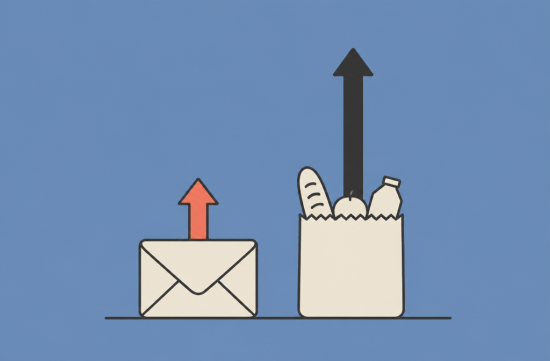
While wages are rising in the low 3% range, prices are up 3.7%, which honestly left me feeling a bit deflated. The rising cost of tteokbokki on delivery apps is immediately noticeable, but wages can't keep up with that pace.
So what about companies' budgets for next year? I looked up a few surveys from compensation consulting firms.
According to Payscale, U.S. companies are planning an average increase of 3.5% in 2027, with 3% of that being merit-based bonuses.
WTW estimates the average budget for increases in 2027 to be 3.4%, slightly lower than the actual budget of 3.5% for 2026.
Mercer's survey shows similar results, with a performance increase of 3.2% and a total increase, including promotions and adjustments, at 3.5%.
Korn Ferry estimates an average of 3.3% and a median of 3%. The methods of aggregation vary by company, so the numbers differ slightly, but most are clustered in the low to mid-3% range.
This means that if you do nothing, there's a high chance your increase will be around 3%. What you negotiate beyond that is up to you.
Curious about job changes, I also checked the Wage Growth Tracker from the Atlanta Fed.
As of September, those who stayed at the same job saw a 3.4% increase, while those who changed jobs saw a 4.7% increase. In August, the difference was 3.6% to 5.0%.
The gap isn't as large as it used to be, but it still exists. This means that job offers can still be a useful negotiation tool.
So I organized how I plan to prepare this year. It's nothing grand, just some things I can do while enjoying a late-night snack.
First, I check the market rates. Since September 2023, New York State requires companies with four or more employees to include salary ranges in job postings.
So just gathering a few job postings for the same role can give you a clear picture of the market range for your position. This is really useful. You can quickly find it by searching for job titles on LinkedIn or Indeed.
Second, I write down my performance over the past year in numbers. Creating a one-page summary of cost savings, projects I've managed, and expanded responsibilities makes it much easier to discuss. It's better to jot these down now rather than cramming them in right before the evaluation when you might forget.
Third, I don't push solely with inflation arguments. From the company's perspective, living costs are my concern, and the market range and my performance should be the basis for persuasion.
Fourth, I prepare to state numbers first. I suggest a figure slightly higher within the market range and explain in one or two sentences why that number is justified.
For reference, New York has prohibited companies from asking applicants about their previous salaries since 2020. This means you don't have to be tied to your past salary when changing jobs.
Fifth, if the base salary is capped, I look at other options. Signing bonuses, remote work days, education reimbursement, and promises regarding promotion timelines are all negotiable items.
Sixth, after the conversation ends, I summarize the agreed-upon points in an email. If it ends verbally, things can easily get vague later. It's especially good to note any promises to revisit in the first half of next year with specific dates.
And for those working near minimum wage, it's good to know this: the upstate minimum wage is $16 per hour this year, and it will be indexed to inflation starting in 2027.
However, I haven't found the official announcement from the state labor department regarding the 2027 amount yet. It's best to check directly on the New York State Department of Labor (NYSDOL) minimum wage page.
Looking at the numbers, it doesn't seem like companies are in a hurry to raise wages significantly this year. Still, it's clear that doing nothing will yield average results, while being prepared can lead to above-average outcomes.
If it were me, I'd save a few job postings, summarize my performance, and aim to get at least one job offer before going in. That seems like the most comfortable approach.
The ramen is cooked, but I now have a to-do list. I hope everyone can negotiate for a little more than 3% this year-end.
 redsuntraveler1991
 DreamCloud



 Exploring American Life Information |

 Franco Family |

 Home Run King Byeon Seung-yeop Blog |

 mistic |

 Hodong Prince Over Flex |
 Dolly |





 Fros Pro |
 Shining Our Own World |
 Raymond K. |
 gravity |
 714 Success Era Real Estate |
 Investment Beginner Company Information Encyclopedia |
 musicque |
 The Gelaton |
 ovelion |
 Chicagonian |
 Freedom Yea |
 AZ Road Master |
 glenix39 |
 Something is popping in the situation |
 orvella |
 vella |
 comets |
 Banana |
 Yes Dorian |
 Minnesota Sonata N |
 zentar |