

Even within Tacoma, there is a significant temperature difference between downtown and the rest of the area. Overall, the city is still selling quickly, but the situation is different when looking solely at downtown.
According to Redfin, the average median sale price over the last three months as of June 2026 is $500,000, which is a 1.0% increase from a year ago. The Zillow Home Value Index (ZHVI) is at $498,063, down 0.4%. Another survey from February reported a decrease of 1.0% to $520,257. While the indicators vary, they generally show a trend close to stability.
In terms of transaction speed, the average for the city is 8 days, just one day longer than last year's 7 days. However, when looking specifically at downtown Tacoma, it has increased to 52 days from last year's 44 days. This shows how conditions can vary significantly depending on the neighborhood within the same city.
In June, the total number of sales in the city was 751, an increase from last year's 705. In contrast, downtown saw only 27 sales in May, down from 30 last year. This suggests that the demand dynamics are different between the downtown area, which has a high proportion of condos, and the rest of the region, which primarily consists of single-family homes.
Tacoma has consistently attracted residents due to its lower price points compared to Seattle or Bellevue. There is a significant temperature difference in demand between established neighborhoods like the Proctor District and Stadium District in the North End and the relatively affordable South Tacoma. The logistics industry, supported by the port, the University of Washington Tacoma campus, and military-related employment near Joint Base Lewis-McChord, underpins the local economy. It is reported that logistics centers, including Amazon, have established themselves in Tacoma and nearby Pierce County, leading to an increase in related jobs. The relatively low entry barriers within the Seattle metro area continue to be an attractive factor. Recently, Tacoma has been noted as a region that has steadily absorbed demand displaced from Seattle, but how long this trend will continue may depend on interest rates and commuting conditions.
While rental prices are generally lower than in Seattle, the exact figure for Tacoma single-family homes was not confirmed in this survey. However, the average for the adjacent Seattle metro area is $2,238 according to RentCafe and $1,930 according to Zumper, which can provide a directional estimate.
There are clear differences in school district reputations within Tacoma. When choosing neighborhoods with a high concentration of Korean families, it is advisable to refer to ratings from GreatSchools or Niche, but since school district boundaries frequently change, it is best to verify the assigned school for the desired address directly. Many families also compare the Tacoma Public Schools with nearby Puyallup or University Place school districts. It is wise to consider both commuting distance and school district reputation.
If you are coming from another state, Washington has no personal income tax, but the sales tax and property tax rates are relatively high. Closing costs and insurance premiums also vary by county. Estimating the cost of living based on your previous residence can easily lead to discrepancies.
If you are considering investment, it may be worth applying the 1% rule based on Tacoma's ZHVI of $498,063. This calculation suggests that monthly rent should be at least $4,981, but actual market rates tend to be lower, so it is safer to look at both cap rates and cash-on-cash returns. It is also important to differentiate between neighborhoods where transactions have slowed, like downtown, and those that are still selling quickly on the outskirts. Even with the same budget, the negotiation potential with sellers can vary greatly depending on the neighborhood.
Excessive leverage, interest rate fluctuations, property tax reassessments, vacancies, and underestimating maintenance costs are risks that can arise regardless of the neighborhood. Particularly in areas with many older single-family homes, it is advisable to thoroughly inspect plumbing, roofing, and heating systems during the inspection phase to reduce the likelihood of incurring significant expenses later. This article does not constitute investment or legal advice, and it is recommended to consult with professionals before finalizing any contracts.
 CashLegend
 HeartMakers





 Premium Gas Camp |
 CA Real Estate |
 cheesepup |
 breezem |
 yentra |
 Ari Songhan American Immigration Life |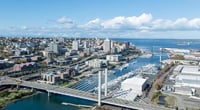
 Mazinger Z Rocket Punch |
 Taco Seattle |

 Lime Juice |
  French fries |
  Rynex |
  Caribbean |
  Let's Be Like a Salt-like City Person |
  Belgray Miscellany |
  sweetvan |
  Augusta Univ |
  Round and Round Children's Song Kingdom |
  butter 90 |
  Lando Mao |
  Washington Denzel DJ |
  LIZ Legal Information Blog |
  vegas mom |
  Sandiego Auntie |
  Things to know |
  TEXAS Fishing Boat |
  AUTO OK |
  aaoaa |