
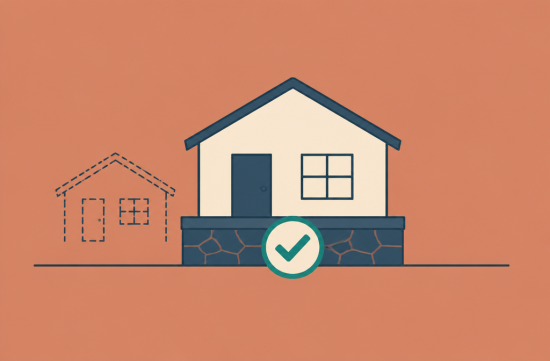
If you received an amount from your bank app before looking at houses, make sure to check whether it's prequalification or preapproval. Even if the same amount is listed, it carries different weight on the offer table.
Let's follow one scenario from the beginning. Assume there's a couple looking for a single-family home around $300,000 east of El Paso.
This couple entered their income, debts, and down payment amount online and received a letter within minutes. They didn't submit any documents.
In most cases, this is prequalification. It's an estimate based on the information they provided, suggesting they could borrow this amount.
They found a house they liked, and on the same day, another offer came in. The prices were similar, but the competing buyer attached a preapproval letter verified by the lender, including pay stubs, W-2s, and bank balances.
From the seller's perspective, the answer is simple. They have to take the house off the market for nearly a month after the contract, so it makes sense to choose the option with a lower risk of falling through due to loan issues.
There's an important point to note here. The Consumer Financial Protection Bureau (CFPB) clearly states that these two terms are used inconsistently by lenders.
Some places mix the two terms, while others issue prequalification based solely on self-reported information and then provide preapproval based on verified information. Therefore, what has been verified is more critical than the name.
The CFPB also explains that neither letter constitutes a guaranteed loan offer. Even with preapproval, the outcome can change based on appraisals or subsequent credit changes.
Still, the reason sellers and listing agents trust preapproval more is clear. It's evidence that someone has already reviewed the buyer's income, assets, and credit.
In Texas, this difference is also tied to the structure of the contract. The Third Party Financing Addendum from the Texas Real Estate Commission (TREC) separates buyer approval from property approval.
Buyer approval pertains to the buyer's own credit, income, and assets. If they don't receive approval within the specified days in the contract, they can terminate the agreement.
The revised form, effective from 2025, requires that when terminating due to buyer approval, a copy of the lender's written determination must also be submitted with the termination notice. This means they need to provide more justification to exit the contract than before.
Sometimes sellers may request a shorter period or even ask to remove it altogether. In this case, buyers with preapproval can respond more comfortably, while those with only prequalification bear the risk.
This aspect can serve as a negotiation card for buyers, but if they push to shorten the period excessively, they risk losing their earnest money. They should assess their document status to decide which route to take.
Returning to the couple's story, they ultimately missed out on the house and went to the lender the following week to submit their documents.
To obtain preapproval, you typically need recent pay stubs, two years of W-2s or tax returns, bank statements, and identification documents. Self-employed individuals will need to provide proof of business income as well.
This process involves a hard credit inquiry. Many worry about their scores dropping, but the impact is usually less significant than expected.
Models after FICO 8 consolidate mortgage inquiries made within 45 days into one. However, older FICO models or VantageScore use a 14-day standard, so if you're comparing rates from multiple lenders, it's safer to complete this within two weeks.
One thing to be cautious about is if you take out a new auto loan during this time. This won't be grouped with the mortgage inquiries and could raise your debt-to-income ratio, potentially lowering your approval amount.
Preapproval letters typically have an expiration date. Since this varies by lender, be sure to ask when it expires and what you need to submit for renewal when you receive the letter.
It's also good to keep an eye on the El Paso market situation. According to Zillow, the typical home value in El Paso is $238,475 as of August 2026, which is a 2.2% increase from a year ago.
Nationally, this price range is relatively affordable, attracting first-time homebuyers consistently. In this price bracket, similar offers can easily overlap, making a single letter a decisive factor.
Conversely, in neighborhoods where listings linger, sellers may accept prequalification letters. When the market cools, price and condition negotiations become more critical.
The CFPB also advises asking local agents or housing counselors what types of letters sellers in the area trust. Since the atmosphere can vary from neighborhood to neighborhood within El Paso, this is sound advice.
In summary, prequalification is sufficient for getting a sense of how much you can afford. It takes less time and is a low-pressure first step before house hunting.
However, when it comes time to make an offer, going through the verification process for preapproval is much more advantageous. You'll need to accept that document preparation may take a few days and involve a credit inquiry.
If I were buying a house myself, I would get preapproval before I found a home I liked. Good homes typically don't last past the weekend, so starting to gather documents then would be too late.
Finally, when you receive your letter, be sure to ask the lender what they verified. It's not the name but that answer that will serve as the real evidence to show the seller.
 joyfulroadwalker2008
 MorningGlow92








 Something is popping in the situation |

 lumix88 |

 quiet river |

 Doori Ark |

 My Town My Way Blog |

 Tomex Train Uncle |

 tredon |

 don63 |

 clarion |
 Shining Our Own World |
 Raymond K. |
 gravity |
 714 Success Era Real Estate |
 Investment Beginner Company Information Encyclopedia |
 musicque |
 The Gelaton |
 ovelion |
 Chicagonian |
 Freedom Yea |
 AZ Road Master |
 glenix39 |
 orvella |
 vella |
 comets |
 Banana |
 Yes Dorian |
 Minnesota Sonata N |
 zentar |