
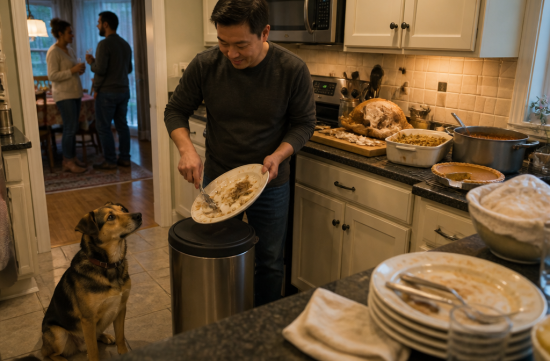
Last Thanksgiving dinner, something happened at my friend's house. While everyone was laughing and chatting around the turkey, their dog snatched a piece of bone that had fallen under the table and disappeared behind the sofa.
Fortunately, I was able to take it away quickly, so nothing happened, but since that day, I've been more cautious about what the dog might be eyeing whenever I see holiday food. This Thursday is already Thanksgiving, so I'm putting together this list in advance.
First, let's talk about turkey bones. Cooked bones can easily splinter into sharp pieces, which can injure the esophagus or intestines.
Many veterinarians commonly identify turkey bones as particularly dangerous. In some cases, it could lead to emergency surgery, so it's best to send the bone plate to a covered trash can right after the meal.
What about the meat itself? I thought it would be fine as long as I removed the skin, but the American Veterinary Medical Association (AVMA) has a surprisingly firm stance on this.
The AVMA warns that eating turkey or turkey skin can sometimes cause pancreatitis, even in small amounts. Pancreatitis can be life-threatening, so it's especially important to be cautious with fatty skin or drippings from the pan.
Therefore, the AVMA recommends buying or making pet-specific treats instead of sharing human food. Honestly, it's the hardest to ignore those big, pleading eyes.
Next up are onions and garlic. The ASPCA advises that both are commonly used in Thanksgiving dishes and can be toxic to pets.
Onions can damage red blood cells and cause anemia. Foods that are mixed in and not visible, like stuffing, gravy, or casseroles, are the real problem.
In this area, gumbo or jambalaya often makes an appearance on holiday tables. Since these dishes typically contain onions, it's best not to even add a spoonful of broth to the dog's bowl.
Andouille sausage is similar. It's fatty and salty, and contains seasonings like garlic, so it's safer to avoid it for the same reasons as turkey skin.
Surprisingly, one often overlooked item is rising bread dough. According to the ASPCA, raw dough containing yeast can be toxic to pets.
The yeast continues to break down sugars in the stomach, producing gas and alcohol, and the dough can keep rising inside the belly. If you have a household that lets roll dough rise on the table, make sure to remember this.
Grapes and raisins are known to pose a risk to the kidneys. The scariest part is that it's unpredictable how much a dog needs to eat to have a reaction.
There are surprisingly many recipes that include raisins in salads or stuffing, so be sure to double-check the ingredients when giving leftover food.
Moving on to desserts, as a sweet tooth myself, this part hurts a little. The AVMA clearly states not to give pets desserts, including pies.
Particularly concerning is xylitol. The FDA notes that xylitol can be used in baked goods like cakes, muffins, and pies.
Symptoms identified by the FDA can start with vomiting and lead to lethargy, staggering, collapse, and seizures. Sugar-free pies or gum might come out of guests' bags, so it's best to keep those bags out of reach.
The FDA also emphasizes checking labels on peanut butter used to hide pills. It only takes a quick glance at the ingredient list to see if it contains xylitol.
Nutmeg, which is found in sweet potato pie or pumpkin pie, is another ingredient to be cautious about. The compound myristicin in nutmeg can cause disorientation or seizures if consumed in large amounts.
On the other hand, pure pumpkin without any additives is safe for dogs, according to the American Kennel Club (AKC). However, canned pie filling that contains sugar and spices is a completely different product, so don't get them confused.
Chocolate, alcohol, and macadamia nuts are also on the holiday warning list. Just avoiding leaving cocktail glasses on low tables can significantly reduce accidents.
If you suspect your dog has eaten something harmful, contact your veterinarian immediately. Don't wait for symptoms to appear.
The ASPCA Animal Poison Control Center operates 24/7 at 888-426-4435, and the Pet Poison Helpline is at 855-764-7661. There may be a consultation fee, so it's good to know this in advance to avoid panic.
This year, I plan to stick a note with these two numbers on my fridge. On busy days with many guests, it's hard to see who might sneak a piece to the dog.
It's surprisingly effective to tell guests in advance, "Please don't give anything to the dog." Everyone thinks they're being cute, so just ask with a smile.
The best moments in jazz are when the musicians sync up with each other. I think the holiday table becomes most comfortable when everyone pays attention to the same tempo.
Leave the sweets for the humans and give the dog a special treat. That's the kindest choice I've made for this Thanksgiving.
 MilkThugBots
 TemuBoss


 donggul donggul |

 Mr. Largo |

 Silent Sea |

 Noodle Noodle |

 figtop |

 melon90 |


 U.S. Weather Bureau News |

 King King TV |

 Raymond K. |
 gravity |
 714 Success Era Real Estate |
 Investment Beginner Company Information Encyclopedia |
 musicque |
 The Gelaton |
 ovelion |
 Chicagonian |
 Freedom Yea |
 AZ Road Master |
 glenix39 |
 Something is popping in the situation |
 orvella |
 vella |
 comets |
 Banana |
 Yes Dorian |
 Minnesota Sonata N |
 zentar |
 mykiwi blog |