

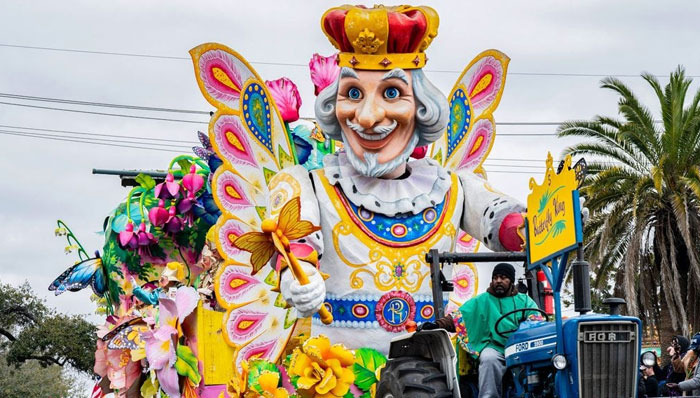
If you visit New Orleans, there is a festival that everyone wants to see at least once.
It is 'Mardi Gras', known as one of the top three festivals in the world.
From the moment I arrived, the city was already covered in purple, green, and gold decorations, and the streets were filled with music and laughter. Mardi Gras is not just a parade; it is the very essence of 'living culture' where the identity, history, and free spirit of this city come together.
The origins of Mardi Gras date back to the late 17th century in France. 'Mardi Gras' means 'Fat Tuesday' in French, signifying a time to eat and enjoy before Lent begins. The tradition of indulging in meat, alcohol, and sweets before the fasting and moderation of Lent evolved over time into a massive festival.
In 1699, French explorer Pierre Le Moyne d'Iberville held the first Mardi Gras celebration near present-day New Orleans, establishing this culture in Louisiana. As French settlers made their home in New Orleans, Mardi Gras became a tradition for the entire city. In the late 18th century, it was celebrated as a masquerade ball among the aristocracy, and by the 19th century, it evolved into a street festival led by the citizens.
After the Civil War, various groups began to form their own 'Krewes' to organize parades, leading to the modern parade format we see today. A 'Krewe' is a type of club or social organization that decorates elaborate floats with their own symbolic colors and themes and takes to the streets.
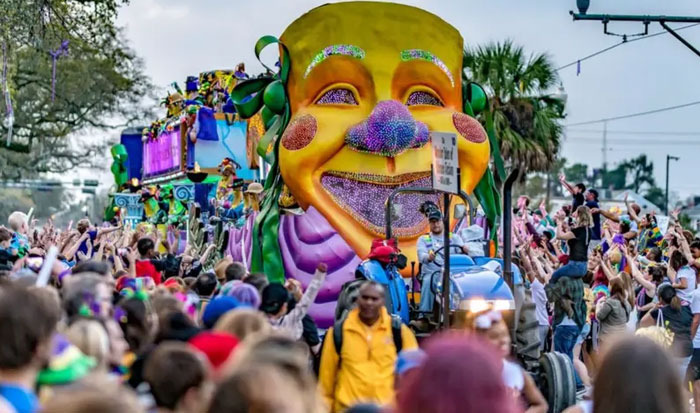
The representative colors of New Orleans Mardi Gras are purple (justice), green (faith), and gold (power).
These three colors saturate the city and become symbols of the festival. During the parade, kings and queens appear, adorned in splendid costumes and crowns, tossing beads, candies, cups, and trinkets to the crowd. Spectators wave their hands and shout, "Throw me something, mister!" and in that moment of catching beads, everyone becomes part of the celebration.
When I visited, the French Quarter and Canal Street were packed with crowds. On both sides of the street, people had set up folding chairs and coolers, and as the parade began, the entire city transformed into one gigantic stage.
Jazz bands played on the floats, while dancers, theater troupes, and performers mingled with the audience in the streets. The most astonishing thing was that the energy did not fade even after nightfall. Even after the sun went down, music continued under the neon lights, and people danced freely, laughing with strangers.
At the heart of New Orleans Mardi Gras is jazz. Jazz is the music born in this city, created from a blend of French, African, and Caribbean cultures. The rhythm of brass bands echoing throughout the streets was the heartbeat of the festival, and every time the sounds of trumpets and saxophones filled the air, people instinctively swayed to the music.
I couldn't help but think, "This is New Orleans." Music, dance, and freedom felt like the essence of this city.
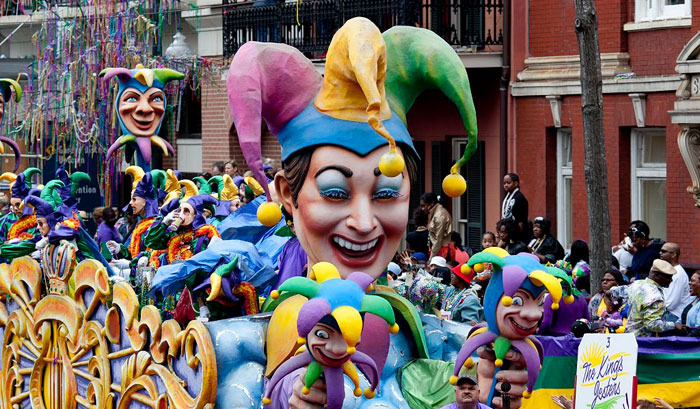
Food is also an essential part of the experience. During the festival, the entire city transforms into a massive outdoor food market. Louisiana's signature dishes like gumbo, jambalaya, and sweet beignets fill the streets.
I bought spicy shrimp jambalaya with a Creole sauce near the French Market, and the bold Cajun spices and the flavor of sausage filled my mouth, leaving an unforgettable taste that matched the energy of the festival.
This event is the very 'identity' of the people of New Orleans. This city, where French, Spanish, and African cultures converge, showcases its history and diversity through Mardi Gras. Each Krewe often incorporates their social messages into the parade themes, and the participation of citizens across races, classes, and genders makes this festival even more special. Perhaps that is why Mardi Gras here feels less like a spectacle and more like a 'cultural experience we live together.'
In the bars along the streets, blues music flowed, and someone played the trumpet by the window, continuing an impromptu performance. The beads fluttering in the wind, the glitter scattered on the ground, and the laughter of people passing by created a cinematic scene.
New Orleans Mardi Gras is not just an event or a tourist attraction; it is proof that this city is alive. The traditions brought from France meet the rhythms of Africa, and the forms of Europe blend with the freedom of the South, blossoming into a completely new culture. At the center of it all is the Louisiana philosophy that "life exists to be enjoyed."
Here, no one is a stranger; everyone becomes part of the festival. I felt that New Orleans Mardi Gras is the most free and warm 'stage of life' in the world.





 Certified Authentication Blog Page |
 ORAVEZIN Oppa |
 melon90 |

 White bunny |
  DREAM BIG |
  frostbite |
  330 Forever My Love |
  El Dorado |
  dralix58 |
  Gorama Round |
  Skydiving |
  dreamport |
  Yellow Snowman |
  Toaster Pizza Magic Show |
  velvetnom |
  Anytime Journey |
  Mrs. Duluth |
  jaxter |
  Atlanta Mama |
  Baguette Blog |
  Tan Sol |
  US Embassy |
  Korean Mom |
  My NYC |