
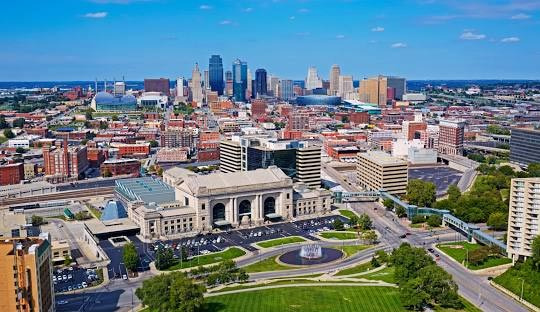
Kansas City is a city located on the border of Missouri and Kansas, possessing unique geographical and cultural characteristics formed across the two states. The city of Kansas City, Missouri serves as the central city, having established itself as an important city in the American Midwest through its long history and economic and cultural development.
1. Early History: Native Land and Trade Center
Native Land:
The Kansas City area was originally the land of the Osage, Kaw, and Sioux tribes. They lived along the Missouri River and Kansas River through trade and agriculture.European Settlement:
In the late 1700s, French explorers explored the area and established trade posts. This place became an important hub for trade via the rivers.
2. Establishment of the City and Early Development (Early 19th Century)
Establishment of Kansas City:
In the early 1830s, the Blue Mills Trading Post was established on the west bank of the Missouri River, and early settlers began to migrate. It was officially established as the "Town of Kansas" in 1838.Origin of the Name "Kansas":
The city's name is derived from the local Kaw or Kansas tribe, and their name means "people of the south wind."City Expansion:
In 1850, it was incorporated into Missouri, and the city rapidly grew as trade developed through railroads and rivers.
3. Civil War and Political Significance
Slavery and Free State:
Kansas City was located on the border of Missouri, which supported slavery, and Kansas, which opposed it, making it a region of heightened political and social tension even before the Civil War.Kansas-Nebraska Act (1854):
This act allowed residents to vote on whether to permit slavery in the area near Kansas City, leading to intense conflicts known as "Bleeding Kansas."
4. Railroads and Economic Development (Late 19th Century)
Introduction of Railroads:
In the late 1860s, railroads passing through Kansas City greatly expanded the city's economic significance. It developed into a railroad hub connecting Chicago and Texas, becoming a center for the distribution of agricultural products and goods.Steamboat Trade:
Steamboat trade along the Missouri River became active, and it emerged as a center for the transportation of agricultural products, livestock, and coal.Main Industries:
With the railroads, the livestock industry developed, establishing Kansas City as a major livestock trading center in the United States.
5. Modern Development and Cultural Center (20th Century to Present)
Center of Jazz and Music:
In the 1920s and 1930s, Kansas City emerged as a center for jazz music. The "18th & Vine District" became a region where famous jazz clubs and musicians thrived, hosting jazz legends like Duke Ellington and Charlie Parker.Architecture and Urban Development:
Union Station and Country Club Plaza, built in the 1930s, became landmarks of the city, evolving into centers of modern commerce and transportation.Sports and Industry:
Since the 1970s, Kansas City has established itself as a center for sports with the success of sports teams (Kansas City Chiefs, Kansas City Royals) and has grown as a hub for the automotive, agricultural, and logistics industries.
6. Major Historical Events
- 1838: Establishment of the "Town of Kansas."
- 1850: Incorporated into Missouri.
- 1869: Completion of the Union Pacific Railroad, leading to economic growth in the city.
- 1930s: The golden age of jazz and blues music.
- 1970s: Emergence as a center for sports and modern industry.
Kansas City is a city that combines a rich historical heritage with modern charm, establishing itself as a center for culture, arts, cuisine, and sports. The natural scenery formed along the Missouri River and the vibrant downtown area offer visitors a variety of experiences.
Kansas City is loved as a city where the past and present harmonize, showcasing the unique charm of the Midwest.


 US Regional Information Blog |
 business life |
 Kansas City Representative Singer |
 Information on All Regions of the United States |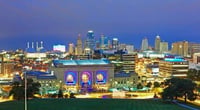
 US Embassy |
  Korean Mom |
  My NYC |
  moo moo |
  Mr Oh |
  forevergee |
  festival |
  manchester |
  constant |
  Leapfrog Move |
  vibranto |
  Tora Tora |
  yellowbutter |
  Dolly |
  NYC saladbar |
  Finding Superfoods |
  lightyear |
  song bang |
  vexomo |
  Indiana Jones |