
Recently, I met a family who was looking at homes in Long Beach. They had two properties in mind that were only a block apart. However, the assigned schools listed on the real estate website were different. One house had a school rating of 9, while the other had a rating of 5. They were confused as to why there was such a difference in the same neighborhood.
The answer lies in school boundaries. Public schools are assigned based on the address. These boundaries can be divided by just one road or even one block. The school ratings displayed on real estate websites are automatically calculated based on the school boundary that the property address falls within, and these boundaries can be adjusted every few years depending on district circumstances. Therefore, there is no guarantee that the school assigned at the time of listing will still be the same when you move in.
Looking at elementary schools in the Long Beach area, you can see how significant these discrepancies can be. According to GreatSchools, Longfellow Elementary School received a rating of 9. In contrast, Lafayette Elementary School and Stevenson Elementary School, both within the same Long Beach Unified School District, received ratings of 5 (source: greatschools.org). This illustrates why you cannot generalize the entire city as one school district.
Many families also consider middle and high school assignments within the Long Beach Unified School District. In this case, it's advisable to also check the College Readiness metric. This metric is calculated by averaging the graduation rates and college entrance exam scores, and a high elementary school score does not automatically mean that the assigned middle or high school will also have a high college readiness score (source: GreatSchools Ratings Methodology Report).
So, what criteria are used to assign these scores? GreatSchools takes into account test scores, academic progress, equity, and for high schools, college readiness. They assign a weight of 0.45 to the higher of the test score rating or academic progress rating, and distribute a weight of 0.27 to the other categories (source: GreatSchools Ratings Methodology Report). This means that simply performing well on tests does not guarantee a high score; growth trends and equity are also considered.
The equity metric is particularly important. It shows how evenly students from disadvantaged backgrounds, including low-income students, perform. If a school has high test scores but low equity scores, it may indicate an environment that favors only certain groups of students. This is why it's essential to look beyond just the overall score and examine the detailed metrics.
Here are a few points to consider when selecting a home:
- Reconfirm the assigned school by entering the property address directly into the school district website or GreatSchools' District Boundary Map.
- Look at the trend of ratings over the past 3-4 years, not just a single score.
- Keep in mind that the student-to-teacher ratio may differ from actual class sizes.
- Cross-reference reviews from other sites like Niche with GreatSchools scores.
If you are moving to Long Beach from another state, it's also wise to review the property tax structure along with the school district. In California, the tax base is set based on the market value at the time of sale, and thereafter can only increase by up to 2% per year (source: Proposition 13 related materials). Keep in mind that neighborhoods with good school districts may have higher property values, which can lead to increased property tax burdens.
In areas like Long Beach, where school boundaries are tightly drawn, this verification process is especially important. Be sure to check the school boundaries directly before signing any contracts. This article is not investment or legal advice, and it is recommended to verify the latest assignment information with a real estate professional before any transactions.
 LuckyBird
 GochujangSpy








 moo moo |
 ultron78 |
 garlic bread |

 urbanmint |
 Korean Blog |
 Coastal city |
 Key spots |
 Leapfrog Move |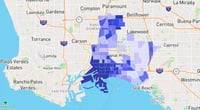
 Sammy Beach |
  round1 |
  Way to easy |
  musicque |
  road98 |
  Churros Train Conductor |
  gleeful |
  Burbank Lee |
  Olivia's Blog |
  Bushing Around Life |
  Active |
  Cherokee Rose |
  Kor. Master |
  Holey Moley |
  Conflite Teacher |
  Hodong Prince Over Flex |
  Mist inn |
  citrus pop |
  Onion Ring |
  phoenixia |
  viewtop |