
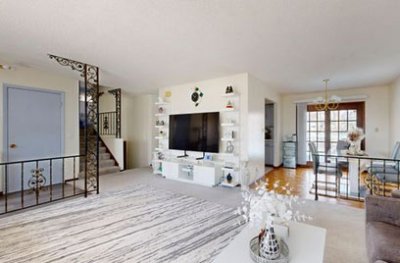
These days, when discussing homes in San Antonio, there are definitely more people interested in energy efficiency than before.
Especially for those approaching retirement, the question is whether to invest in improving insulation and replacing windows in their current home or to take this opportunity to move to a more convenient condo.
The average electricity bill in the San Antonio area is about $203 per month, based on EnergySage data, and the electricity rate is approximately 12 cents per kWh.
This is relatively low compared to other major cities in Texas. When compared to other states, I've heard that the rates are about 40% lower than in the Los Angeles area of California.
However, this is just an average, and those who have lived in San Antonio know that the story changes in the middle of summer.
Homes with poor insulation and many old windows may require air conditioning to run all day, leading to electricity bills that can be much higher than average.
So, for older homes, it might be worth considering reinforcing insulation or replacing windows with energy-efficient products.
Initially, it requires a significant investment, but if it's a home you plan to live in for another 10 or 15 years, the reduction in cooling costs each month can be hard to ignore.
On the other hand, if you're thinking of downsizing as you retire, moving to a townhome or condo is also an option.
Since these spaces are generally smaller and often share walls with neighbors, the heating and cooling burden can be less than that of a single-family home.
The issue is the HOA.
According to data from the Texas metropolitan area, the typical HOA fee for single-family home communities ranges from $55 to $160 per month, but for master-planned communities, it can rise to $200 to $400.
Townhomes typically cost around $200 to $300, while condos can often exceed $400.
So, if you move to a condo to save on electricity and home maintenance costs but end up paying $400 to $500 a month in HOA fees, you may need to reevaluate whether you're really saving money.
If you're considering retirement, property taxes are also important. Bexar County, where San Antonio is located, has a significant property tax burden.
However, homeowners aged 65 and older can receive property tax benefits if they meet certain criteria.
In particular, there is a tax cap for school district property taxes for those over 65, which is something to check when calculating fixed costs after retirement.
Ultimately, the first step is to get an estimate of how much it will cost to fix your current home. Calculate the costs of reinforcing insulation and replacing windows, and then compare that with the HOA and property taxes that would arise from moving to a condo or townhome.
In reality, many people tend to follow this order of inquiry. If the estimate comes back and it's several tens of thousands of dollars, the conclusion might be that "it would be better to downsize instead." Conversely, if you really like the location of your home and your mortgage is nearly paid off, making some repairs to continue living there could be much more economical.
And in San Antonio, it's not just about insulation. The direction of the windows is also important.
Especially if there are many west-facing windows that receive direct sunlight during the long summer afternoons, it can significantly impact summer cooling costs.
It's also good to check the eaves, window awnings, and the insulation condition of the roof.
In my opinion, as you approach retirement, there's no need to rigidly decide that "condos are convenient" or "my current home is the best."
If you calculate the money that will go into the house over the next 10 years, the answer will gradually become clearer.
Ultimately, after retirement, a home where you can predict your monthly expenses may become a more comfortable home than a large one.
 CrystalRiver98
 WaveLink






 Sugar Cream Door Bulletproof Noodles |
 urbanmint |
 |
| 
 Premium Gas Camp |
 CA Real Estate |
 Hajiwon Blog Hair Salon |
 Make My Day |
 Texas Migration Story |
 Helpful Life Stories |
 Nanana Nanana Nanana |
  horse |
  moodansa 77 |
  zymit |
  maplefox |
  Fun Flex Life |
  hopeful |
  Reeno |
  Coastal city |
  meonetoo |
  Winter bear |
  Peach Jam Eating Laughter |
  Nando Raldo |
  American Man in a Mask |
  wendra |
  silver |
  bada2002 |
  horizon |
  victoria jung |
  Kkikki Ppappa Shout Out Loud |