
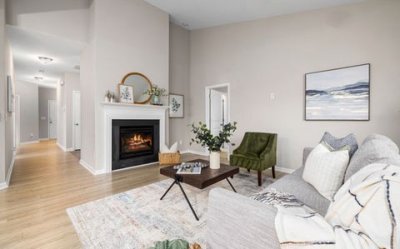
There is a case of a low-rise apartment building from the 1970s near downtown Fargo that recently completed renovations and started accepting new tenants again. The plumbing and electrical wiring were replaced, and the kitchen and bathroom were updated, but the building's structure, windows, and insulation remained unchanged. Looking at such renovation cases, it becomes clear that while the appearance may change to look like a new building, the actual management costs and maintenance burdens do not necessarily drop to the level of new constructions.
Examining Fargo's rental market, as of April 2026, the average rent for all apartments is around $1,126 (RentCafe as of April 2026). In contrast, newly built apartments show studio rents at $807, one-bedroom at $946, two-bedroom at $1,115, and three-bedroom at $1,479 (Apartments.com new listings data). Compared to the overall average, the rents for new one-bedroom and two-bedroom apartments are actually lower or similar, indicating that the supply of new constructions in Fargo is quite active, and new does not automatically mean expensive.
In fact, on NP Avenue downtown, the Avery Apartments are being built with 168 units over six stories, with the first move-ins expected in early summer 2026 and completion of the remaining units in the fall. Near North Dakota State University on 18th Street, a five-story building with 88 units is set to break ground in the first half of this year, aiming for completion in June, and there is also a project for 64 units in South Fargo. The riverside Rashikowitz Riverfront Apartments are also targeting completion in March 2026, meaning that hundreds of new units will be released into the market this year alone.
Nationally, newly built apartments or homes often carry a rent or price premium of about 10 to 20 percent over older constructions due to energy efficiency, modern amenities, and construction warranties (based on RentCafe, Apartment List new trends report). However, in areas like Fargo where new construction supply is concentrated in a short period, this premium tends to narrow significantly compared to the national average. In addition to the previously mentioned Avery and NDSU projects, a five-story, 262-unit Central at the Horizon project has been proposed along NP Avenue downtown, and if approved, it aims for completion in 2028, adding more supply to the market.
When considering older buildings, it is important to also assess the aging of unseen components like plumbing, roofing, and electrical wiring. Buildings over 20 to 30 years old may require significant repairs all at once, leading to unexpected expenses. In contrast, new constructions often come with a one to ten-year construction warranty on the structure and systems, making them relatively free from major repair burdens in the initial years (based on nar.realtor, angi.com new vs. old guide).
In areas where supply is increasing, the price gap between new and old constructions often does not widen as much as in other cities. However, older buildings can differ significantly in winter heating costs. The Fargo area, including North Dakota, often experiences temperatures dropping below -20 degrees, and older buildings with poor insulation can have significant heat loss through window gaps, leading to higher heating bills than expected. New constructions, built to recent energy codes, tend to have better insulation and window standards, making winter management costs more manageable even for the same square footage.
On the other hand, older buildings have clear advantages. In older neighborhoods, trees are often established, and schools and shopping areas are already in place, reducing the need to familiarize oneself with new living infrastructure. Based on school districts preferred by Korean families, schools in South Fargo and West Fargo are frequently mentioned, but school district boundaries can change annually, so it is essential to verify the assigned school for a specific address before signing a lease.
If moving to Fargo from another state, it seems practical to consider not just the rent itself but also winter heating costs and car maintenance. New constructions may have similar or even lower initial rents, but those with community facilities may have separate management fees, while older buildings may have lower rents but could lead to frequent unexpected repair requests.
Ultimately, the continuous increase in new supply in Fargo is a characteristic of this market, and from an observational standpoint, the gap in rental prices between new and old constructions has not widened significantly compared to a few years ago. This article does not constitute investment or legal advice, and it is recommended to consult a local real estate expert before any actual contracts or transactions.
 HousekeepMemo
 ThirstyJjang






 cheesepup |
 breezem |
 yentra |
 virex |
 vexon87 |
 reliable |



 Elastico |
  shaket |
  vionoo |
  chocolate |
  Whisper |
  Star Voyager |
  InDiGo |
  Rocky Mountains |
  Whoever It Is, I Don't Know |
  Why Not Me |
  Plastic Rose |
  Rice Shop Uncle BLOG |
  Victory 1988 |
  Gook Rule |
  Rowland Mama |
  Coco and Lulu |
  Baguette Blog |
  washington mom |
  yorvik12 |
  solvix18 |