
Have you ever closely examined your car loan statement? It's frustrating to see that the principal hasn't decreased much while the interest keeps piling up; I'm sure I'm not the only one who feels this way.
In fact, there are many recent cases where simply switching to a credit union has saved borrowers over $100 a month. Just lowering the interest rate by about 2 percentage points can make a significant difference.
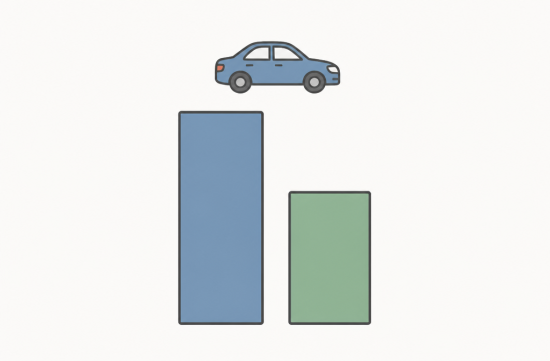
As of the second quarter of 2026, borrowers who refinanced through credit unions saved an average of $102 per month. In comparison, those who used banks saved only $65, and those with traditional finance companies saved just $38.
The reason for this difference is that credit unions often set interest rates without adding large margins, as they operate on a member cooperative structure. Even with the same credit score, the rates offered can vary significantly depending on where you borrow from.
Credit scores also play a significant role. In the second quarter of 2026, the average interest rate for new car loans for the highest credit tier, super prime, was 4.41 percent, while the lowest tier saw rates rise to 16.11 percent.
Many people rush to sign a contract at the dealer's offered rate when buying a car, and even if their credit score improves later, they often leave it as is. This situation is a prime candidate for refinancing.
Timing is also crucial. It's generally more advantageous to apply for refinancing after a few months of on-time payments rather than shortly after purchasing the car.
In fact, in the first quarter of 2026 alone, over 110,000 borrowers refinanced their loans, averaging a rate that was 2.24 percentage points lower than their previous one. As a result, they saved an average of $81 per month.
However, not every refinancing is beneficial. According to industry standards, you should aim for a rate that is at least 1 to 2 percentage points lower than your current one to ensure that you actually save money after accounting for fees.
The documents needed for application are simpler than you might think. A copy of your vehicle registration, proof of your current loan balance, and a pay stub to verify your income are usually sufficient for most applications.
If you apply online, the approval process is relatively quick. If you have your documents ready, you can receive results within a few days, making it less burdensome.
It's advisable not to settle for just one estimate; compare at least two or three. You can find significant differences in the rates offered, even with the same credit score.
When comparing, it's best to first organize your remaining principal, interest rate, and remaining months. Knowing these three factors will help you quickly determine if a new estimate is truly beneficial.
One thing to be cautious about is extending the loan term just to lower the monthly payment. While it may reduce your immediate out-of-pocket expenses, it could increase the total interest paid over the life of the loan. Personally, I would prefer to keep the term as short as possible while lowering the interest rate.
Make sure to check your existing loan agreement for any prepayment penalties. Overlooking this could lead to a situation where the fees outweigh the interest savings.
In my opinion, it's better to take the initiative to crunch the numbers yourself rather than waiting for someone else to do it. Spending time comparing estimates from several credit unions is much more beneficial than waiting for guidance at a bank branch.
Most credit score checks are free, so I recommend checking your score before looking into refinancing. If your score has improved since your initial loan, you may have more room to negotiate than you think.
Even saving just $100 a month adds up to over $1,200 a year. I believe it's more logical to address this issue before cutting back on coffee expenses.
 HoldSongHae


 Idaho's Sumi's House |
 holy cheese |
 Michigan Enthusiast |
 Anna Life |
 JESIKYEOALBA BLOG |
 Choco Mint Creator |
 greenloop |


 Goroke Geureoke News |
  Tora Tora |
  pixel77 |
  cuteasducks |
  Lemon Kim |
  What can make money? |
  An ant castle |
  Haha and Bomi Blog |
  glenview 89 |
  Valley Hong |
  novapixel |
  Mr. Midwest America |
  wildfire |
  legalway |
  postcard |
  cheesecake07 |
  My Miami Stories |
  windylotus |
  Mia Flori |
  velaro29 |