
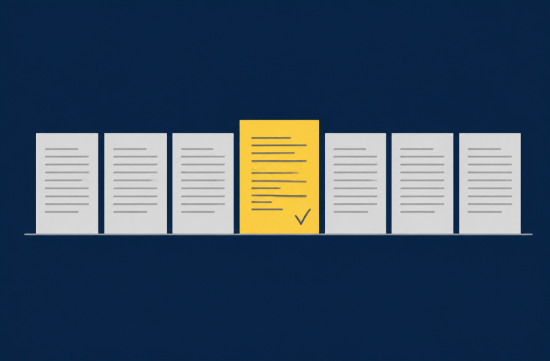
When filling out an application form, there's always that last box that trips you up. Cover letter, optional. You've probably paused at this question at least once.
These days, with ChatGPT, you can whip one up in 30 seconds, which makes it even more confusing. Everyone is using AI, so you might wonder if recruiters take it seriously.
So, I looked into some numbers. To cut to the chase, there isn't one definitive answer for what everyone thinks as of 2026. However, there are some clear patterns.
First, here's data supporting cover letters. A frequently cited study by the resume service company Resume Genius surveyed 625 hiring managers in the U.S.
In this survey, 83% reported that they read most of the cover letters they receive. 94% said that cover letters influence interview decisions.
Additionally, 45% stated they read the cover letter before the resume. The preferred length was about 400 words on average.
From these numbers, it seems like you should definitely write one. But here's where you need to pause. The organization that conducted this survey sells cover letter templates.
In fact, other studies show the opposite, with a significant number of hiring managers reporting that they hardly read cover letters at all. The results can vary greatly depending on who conducted the survey and who they asked.
The company itself has inconsistencies in the year of the survey mentioned on their page, so I view these numbers as just a reference. It's important to distinguish between marketing materials and research data.
That's why I turned to a more neutral study. A working paper from researchers at Yale's economics department is quite interesting.
In April 2023, the freelance platform Freelancer.com launched an AI cover letter writing tool, and the researchers compared application data before and after its release. They analyzed over 5.5 million applications.
Among applicants who could use the tool, 62% tried it at least once. Thanks to AI, the alignment between cover letters and job postings definitely improved.
The problem comes next. The correlation between how well the cover letter matched the job posting and receiving a callback dropped by 51%. The correlation with actual offers dropped by 79%.
I was honestly surprised by these numbers. Since everyone can write a decent cover letter, a well-written one no longer distinguishes skill.
Instead, employers have shifted to other signals. On that platform, past work review scores became better predictors of hiring.
Of course, this is just one case from a freelance platform, and it's not yet a peer-reviewed paper. It would be problematic to apply this directly to regular full-time hiring.
Still, the direction is clear. Writing that anyone can produce loses its value as a signal. This aligns with the signaling theory in economics.
So, what should you do in practice? Personally, I would definitely write one in three scenarios. Conversely, in other cases, I wouldn't spend too much time on it.
First, when the job posting states it's required. There's no need to think twice about this. If you don't submit it, your application will be incomplete.
Second, if there are circumstances like gaps in employment or job transitions that can't be explained by the resume alone. A resume doesn't convey the why.
Third, when applying to a small company or for a position where writing is important. The more likely it is that someone will personally review the documents, the higher the chance the cover letter will be read.
On the other hand, for large companies with thousands of applicants, it's much more beneficial to spend time tailoring your resume to the job posting than to refine your cover letter.
Especially among Korean applicants, many have solid experience but find their English resumes look bland. In such cases, a cover letter can help provide context about who you are.
If you do write one, keep it short. Don't exceed one page, and focus on including why this company and the problems you can solve in the first two or three sentences.
I think using AI for this is perfectly fine. Just make sure to take the draft and fill in the numbers and your actual experiences yourself. In the study, those who spent more time refining the AI draft had higher offer rates.
I believe this is a fair outcome. The tools are available to everyone, and ultimately, the difference comes down to the effort each person puts in.
A cover letter that simply changes the company name and is sent to 50 places is now truly meaningless. It might be better not to submit one at all.
To summarize, cover letters aren't dead, but the era of getting points just for submitting one is over.
If you're unsure about the optional box, ask yourself if there's something unique you can say about this company. If there is, write it; if not, I recommend taking that time to review your resume again.
 Anova
 JeanBundang








 CA Real Estate |

 limestone |
 loran |

 DeArizona Blog |

 Swift Falcon |
 fantastic |

 ansdal |
 Northeastern |

 Toaster Pizza Magic Show |

 ssome |
 skykong |
 Shining Our Own World |
 gardener 007 |
 golfmaster |
 Nanana Nanana Nanana |
 Who's watching? |
 endone |
 RockStar |
 Casa Mia |
 You Only Live Once |
 Hardworking CPA |
 Joyce 77 |
 Runner Kim |
 My Town My Way Blog |
 My Miami Stories |
 Entip |
 Tony Park |
 DJ DC BLOG |