

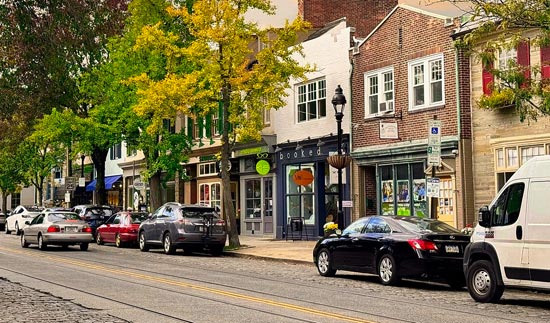
In the early days of immigration, the most common occupation for Koreans in Philadelphia was 'business for survival'.
Beauty supplies displaying wigs from dawn, delis making sandwiches
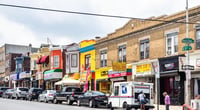
For immigrants with limited English skills and capital, finding employment in mainstream society or professional jobs was challenging. Therefore, Koreans opted for small businesses. This led to the establishment of laundries, delis, liquor stores, beauty supplies, grocery stores, and clothing shops, which became the backbone of the Korean immigrant community in Philadelphia.
As Koreans began to flock to Philadelphia in the 1970s and 80s, a Korean commercial district naturally formed in the northern Olney area and near Chestnut Hill.
North 5th Street in Olney became a symbolic street for Korean entrepreneurship. During this time, most Korean immigrants kept their stores open for more than twelve hours a day, and despite their limited English, the honest and diligent work of Korean shop owners soon established them as 'trustworthy stores' among local residents.
The most common businesses were delis and grocery stores. Korean delis became central to the lives of the Black and Hispanic communities. By selling sandwiches, coffee, snacks, and cigarettes, they naturally became a space for sharing local news. Store owners always opened before 5 AM and closed late at night. Even though daily earnings were not high, every time a customer said, "See you tomorrow," it renewed their strength.
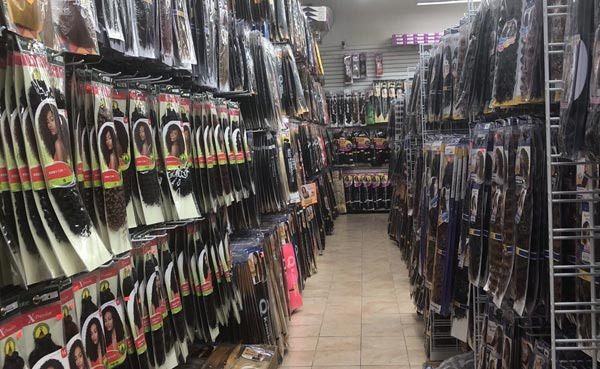
Another significant sector that formed a major part of the Korean community in Philadelphia was beauty supplies.
This business started with the sale of beauty-related products targeting Black female customers. Handling everything from wigs, hair extensions, hair dye, cosmetics, to accessories, Koreans analyzed the market more meticulously than anyone else. They remembered individual styles and introduced new products first to secure loyal customers. This trust has remained as essential stores within the Black community throughout Philadelphia.
One of the businesses commonly run by Koreans was laundries. The laundry business was an industry that early immigrants could start with little capital, and once they learned the skills, they could earn a stable income. Laundries operated by Koreans were usually run by couples, and thanks to their detailed service remembering customers' names and preferences, they had many regulars.
Additionally, liquor stores and clothing shops run by Koreans cannot be overlooked. Liquor stores supported the local nightlife by selling alcohol, cigarettes, and snacks, while clothing shops attracted Black customers by selling trendy clothing imported from New York at affordable prices. The success of these businesses was attributed to their stylish product offerings that matched the local culture's love for vibrant colors and unique designs.
As time passed, the second generation of Koreans either took over their parents' businesses or ventured into new industries. Many grew to become doctors, pharmacists, lawyers, accountants, and IT professionals, but some still continue the tradition of self-employment, as their stores represent not just a means of livelihood but also a space filled with family history and identity.
The characteristic of the Korean business community in Philadelphia is not just 'business' but 'coexistence'. Within the Black, Hispanic, and White communities, Koreans have always built relationships carefully and diligently. Although there have been conflicts due to cultural differences, most Koreans took the time to build trust and resolve issues. They gradually became part of the community by engaging in volunteer activities centered around churches and local organizations and donating a portion of their store profits to local events.
Today, while the number of Korean businesses in Philadelphia may not be as prominent as before, they still thrive throughout the city.
The delis that made sandwiches by hand 40 years ago, and the beauty supplies that displayed wigs from dawn. All these spaces are quiet traces left by Korean immigrants.




 coloradoman |
 Living Economy Information Blog |
 Tomato Health Club blog |
 Banana Style Life |
 crystalo |
  Northeastern |
 Nationally Certified Lightning Charcoal Review |
 American Grape Shine Muscat |
 sparkling |
 U.S. Weather Bureau News |
  Korean Mom |
  My NYC |
  moo moo |
  Mr Oh |
  forevergee |
  festival |
  manchester |
  constant |
  Leapfrog Move |
  vibranto |
  Tora Tora |
  yellowbutter |
  Dolly |
  US Embassy |
  NYC saladbar |
  Finding Superfoods |
  lightyear |
  song bang |
  vexomo |
  Indiana Jones |