

When consulting with those approaching retirement, I often encounter the dilemma of whether to downsize and move or to stay in their current home and explore other options. Recently, someone who has lived in East Grand Rapids for a long time asked me to compare downsizing and reverse mortgages. Both methods convert home equity into cash flow, but downsizing requires selling the home and moving, while a reverse mortgage allows homeowners to stay in their current home while utilizing their equity.
There are three main factors to consider in order: first, the current value of the home; second, the annual property taxes; and third, the consultation and approval process. In Grand Rapids, the situation varies depending on the area. According to Zillow, the typical home value in Grand Rapids is $268,540 as of 2026, having increased by 1.7% over the past year. However, areas like 49506 have higher asset values and property tax rates compared to other areas, meaning the amount of usable equity can differ even within the same city.
The second factor to check is property taxes. According to Ownwell data, the median effective tax rate in Grand Rapids is 0.86%, which is lower than Michigan's median of 1.05% and the national median of 1.02%. For Kent County as a whole, the effective tax rate is around 1.03%. Even if you receive a reverse mortgage, you must continue to pay property taxes and homeowners insurance, and you need to pass a financial capability assessment to qualify for the loan.
The third factor is the consultation and approval process. The HECM, insured by the Federal Housing Administration, has eligibility requirements such as being over 62 years old, the home being the primary residence, and if there is an existing mortgage, it must be at a level that can be paid off with the loan amount. Before applying, you must go through a HUD-approved counseling agency, where you can discuss which option suits your situation better compared to downsizing.
Costs also need to be factored in. When you add the origination fees, mortgage insurance, and closing costs, the initial expenses are generally higher than a standard mortgage. However, because it is a non-recourse loan structure, even if home values decrease later, heirs are not required to pay back any excess due to FHA insurance.
The amount you can receive is determined by age, interest rates, and home value. In order, the older you are, the lower the interest rates, and the higher the home value, the larger the limit. HECM is only available up to the loan limit set by HUD, and if there is an existing mortgage, that balance must be paid off first from the reverse mortgage funds. In areas like Grand Rapids, where home values can vary significantly, the amount you can receive can differ greatly even among people of the same age.
When comparing to downsizing, another option to consider is a HELOC. A HELOC has lower initial costs but requires monthly repayments, which can be burdensome on a fixed income after retirement. In contrast, a reverse mortgage has no monthly repayment obligation but comes with higher initial costs. Which of the three options is right depends on health status, relationships with children, and how long you plan to stay in the neighborhood.
Conversely, as time goes on, the equity left in the home decreases, which means the assets passed on to children may also diminish, a factor that must be considered when comparing to downsizing.
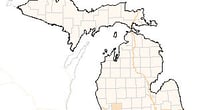
As of 2024, Michigan has a population percentage of 19.6% aged 65 and older, which is higher than the national average of 18%. With a large retirement population, it seems that more people are carefully choosing between downsizing or reverse mortgages based on their lifestyle patterns and asset plans. Regardless of the choice, it is advisable to first consult with HUD and discuss with family. This article is not investment or legal advice, and it is recommended to consult with a professional before making any actual contracts.
 GatoradeShot
 FryRiceLaser






 Sugar Cream Door Bulletproof Noodles |
 urbanmint |
 |
| 
 Premium Gas Camp |
 CA Real Estate |
 apricotla |
 icotla |
 ripple |

 oneonly |
  horizon |
  Nanana Nanana Nanana |
  victoria jung |
  Kkikki Ppappa Shout Out Loud |
  Lululala |
  Toaster Pizza Magic Show |
  nortrix |
  Mau Nui |
  novapixel |
  fixed |
  AL ALASKA |
  amola |
  History Repeats Itself |
  Doori Ark |
  Rainbow Bridge to the Sky |
  Sunny Fullerton |
  U.S. Weather Bureau News |
  GOGO SING |