

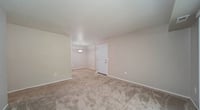
A couple nearing retirement in Hartford has been searching for a ranch-style home, meaning a single-story house without stairs, for several months. The problem is that there aren't many listings available in their desired area. Even within Hartford, the situation varies greatly depending on the neighborhood. Ultimately, the couple had to reconsider whether to continue looking for a single-story home or shift their focus to condos or townhomes.
First, there's the winter heating cost. Most of Connecticut's electricity is generated from natural gas, and during the winter, the demand for gas for both heating and power generation drives up electricity prices. In fact, the standard service rate from Eversource will increase to 12.64 cents per kilowatt-hour starting January 1, 2026, up 13% from 11.19 cents the previous winter. However, on May 1, 2026, the rate will drop by 4.3 cents per kilowatt-hour, resulting in an average savings of about $30 per month for households. The significant difference in rates between winter and summer is a variable that residents of Hartford must consider, whether they choose a single-story home or a condo. Additionally, many older single-family homes in Connecticut still use oil boilers for heating, while many condos and newly built townhomes have switched to gas or electric heat pumps. Since the type of heating fuel can affect winter utility costs, it's essential to check the heating method when viewing properties.
Looking at the sales prices, the median home price in Hartford ranges from $245,000 to $259,000, with variations depending on the time of the survey. By type, condos average $121,500, while single-family homes average $274,000, showing a significant gap. Downtown condos start at $165,000 for a one-bedroom and $259,500 for a two-bedroom, while prices in Asylum Hill are lower, ranging from $83,000 to $120,000. It's noteworthy that condo prices can vary significantly even within the same city. If a desired single-story home isn't available, considering condos in areas like Asylum Hill could be a realistic alternative.
Property taxes are particularly important in Hartford. The mill rate, which is the tax rate applied per $1,000 of assessed value, is 69 mills, one of the highest in Connecticut. This is more than double the state average of around 32 mills. Since Connecticut assesses 70% of the market value for taxation, the burden can feel even heavier. However, Connecticut operates an elderly circuit breaker program, which refunds property taxes for elderly homeowners with incomes below a certain threshold. Couples can receive up to $1,250 annually, while individuals can receive up to $1,000, with income limits set at approximately $53,400 for individuals and $65,000 for couples as of 2026. Applications must be submitted to the local assessor's office between February 1 and May 15 each year. It's also worth noting that the circuit breaker applies only to homes where the owner resides, and regardless of whether it's a condo or single-family home, as long as the income criteria are met, one can apply.
Ultimately, it's important to acknowledge that the choice of neighborhood in Hartford will affect sales prices, heating costs, and mill rates. Instead of fixating solely on the single-story requirement, comparing these three variables across neighborhoods may reveal unexpected options. In Connecticut, there are often significant differences in mill rates even across town borders, so it's a good habit to check which town a property address belongs to. Even two seemingly similar homes can have drastically different property tax bills once you cross a boundary. It's advisable to verify specific criteria with each town before applying. This is not investment or legal advice, and consulting a professional before making any contracts is recommended.
 ElecLicense
 FunElkNight







 Sugar Cream Door Bulletproof Noodles |
 urbanmint |
 |
| 
 Premium Gas Camp |
 CA Real Estate |
 Buckwheat Muktudari Notebook |

 Hartford Blog |

 Lime Juice |
  Rhode Island Good People |
  Big North |
  Famous Attractions in the United States |
  Jin Soo V |
  Starbucks Reserve Roastery Closure |
  peppermint |
  Stable Co. |
  Purple Moons, |
  International Court |
  roma |
  horse |
  moodansa 77 |
  zymit |
  maplefox |
  Fun Flex Life |
  hopeful |
  Reeno |
  Coastal city |
  meonetoo |
  Winter bear |