
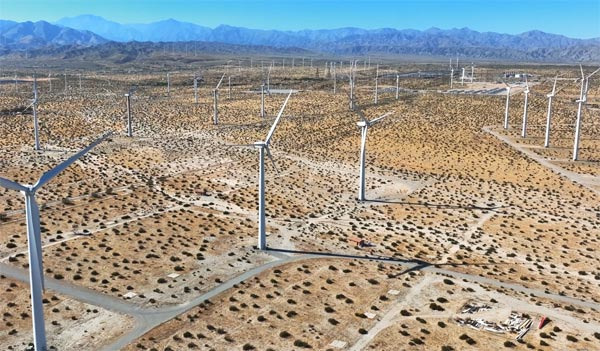
Behind the beautiful desert landscape of Palm Springs, there are several natural disaster risks.
While tornadoes are not a concern in this desert city, earthquakes, extreme heat, flash floods, wildfire smoke, and strong winds are hazards that residents should be aware of.
It is important to understand the desert natural disaster environment that you may not have experienced in Korea.
The greatest long-term risk is earthquakes. The San Andreas Fault runs just north of the city of Palm Springs.
The San Andreas Fault is California's largest active fault, stretching about 1,300 km, and earthquake experts identify the area north of the Coachella Valley as having a high potential for significant earthquakes. If the so-called "Big One" occurs, Palm Springs could be affected.
To prepare for earthquakes, it is essential to secure furniture, stockpile emergency water and food for at least three days, know the location of gas valves, and establish a family evacuation plan. When purchasing a home, consider whether to obtain earthquake insurance. California earthquake information can be found at earthquake.usgs.gov.
The second risk is extreme heat. In Palm Springs, summer daytime temperatures can exceed 110°F (about 43°C). During heat advisories and excessive heat warnings, outdoor activities should be limited to before 10 AM or after evening, and staying indoors without air conditioning can be dangerous. Leaving children or pets alone in a car can be life-threatening within minutes.
The city of Palm Springs operates cooling centers during extreme heat periods. Locations can be found on the city's official website (palmspringsca.gov) or at 211.org. The third risk is flash floods. Sudden heavy rain in desert areas can lead to flash floods, where asphalt or dry soil cannot absorb the water, resulting in a rapid influx of water. Avoid entering nearby canyons or low-lying areas during heavy rain and pay attention to authorities' Flash Flood Watch/Warning alerts.
The fourth risk is high winds. The Coachella Valley experiences strong winds as Pacific winds accelerate through the San Gorgonio Pass, and high winds frequently occur in the Palm Springs area. Particularly strong winds blow from fall to early spring, necessitating the securing of outdoor furniture or structures, and wildfire smoke can also flow into the Coachella Valley. Disaster alerts can be received via text notifications through the San Bernardino County AlertSBC system (sbcounty.gov/alertsbc).
 HomerunKing
 HoneyDreamer






 virex |
 vexon87 |
 seouljung |
 Well Done Sir |
 Vision XT |
 US Regional Information Local News |
 Famous Attractions in the United States |

 Sarah's Blog |
 Texas Real Estate Blog |
  U.S. Retirement Pension Information |
  Seattle - Emerald City |
  Texas Migration Story |
  Unknown Dog Walk blog |
  California Dreamer |
  Bearded Strawberry Smoothie |
  JESIKYEOALBA BLOG |
  Heart Ticker |
  Jellia Angel |
  Moo Tang Clan |
  Khan Film Blog Production |
  yenne |
  neroyo |
  Peter Pan Pet |
  solvix18 |
  Next Year, Let's Become Rich |
  Investment Campus Home Ownership |
  Yoyma |