

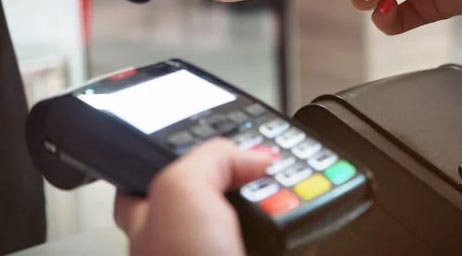
Every time you make a payment with a credit card, invisible money flows in various directions.
If you've ever wondered, "Who takes the card fees and where do they go?" take a light read.
Payment Fees (Interchange) – The Issuer's Pocket
• When a card is swiped at a merchant terminal, about 1 to 3% of the payment amount automatically goes to the 'issuer's share'.
• With this money, issuers fund rewards budgets like points, mileage, and cashback, and cover costs for fraud insurance and customer service operations.
Network Fees – Card Brands like Visa and MasterCard
• To put the Visa, MasterCard, or Amex logo on a card, a brand usage fee is charged.
• Although it's just a few cents per transaction, due to the sheer volume of transactions worldwide, it becomes a core revenue source for the networks. This money is used for system maintenance, hacking prevention, and expanding international payment networks.
VAN, PG, Acquirer Fees – Payment Infrastructure Operating Costs
• In Korea, VAN (Value Added Network) companies and PG (Payment Gateway) companies set up terminals and assist with settlements, while abroad, Acquirers (merchant banks) do the same.
• They operate with a per-transaction fee (around 0.05% to 0.3%) to maintain servers, install terminals, provide A/S, and run fraud detection solutions.
Merchant Fees (MDR) – The Combined Cost of These Three Types
• The actual 'card fees' that merchants bear is the sum of the above 1+2+3.
• If a small café pays 2%, approximately 1.5% goes to the issuer, 0.15% to the network, and 0.35% flows to PG/VAN.
Summary at a Glance
-
Consumer → Merchant Payment
-
Merchant → Transfers Fees to PG/VAN, Network, Issuer
-
Issuer/Network → Reinvests in Rewards, Systems, Security, etc.
-
Consumer Additional Fees (annual fees, interest, etc.) are used for issuer operations and risk management
Ultimately, behind the convenience of a 'single card' are various companies involved, each providing a range of services from security maintenance to reward distribution with the fees they receive.
Understanding these fee components makes it easier to choose a card that fits your spending patterns, so keep this in mind.







 Baguette Blog |
 Khan Film Blog Production |
 dermoon |
 hoosierdaddy |
 sun walker |
 Weekend Movie Blog |
 Beauty, Health, Lifestyle Blog |
 coloradoman |
 Superman Cat Blog |
 Victory 1988 |
  round1 |
  Way to easy |
  musicque |
  road98 |
  Churros Train Conductor |
  gleeful |
  Burbank Lee |
  Olivia's Blog |
  Bushing Around Life |
  Active |
  Cherokee Rose |
  Kor. Master |
  Holey Moley |
  Conflite Teacher |
  Hodong Prince Over Flex |
  Mist inn |
  citrus pop |
  Onion Ring |
  phoenixia |
  viewtop |