
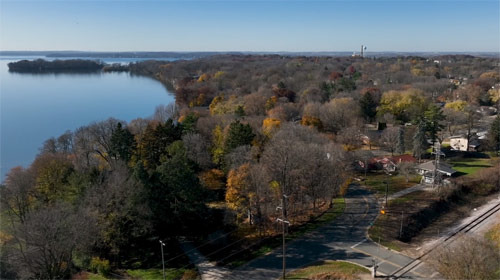
Before moving to Madison, I asked a friend if there were any natural disasters there, and they laughed and told me not to worry.
I thought it was just a way to reassure me, but living here, I can see that it's mostly true. Of course, it's not completely absent.
Wisconsin is indeed in the Midwest, so there are some natural phenomena. However, my honest impression is that it's much less dramatic compared to other states. You hardly have to worry about hurricanes or earthquakes here. Instead, knowing a few things can make life much easier. Compared to states like California, Florida, or Texas, Wisconsin is really quite calm.
Tornadoes are not completely absent in Wisconsin. Between 1991 and 2020, the average annual number of tornadoes in Wisconsin was 23. They occur most frequently in June. The worst day on record was August 18, 2005, when 28 tornadoes struck southern Wisconsin in one day. This is the highest number ever recorded in a single day in Wisconsin. Near Madison, an F1 tornado hit the western area in 2004.
That said, there's no need to be overly scared. When a tornado warning is issued, you can take shelter in a basement or an interior room of a building. Madison residents are already accustomed to tornado warning culture, so when the sirens go off, they act calmly. If you turn on the Wireless Emergency Alert setting on your smartphone, you can receive alerts automatically.
Heavy winter snowfall is also a real natural phenomenon. Wisconsin is one of the snowiest regions in the U.S. Between 1980 and 2024, there were 63 weather disasters in Wisconsin that caused over a billion dollars in damage, four of which were related to winter storms. During the North American blizzard in 2008, Wisconsin recorded significant snowfall. Winters in Madison can be long and harsh. When there's a lot of snow, roads can become slippery, causing delays in commuting. It's a good idea to replace your tires with snow tires or all-season tires before October. Keeping a shovel in your car should also become a habit. The first winter in Wisconsin can be longer and colder than expected, but once you adapt, the beauty of Madison in the snow is something special.
Flooding can vary by area. Between 1980 and 2024, there were five flood-related disasters in Wisconsin that caused over a billion dollars in damage. Madison is surrounded by two large lakes, so low-lying areas near the lakes are at risk of flooding during heavy rain.
When looking for properties, it's good to check if they are in low-lying areas near the lakes and to refer to FEMA flood maps. You don't have to worry about earthquakes. Madison is far from major fault lines, so the risk of earthquakes is very low. Being an inland city near the Great Lakes, hurricanes or tsunamis are also not a concern, as it's over a thousand miles from the ocean.
In summary, the risk of natural disasters in Madison is relatively low compared to other parts of the U.S. You should be cautious about tornadoes around June and prepare well for heavy snowfall in winter. There's no need to worry about hurricanes, earthquakes, or tsunamis, and you can reduce the risk of flooding by simply checking if you're in a low-lying area.
Disaster preparedness requires knowledge. Emergency evacuation information provided by the Wisconsin state government and Dane County Emergency Management can be accessed online for free. Once I learned about it, it became even clearer that Madison is a city with great living conditions. Preparing for winter clothing is a more realistic preparation than worrying about natural disasters.
 silverfoxwalker1906







 American Hardcore Band |
 Rice Shop Uncle BLOG |
 Baguette Blog |
 solvix18 |
 novapixel |
 winter |
 My Love Bambino Alaview |
 marketbox |
 Wenda |
 Silent Sea |
  West Kong |
  Franco Family |
  coloradoman |
  lumora |
  Valley Bang |
  pravix22 |
  Cohesive Kong |
  werehere |
  problemo |
  galaxy88 |
  breezelove |
  Minnesota Sonata N |
  hazelnut |
  Korean News American Blog |
  AH LALA |
  Savion |
  pintos |
  Good Good |