
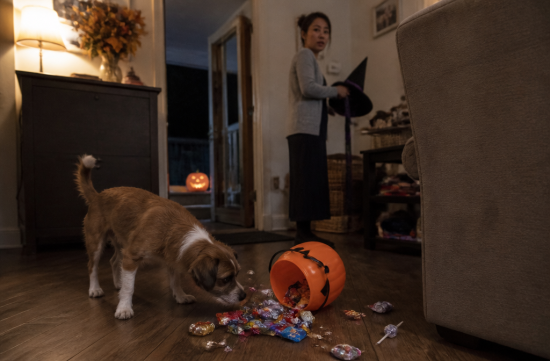
On Halloween night, the neighborhood alleys take on a strangely different face. Jack-o'-lanterns light up every porch piled with fallen leaves, and little witches and pirates pass by shaking their candy buckets.
However, this magical night can tell a completely different story for the dog inside the house. The pile of candy spilled on the living room floor is no different from a cluster of poisonous mushrooms in the woods for a dog.
The numbers are quite surprising. According to the Pet Poison Helpline, which provides 24-hour pet poisoning consultations, calls increase by 12% during Halloween week, making it the busiest time of the year.
What people worry about the most is chocolate. Chocolate contains theobromine and caffeine, which dogs cannot process as quickly as humans.
Not all chocolates are equally dangerous. The highest risk comes from baking chocolate and cocoa powder, followed by semi-sweet, dark, and milk chocolate.
White chocolate has very little theobromine, so cases of poisoning are rare. However, it is high in fat and can definitely cause an upset stomach.
Symptoms of chocolate poisoning include vomiting, diarrhea, excessive thirst, frequent urination, restlessness, and rapid or irregular heartbeats. In severe cases, tremors and seizures can occur.
The problem is that these symptoms can appear several hours later. This is why a dog might sneak a bite at night and only show signs of trouble in the morning.
Personally, I find xylitol even scarier. It is a sweetener found in sugar-free gum, mints, keto candies, diabetic-friendly low-sugar candies, and some protein bars.
These days, many households keep sugar-free snacks for adults in their bags for health reasons. This is why it's not enough to just put away the kids' candy buckets.
According to VCA Animal Hospitals, xylitol is quickly absorbed into a dog's body, causing a rapid release of insulin. As a result, blood sugar can drop dramatically within 30 minutes to 2 hours after ingestion.
The FDA has also warned that xylitol can cause hypoglycemia, seizures, and liver failure in dogs, potentially leading to death. The more consumed, the greater the risk of liver damage, so it should never be taken lightly.
When checking labels, simply looking for the word xylitol is not enough. Ingredients like birch sugar, birch extract, and wood sugar indicate the same substance.
It's like hiding under a different name, making me think of a witch disguised in a fairy tale. There's probably no better metaphor for Halloween than this.
Don't forget about raisins either. They can be found in unexpected places like chocolate-covered raisins, trail mix, and oatmeal raisin cookies.
The Pet Poison Helpline explains that there is no known safe amount of raisins for dogs. It's best not to trust the idea that a few are okay.
Sometimes the packaging itself can be a problem. Swallowing foil or plastic wrappers, or lollipop sticks can lead to intestinal blockages.
Signs of a blockage may include vomiting, decreased appetite, lethargy, and straining to defecate. At this point, imaging tests like X-rays may be necessary, and surgery could be required.
Eating a large amount of candy high in fat and sugar can lead to pancreatitis. Symptoms may not appear until 2 to 4 days later, so if your dog hasn't eaten for a few days, it's worth considering what they might have consumed.
It's also worth taking a look at decorations. The liquid inside glow sticks can irritate the mouth and cause drooling, and this consultation is more common for cats.
It's best not to place candles from jack-o'-lanterns at nose and tail height for dogs. Just like you would check the wind direction before starting a campfire in the woods.
So what should you do if your dog has already eaten something? First, it's a good idea to keep the packaging to note what, how much, and when they ate.
Then, call your veterinarian or a poison control hotline immediately. The ASPCA Animal Poison Control Center can be reached at 888-426-4435, and the Pet Poison Helpline at 855-764-7661, both available 24/7.
Both services may charge a consultation fee. The Pet Poison Helpline states that a one-time fee includes follow-up consultations with a veterinarian.
Avoid trying to induce vomiting at home using methods you found online. Both organizations advise against inducing vomiting without professional guidance.
Symptoms and treatments can vary greatly depending on the dog's weight and the amount ingested. Ultimately, it's best to make decisions in consultation with a veterinarian.
If it were me, I would handle this Halloween like this: When the kids come back, I would immediately put the candy buckets on a high shelf or in a lidded container, and keep sugar-free snacks stored separately.
And I would stick two phone numbers on the refrigerator door. It's like casting a little spell to ensure that the magical night doesn't turn into a night in the emergency room.
 SilverCloud96
 MintStar




 Anjollinya Blog |

 Kitchen Ideas |

 Spaghetti Flying Religion |
 Giant Squid and Sweet Potato Soup |

 choi family |

 andrew park |

 Living in New Jersey blog |

 springw |

 forestcloud |
 forestbon |
 ssome |
 skykong |
 Shining Our Own World |
 gardener 007 |
 golfmaster |
 Nanana Nanana Nanana |
 Who's watching? |
 endone |
 RockStar |
 Casa Mia |
 You Only Live Once |
 Hardworking CPA |
 Joyce 77 |
 Runner Kim |
 My Town My Way Blog |
 My Miami Stories |
 Entip |
 Tony Park |
 Jean Claude Bundang Blog |
 DJ DC BLOG |