
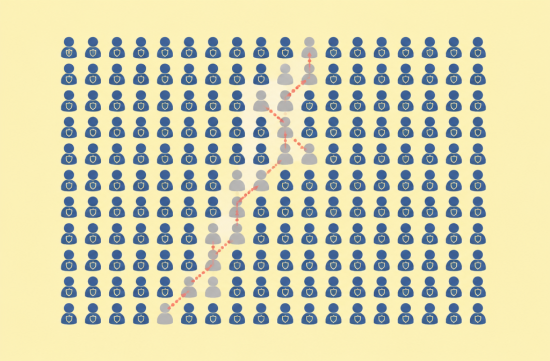
Recently, a question popped up on our company Slack: "How can I check if I've had the MMR vaccine twice?" At first, I laughed it off, but after looking into the numbers, it became clear this is no laughing matter.
Philadelphia has been issuing continuous alerts for measles exposure. On September 11, a potential exposure was announced at CHOP, the Children's Hospital of Philadelphia.
The areas identified as exposure sites include the neonatal intensive care unit, the hospital atrium, and the main cafeteria. It was particularly alarming since these are places where babies are present.
Just a few days later, on September 13-14, there was also a notice that an infected person had passed through Philadelphia International Airport (PHL). Earlier this year, there were exposure alerts for PHL and 30th Street Station as well.
So, what is the situation across Pennsylvania? Let's summarize based on an update released by the state health department around October 14.
This year, there have been 1,222 confirmed cases across 42 counties, with 225 hospitalizations.
There have been 5 officially confirmed measles-related deaths. Additionally, one death reported in Franklin County is still under investigation.
As of mid-September, the total confirmed cases in the state were 767. In just over a month, that number has increased by more than 400.
Now, what does the title "1991" refer to? There are two overlapping contexts.
First, nationwide, according to CDC data as of October 9, there have been 4,080 cases, the highest number since 1991. Reports indicate that over a quarter of these cases originated in Pennsylvania.
Second, in August, two infants died in Lancaster County, and the state health department stated that this marked the first measles-related death in Pennsylvania in 35 years. Counting backward, that brings us right to around 1991.
The number of 225 hospitalizations should not be taken lightly. Measles can lead to complications such as pneumonia or encephalitis, making it particularly dangerous for infants and immunocompromised individuals, as warned by the CDC.
It's also worth noting that federal and state counts can differ. There have been multiple reports indicating that the CDC's website reflects only a portion of the deaths in Pennsylvania.
This outbreak began in April in the western region of Philadelphia. As of early October, Lancaster County had the highest number of cases at 391, with Mifflin County also surpassing 100 cases.
The answer to why this is happening here ultimately lies in vaccination rates. Measles typically requires a vaccination rate of 95% to achieve herd immunity.
However, state data shows that the MMR vaccination rate for kindergarteners in Lancaster for 2025 is only 89%. For high school seniors, it is 95%.
89% might seem relatively high, but measles is highly contagious, and even a small percentage of unvaccinated individuals can lead to outbreaks. This is the real reason measles is so concerning.
According to the CDC, a person can spread the virus from four days before to four days after the rash appears. This means that transmission can begin even before someone realizes they have measles.
Initial symptoms include high fever, cough, runny nose, and red eyes, which can easily be mistaken for a cold. After a few days, a rash typically spreads from the face downwards.
The vaccine's effectiveness is 93% after one dose and 97% after two doses, according to CDC standards. The standard schedule is one dose at 12-15 months and a second dose at 4-6 years.
For those who grew up in Korea, there may not be records of vaccinations in English. I personally had quite a bit of trouble with this when I had to submit school documents in the past.
If your records are unclear, you can ask your doctor whether to get an antibody test or just receive an additional vaccination. The appropriate choice depends on age and health status, so be sure to consult with a doctor or pharmacist.
If you think you may have been in an exposure location, health authorities advise not to go directly to the hospital if symptoms develop but to call first. This is to prevent further spread in the waiting room.
You can check the latest numbers and exposure locations on the state health department's measles dashboard (pa.gov/measles) and the Philadelphia Department of Health announcements. Often, this information is available faster than in the news.
Personally, I don't want to view this issue as a political battle. Regardless of whether we should mandate vaccinations, the data is quite clear.
I don't expect the government to dictate everything, but I believe it is essential for the government to quickly release accurate information. The discrepancies between federal and state numbers can be quite frustrating.
The MMR vaccine not only protects against measles but also against mumps and rubella. The CDC recommends that adults without proof of vaccination receive at least one dose, and the requirements are stricter before international travel.
Ultimately, the most practical step is to check your own vaccination records. Many hospital patient portal apps have vaccination records organized, so you might find it quicker than expected.
If I were you, I would take some time this weekend to organize my family's vaccination records. Especially if you have a baby at home or plan to visit Korea at the end of the year, don't delay.
 VelvetValley97
 HappyToo213

 The Emperor Must Grow |

 squidogame |
 daddyyo |

 Top Beaches |
 Solo Yolo |

 DelphiaMo |


 Northeastern |

 averagestudent |

 Texas Migration Story |

 American General Knowledge Expert |
 ssome |
 skykong |
 Shining Our Own World |
 gardener 007 |
 golfmaster |
 Nanana Nanana Nanana |
 Who's watching? |
 endone |
 RockStar |
 Casa Mia |
 You Only Live Once |
 Hardworking CPA |
 Joyce 77 |
 Runner Kim |
 My Town My Way Blog |
 My Miami Stories |
 Entip |
 Tony Park |
 DJ DC BLOG |