
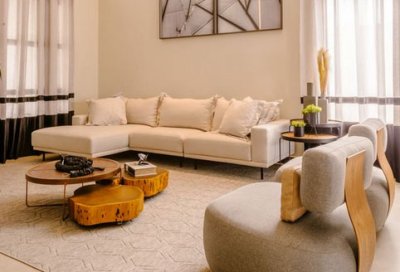
Every summer, a familiar scene unfolds in Ann Arbor. As the University of Michigan's semester changes, the prices on rental listings noticeably rise. Many people are often surprised to see that the price of a one-bedroom apartment, which was around $1,600 last year, has now surpassed $1,800. This conversation comes up every August without fail.
However, when you actually look for home prices, the story is a bit different. According to Zillow, the median home value in Ann Arbor as of 2026 is $489,157, which is a 3.6% increase from the previous year. This trend is not as sharply rising as rent prices. Here lies the clue that distinguishes between renting and buying.
In real estate, this relationship is viewed through a metric called the price-to-rent ratio. Simply put, it calculates how many times the cost of buying a home is compared to a year's worth of rent. In Ann Arbor, the rent for a one-bedroom is $1,650 according to RentCafe. When calculated against the average rent of $2,058 for all units, this results in an annual cost of about $24,696, leading to a ratio close to 20 times.
Commonly referenced benchmarks in the industry suggest that if this ratio is below 15, it leans towards buying, while if it exceeds 20, it tends to favor renting. Of course, this is not an absolute rule but merely a guideline. Ann Arbor falls around the 20 mark, indicating a market that slightly favors renting over buying. The unique demand for rentals in a college town also contributes to pushing this ratio higher.
The differences become even more pronounced when looking at room sizes. According to RentCafe, studios rent for $1,725, one-bedrooms for $1,650, two-bedrooms for $1,973, and three-bedrooms for $2,782. As families seek larger units, the rental burden feels significantly heavier compared to buying.
That said, renting is not the only answer. Assuming a 20% down payment on a $489,157 home, the loan principal would be about $390,000. Applying recent interest rates, the monthly mortgage payment, including property taxes and insurance, would range from $2,500 to $2,700. Compared to the rent of $2,058, this means an additional $400 to $600 each month.
Whether you can afford this difference and how long you plan to stay are key factors in making a decision. Given Ann Arbor's college town nature, many families move to different areas within 3 to 5 years. If you expect a short stay, considering closing costs and selling expenses, renting may appear to be the more realistic choice. Additionally, renting means you won't have to worry about maintenance costs for the roof or boiler. It's also worth considering the option of investing the lump sum you would use for a down payment elsewhere.
There are also important considerations before making a judgment based solely on numbers. While renter's insurance is sufficient when renting, transitioning to buying requires separate home insurance and closing costs. It's easy to overlook these one-time expenses when only comparing monthly rent and mortgage payments.
Conversely, if you plan to raise your children in the Ann Arbor public school district, the conversation changes. The school districts preferred by Korean families tend to consistently receive high ratings on platforms like GreatSchools, so if you're considering a long-term stay, it may be worth factoring in the potential for building equity through buying, even if it means paying an extra $400 to $600 each month.
If you're coming from out of state, you should also be aware of Michigan's unique property tax system. Michigan offers a Homestead Exemption that lowers property taxes on your primary residence, so budgeting based on property tax rates from your previous state may lead to discrepancies. Tax rates vary by county, so be sure to check the actual property address for confirmation.
Ultimately, what distinguishes renting from buying in Ann Arbor is not just how much rent has increased this summer. You need to consider whether you can prepare a down payment, how long you plan to stay, and whether long-term residency is a factor, including school districts. This article does not constitute investment or legal advice, and it is recommended to consult with a professional before making any actual agreements.
 TOUCHE
 CocoaHunter





 Sugar Cream Door Bulletproof Noodles |
 urbanmint |
 |
| 
 Premium Gas Camp |
 CA Real Estate |
 saffronroute |
 crumb |
 marydock |
  UCLA Captain |
  lattecu |
  dynamite |
  frostingline |
  Hakuna Matata |
  Your Curiosity Resolved |
  Way to easy |
  Chino Min |
  nexabyte |
  moonshine 7 |
  Sunset Oregon |
  victoria 68 |
  golfmaster |
  Montgomery Mom |
  squidogame |
  Noodle Noodle |
  Rhode Island Good People |
  Big North |
  Famous Attractions in the United States |
  Jin Soo V |