
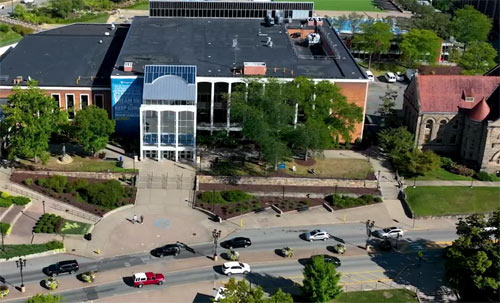
One of the first things to adapt to while living in Morgantown is the city's unique transportation structure.
With a surprisingly complex road system for a small town and the PRT system that is unlike anything else in the world, it can be overwhelming at first, but once you understand it, a quite attractive urban mobility environment unfolds. I've organized Morgantown's transportation structure with a bright and creative perspective.
The key to regional mobility is I-79 (Interstate 79). I-79 runs north-south through Morgantown, connecting to Pittsburgh to the north and Clarksburg and Charleston to the south. It's about 70 miles to Pittsburgh, taking approximately 1 hour and 10 minutes to 1 hour and 30 minutes by highway. US-119 is another major arterial road that connects Morgantown's downtown with nearby areas. The dispersed structure of the WVU campus and the hilly terrain mean that major roads can become severely congested during rush hour or on WVU football game days. If you have plans on game days, it's essential to allow plenty of time for travel.
The most unique transportation system in Morgantown is the PRT (Personal Rapid Transit). This system, which first opened in 1975, operates 67 small electric vehicles along an 8.7-mile dedicated guideway. It connects five stations: Walnut, Beechurst, Engineering, Towers, and Health Sciences, with about 12,000 riders daily.
Holders of a WVU ID card can use it for free, making it a primary mode of transportation for students connecting the downtown campus, Evansdale campus, and medical campus. Analysis suggests that if bus service were to replace the demand met by the PRT, at least 34 buses would be needed, highlighting the system's significant role. In 2024, the system is set to receive $6.4 million in maintenance funding from the U.S. Department of Transportation for improvements.
The PRT operates on weekdays during the semester from 6:30 AM to 10:15 PM, and on Saturdays from 9:30 AM to 5 PM. However, it has limitations as it cannot travel outside the five stations, and service is reduced during non-semester periods. While it is optimal for travel directly related to WVU, buses or personal vehicles are necessary for getting around other areas of the city.
Public transportation also includes bus routes operated by the Mountain Line Transit Authority. This service connects Morgantown's downtown with surrounding areas, primarily used by students and seniors without cars. Megabus offers round-trip service twice a day to Pittsburgh and Washington D.C. at a low cost, but the limited schedule may not suit urgent travel needs.
There are also winter traffic precautions to consider. Due to the hilly terrain, some roads may be closed when it snows. It's safest to avoid travel in areas with steep declines and many curves until snow removal is completed. Among parents dropping off their children at school, there is active community communication sharing real-time traffic information on snowy days. Preparing winter tires and allowing extra time for travel are basic rules for winter life in Morgantown.
The most critical traffic issue in Morgantown is the congestion on days with major WVU events. On football game days, the entire city can become gridlocked, so if you have plans on those days, adjusting your departure time or route is essential. However, by actively utilizing the PRT and buses, you can expand your range of movement without worrying about parking, and you may find the unique transportation culture of this city quite appealing.
 PizzaDrone
 MyLoveBambino


 Casa Mia |
 TEXAS Fishing Boat |
 Study Abroad Life Know-How Tips |
 pravix22 |
 American Hardcore Band |
 silver |
 Gomex Korea |
 Freedom Yea |
 Bridgo |
 Always Dreaming of Big Success |
  NEXT ROUND |
  Helpful Life Stories |
  Healthy Local Fresh Information |
  molten |
  Way to easy |
  intact |
  happy 9 |
  Park M.Y. |
  tredon |
  Poppin News |
  metsoo |
  dewyo |
  Asparagus Blog |
  dorange |
  hiddenkong |
  some fame |
  Godory Life |
  Lime Juice |