

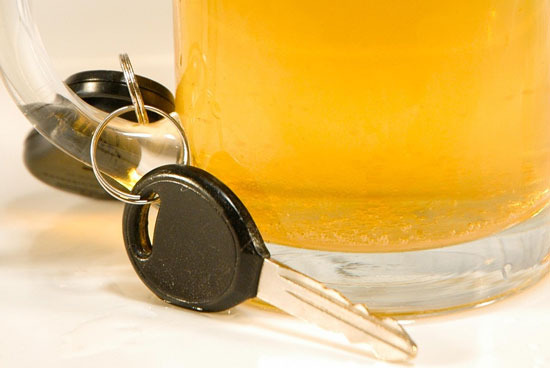
According to California law, a driver can be charged with driving under the influence (DUI) if they operate a vehicle while under the influence of alcohol or drugs, or if their blood alcohol concentration (BAC) exceeds the legal limit.
Most adult drivers are considered in violation when their BAC is 0.08% or higher, while commercial vehicle drivers face stricter standards, with penalties applying at 0.04% or higher. For drivers under 21, the 'Zero Tolerance' principle applies, meaning any detectable alcohol level of 0.01% or higher can result in penalties.
Additionally, California's DUI laws encompass all substances that impair driving ability, including prescription medications, over-the-counter drugs, and illegal substances.
• The 'Implied Consent Law' is enforced more strictly. Refusing a breath or blood test will result in an immediate suspension of the driver's license.
• Ride-share drivers for services like Uber and Lyft, as well as some commercial drivers, will face lower BAC thresholds and increased scrutiny.
• Penalties for repeat offenders have been intensified, leading to longer license suspension periods, increased jail time, and broader mandatory installation of ignition interlock devices (IID).
Definition of DUI in California
According to the California Vehicle Code, it is illegal to operate a vehicle with the following BAC levels:
-
0.08% or higher: General drivers aged 21 and over
-
0.04% or higher: Commercial vehicle drivers
-
0.01% or higher: Drivers under 21
California's DUI laws include not only alcohol but also drugs. It is illegal to drive under the influence of illegal drugs or if one's driving ability is impaired by substances such as:
-
Overdosing on medications containing alcohol (e.g., cough syrup)
-
Driving under the influence of prescribed medications
-
Taking over-the-counter medications that impair concentration or judgment
A DUI conviction will remain on a driver's record for up to 10 years.
Understanding Your DUI Penalties
Not all DUI penalties are the same. The severity of penalties varies based on the driver's age, type of license, and prior offenses. Major penalties include:
-
License suspension under Admin Per Se
-
License suspension due to criminal proceedings
-
Fines
-
Jail time or community service orders
-
Completion of DUI education programs (DUI School)
-
Mandatory installation of ignition interlock devices (IID)
-
Submission of SR-22 insurance certificate
Admin Per Se Penalties
Admin Per Se license suspension is triggered immediately when a driver refuses or fails a chemical test (breath, blood, or urine test) at the scene.
This action is separate from criminal prosecution and is automatically applied if the BAC exceeds the legal limit or if the test is refused.
The police will issue an Order of Suspension at the scene and may provide a temporary driving permit if necessary.
Subsequently, the police report, the driver's license, and other relevant documents will be sent to the DMV, which will review them to determine whether to uphold the suspension.
If a driver believes the suspension is unjust, they can request a hearing.
If a chemical test is refused in a suspected DUI situation, the Admin Per Se license suspension period will be significantly longer.
Drivers Under 21 Years Old
-
First offense: 1-year license suspension
-
Second offense: 2-year license revocation
-
Third offense: 3-year license revocation
Drivers 21 Years Old or Older
-
First offense: 1-year license suspension
-
Second offense: 2-year license revocation
-
Third offense: 3-year license revocation
Additionally, if a driver has a BAC of 0.15% or higher, drives under the influence with a child under 14 years old, or causes injury in an accident, the criminal penalties are much more severe.
Fact Summary:
-
The Admin Per Se system was actually implemented in California in 2011.
-
The BAC limits (0.08%, 0.04%, 0.01%) are specified in California Vehicle Code §23152 and §23136.
-
It is true that DUI records remain on driving records for 10 years, and DMV administrative suspensions and court criminal penalties are processed separately.
-
The above information remains valid as of 2025, with the same detailed procedures applied according to state laws and DMV regulations.
California's DUI laws are divided into three criteria.
General drivers aged 21 and over are illegal with a BAC of 0.08% or higher, commercial drivers at 0.04%, and drivers under 21 at 0.01% or higher. It is not just alcohol that is included; drugs are also considered, and medications containing alcohol, prescription drugs, and even over-the-counter cold medications can be deemed DUI if they impair driving ability.
A DUI record remains on your driving record for 10 years.
If a reoffense occurs during this period, enhanced penalties will apply. For example, a first offense may result in fines, a short license suspension, a DUI school order, and the installation of an IID in the vehicle. In the case of a reoffense, criminal penalties are intensified, leading to possible jail time or community service orders, and a third offense may be classified as a felony, resulting in larger fines, longer license suspensions, and even imprisonment.
The license suspension process under the Admin Per Se system is also very specific.
California implemented the "Admin Per Se" system in 2011, allowing police to immediately seize the license of a driver suspected of DUI. The license is sent to the DMV and held until the specified suspension period ends or until a hearing determines that the charges are unfounded. If a police officer stops a driver suspected of DUI and requests a test, but the driver refuses or exceeds the limit, the police will immediately seize the driver's license and issue an Order of Suspension. A temporary driving permit may also be issued at the same time.The suspension periods also vary by age.
For those under 21, the first offense results in a 1-year suspension, the second offense leads to a 2-year revocation, and the third offense results in a 3-year revocation. The same applies to those 21 and older, with the first offense resulting in a 1-year suspension, the second offense leading to a 2-year revocation, and the third offense resulting in a 3-year revocation. Additionally, if a test is refused or if a high BAC (e.g., 0.15% or higher), driving with a child under 14, or causing injury in an accident occurs, the criminal penalties are much more severe.
California also requires DUI-related drivers to submit an SR-22, a 'high-risk driver insurance certificate.' Additionally, an IID must be installed in the vehicle to start the engine, which is mandated for a specified period.







 Weekend Movie Blog |
 Beauty, Health, Lifestyle Blog |
 coloradoman |
 Superman Cat Blog |
 Awesome Blog |
  forevergee |
  festival |
  manchester |
  constant |
  Leapfrog Move |
  vibranto |
  Tora Tora |
  yellowbutter |
  Dolly |
  US Embassy |
  NYC saladbar |
  Finding Superfoods |
  lightyear |
  song bang |
  vexomo |
  Indiana Jones |
  meloncat |
  novapixel |
  mortrix |
  Esther 1983 |