
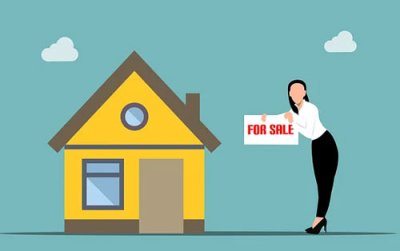
Let's follow the situation of a family that has lived in Pasadena for a long time. Their children are all independent, and the couple is left in a four-bedroom single-family home. As the costs of maintenance and upkeep become burdensome, they begin to contemplate whether to sell the house and move to a smaller condo or to maintain their current home while leveraging their equity for cash.
Starting with the budget, according to Zillow, the average home value in Pasadena in July 2026 is $1,206,740. Downsizing to a home of this size could yield a significant profit, but they must also consider the costs of moving and settling in, as well as the emotional burden of leaving a familiar neighborhood.
On the other hand, choosing a reverse mortgage allows them to continue living in their current home without moving while accessing some of their equity as funds. This structure allows homeowners aged 62 and older to borrow against the value of their home, receiving funds from a lender in the form of a lump sum, monthly payments, or a line of credit. Instead of making monthly repayments, the principal and interest are settled when the home is sold, the homeowner passes away, or the home is no longer their primary residence.
The reason this family is exploring reverse mortgages further is due to the flexibility of the payment options. They can choose between a lump sum, monthly payments, or a line of credit, and if they opt for a line of credit, the unused portion increases over time. Downsizing provides a lump sum at the moment of sale, which is different from this kind of flexibility.
The HECM, insured by the Federal Housing Administration, is the only type of reverse mortgage backed by the government. Its non-recourse structure means that if the home value falls below the loan balance, heirs are not required to pay the excess, and the absence of monthly repayment obligations is often cited as an advantage compared to downsizing.
The amount they can receive depends on the applicant's age, the home's value, and the interest rate at the time of application. The older the applicant, the higher the home value, and the lower the interest rate, the larger the loan limit. In areas like Pasadena, where home values are high, this structure often works to their advantage.
However, the costs tell a different story. When combining origination fees, initial mortgage insurance premiums in the 2% range, and closing costs, the initial expenses are higher than those of a traditional mortgage. Over time, as equity decreases, the assets left for children diminish, and if property taxes and insurance premiums are not continuously paid, there is a risk of default. Downsizing frees them from these burdens, but they must accept the significant change of moving.
During the consultation process, a financial capability assessment was conducted, reviewing credit history, income, and expenses. They were informed that if there have been any past due tax payments, a portion of the loan could be set aside for property taxes and insurance. This procedure would not have been necessary if they were downsizing, but it was explained as a measure to reduce future default risk.
California's effective property tax rate averages around 0.71%, but this is an average that includes existing owners who benefit from Prop 13's lower rates. Recently purchased homes or those pending reassessment typically face rates between 1.1% and 1.3%. Moving to a less expensive home through downsizing could reduce property tax burdens, while choosing a reverse mortgage means they must continue to bear the property taxes of their current home.
With 16.5% of California's population aged 65 and older, the number of households at this crossroads is expected to continue to rise.
If one spouse passes away first, the surviving heir will have to choose between selling the home to settle the loan, paying off the balance to keep the home, or transferring the home to the lender. Be cautious of advertisements that promise to give away homes for free or pressure to act quickly, as these may be scams.
Before applying for an HECM, they must undergo mandatory counseling with a HUD-approved counseling agency. There is no definitive answer as to whether downsizing or a reverse mortgage is the right choice. It is advisable to take time to assess the situation through counseling and family discussions.
HUD counseling can be conducted in person, over the phone, or online. After completing the counseling, they will receive a certificate, which is required to begin the loan application process.
 TicDoctor
 LunaDreamer








 Sugar Cream Door Bulletproof Noodles |
 urbanmint |
 |
| 
 Premium Gas Camp |
 CA Real Estate |
 Various Knowledge and Information in the USA |
 Olivia's Blog |
 U.S. Weather Bureau News |
 Cali M Law Group |
 horizon |
  Nanana Nanana Nanana |
  victoria jung |
  Kkikki Ppappa Shout Out Loud |
  Lululala |
  Toaster Pizza Magic Show |
  nortrix |
  Mau Nui |
  novapixel |
  fixed |
  AL ALASKA |
  amola |
  History Repeats Itself |
  Doori Ark |
  Rainbow Bridge to the Sky |
  Sunny Fullerton |
  GOGO SING |