

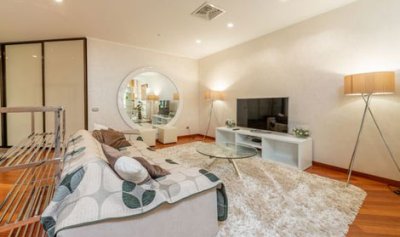
A family preparing to move to Kansas City, Kansas, was considering whether it would be better to live in Missouri or Kansas, and whether to buy or rent. With these two questions overlapping, their decision was continually postponed. In such cases, it helps to go through the numbers one by one to clarify the situation.
It is helpful to organize the items to check in order. First is the level of purchase prices and rent, second is the recent trends, and third is one's budget and duration of stay.
The median home value in Kansas City, Kansas, is $198,195. This is only a 1.0% increase from a year ago. This data is based on Zillow as of March 31, 2026. In contrast, rental prices have fluctuated significantly. According to Zumper, the average rent is $1,225, which is an 11% increase compared to the previous year. This data is from July 2026. According to RentCafe, the level is also around $1,192.
While purchase prices are stable, rental prices have jumped by double digits, which is a characteristic of this area. This situation may be a burden for those renting, but conversely, it can be seen as a relatively favorable signal for those considering buying.
Let's check the price-to-rent ratio. This indicator shows how many years of rent correspond to the current home price by dividing the purchase price by the annual rent. In Kansas City, dividing $198,195 by the annual rent of $14,700 gives a ratio of 13.5. Typically, a ratio below 15 indicates that buying is often more advantageous, and 13.5 is below that threshold.
Even when converted to monthly payments, a similar conclusion arises. As of August 20, 2026, the national average for a 30-year fixed mortgage rate is 6.65%, according to Freddie Mac PMMS. Assuming a 20% down payment, purchasing a home priced at $198,195 would result in a principal and interest payment of approximately $1,020 per month. This is actually lower than the current rent of $1,225. Even when adding property taxes and insurance, the total may be similar to or not significantly different from the rent.
- Can you prepare a 20% down payment?
- Do you plan to stay in the area for more than three years?
- Does the current mortgage rate result in a monthly payment similar to or lower than the rent?
If you can answer yes to all three questions, it is currently more favorable to consider buying. Conversely, if you lack a down payment or plan to stay for a short period, it may be safer to save more funds rather than rush into buying, even if rental prices are rising.
Closing costs should also be factored into the calculations. Typically, these range from 2% to 5% of the purchase price, so based on $198,195, an additional $4,000 to $10,000 may be needed. When adding this cost to the 20% down payment of about $40,000, the total amount needed may seem large, but Kansas City has relatively lower purchase prices compared to other major cities, making the down payment burden less significant in this area.
If a Korean family is also considering school districts, it is worth noting that some areas in Kansas receive good ratings from GreatSchools. However, school district boundaries change frequently, so it is advisable to check the assigned school for the specific address before purchasing. If moving from Missouri, it is also important to note that the property tax rates and tax structures differ in Kansas.
From an investor's perspective looking for rental income, this area has relatively high rental prices compared to purchase prices, which can result in favorable conditions for calculating rental yields. While this is attractive to investors, it is also important to consider that rental income can vary significantly based on vacancy rates and management costs. It is safer to check local rental prices and vacancy periods separately before making a purchase.
This article is not investment or legal advice, and it is recommended to consult with a professional before making any actual contracts.
 KickBBQ
 LeafBlog






 Sugar Cream Door Bulletproof Noodles |
 urbanmint |
 |
| 
 Premium Gas Camp |
 CA Real Estate |
 business life |
 US Regional Information Blog |
 Kansas City Representative Singer |
  UCLA Captain |
  lattecu |
  dynamite |
  frostingline |
  Hakuna Matata |
  Your Curiosity Resolved |
  Way to easy |
  Chino Min |
  nexabyte |
  moonshine 7 |
  Sunset Oregon |
  victoria 68 |
  golfmaster |
  Montgomery Mom |
  squidogame |
  Noodle Noodle |
  Rhode Island Good People |
  Big North |
  Famous Attractions in the United States |
  Jin Soo V |