
It has been nearly two weeks since daylight saving time ended. This year, we turned the clocks back one hour at 2 AM on Sunday, November 1.
These days in the Buffalo area, the sun sets before 5 PM. When the streetlights come on during my commute home, it feels like the day has been stolen.
However, for families caring for parents with dementia, this is more than just a feeling. As dusk approaches, many become suddenly anxious, searching for their shoes and repeatedly asking the same questions.
This is commonly referred to as sundowning. It describes the confusion and agitation that starts in the late afternoon and can continue into the evening or night.
The exact cause is still unknown. However, experts agree that fatigue, changes in light, and disruptions to the body's internal clock can exacerbate the symptoms.
Therefore, this time of year, when the clocks are set back an hour, can be particularly challenging. The body is still operating on the old schedule, while outside it gets dark an hour earlier.
After hearing stories from others struggling with this issue, I looked into resources from the National Institute on Aging (NIA) and the Alzheimer's Association. There are actually quite a few strategies that can help.
The first is to get plenty of light during the day. It's recommended to open the curtains wide in the morning and take a short walk if the weather permits.
Receiving bright light during the day helps reset the internal clock and can improve nighttime sleep. It's even better when combined with light exercise like walking.
November in Buffalo typically means gray skies, so this isn't as easy as it sounds. Still, it's said that even on cloudy days, outdoor light is much brighter than indoor lighting, so I encourage you to step outside briefly, even just at the front door.
The second strategy is to keep the home well-lit before sunset. If you scramble to turn on the lights after it gets dark, shadows and reflections can actually increase anxiety.
Many homes turn on indoor lights and close the curtains before the sun completely sets. This way, they minimize the moments when it gets dark outside.
The third is to maintain a consistent daily routine as much as possible. Keeping wake-up, meal, activity, and bedtime schedules similar each day is essential.
Right after daylight saving time, it's often recommended to adjust meal or medication times gradually over several days rather than all at once. Be sure to consult with the prescribing doctor about medication timing.
The fourth is to create a calm evening environment. According to NIA resources, noise from the TV, multiple conversations, and clutter can increase confusion.
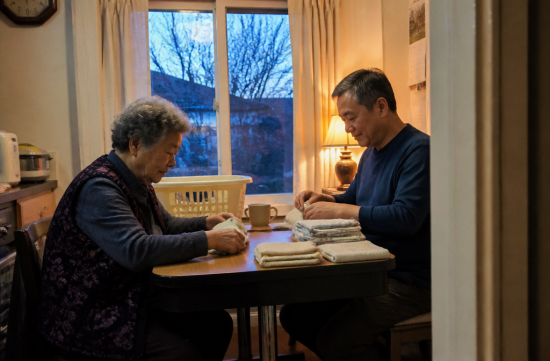
Engaging in simple tasks together during dusk can also be helpful. Familiar activities like folding towels, trimming bean sprouts, or looking at old photos are sufficient.
The fifth is to limit caffeine and sugary foods to the morning. It's advised to have a light dinner a bit earlier and to shorten late afternoon naps.
Many Korean seniors have a habit of enjoying a cup of mixed coffee in the afternoon. Switching to decaf or barley tea could be a good start.
Finally, when symptoms arise, avoid trying to reason with them. Instead of insisting, "This is home," it's better to listen calmly to their worries and redirect their attention elsewhere.
If these strategies don't work, it's important to consult a doctor or pharmacist. Symptoms in the evening can worsen due to pain, infections, or medication side effects.
It's also a significant issue when caregivers become exhausted. A helpful program to know about is the Medicare GUIDE model.
GUIDE is a dementia care demonstration project starting on July 1, 2024, and running for eight years. If eligible, families can receive up to $2,500 per year to cover respite services.
However, there are conditions. You must have a dementia diagnosis and be enrolled in Original Medicare with Part A and B; Medicare Advantage, hospice, and long-term care residents are not eligible.
Respite support is only available for those with moderate to severe dementia who have family caregivers. You can check for participating organizations on the CMS website map.
The Alzheimer's Association Western New York chapter is also available. Their 24-hour helpline at 800-272-3900 is free, and in Erie County, you can contact the chapter directly at 716-626-0600.
Since the application of these programs can vary based on individual circumstances, it's essential to confirm with a professional. The outcomes can differ significantly depending on the type of insurance or living situation.
I generally believe that most things will work out. Like buying a lottery ticket every week, I think tonight will be a little better than last night.
While it's difficult to completely eliminate sundowning, many have shared experiences that managing light and routines can significantly ease evening times. If I were caring for someone, I would start with morning walks and pre-lit lamps.
The long winter has just begun. I sincerely hope that this winter evening will be a little more peaceful for every household caring for their parents.
 LunaStar
 SkewerFighter



 American Politician Community |

 memorabilia |

 orvian89 |

 looksee 78 |

 vivavida |
 Darnignac |

 Polaris |

 American Golf Course Travelogue |

 Delicious Food Finder |


 Holy Cow |
 action blog 101 |
 athome blog |
 calvor |
 Haha and Bomi Blog |
 Lee Ton |
 viba viba |
 Olivia's Blog |
 208 Master |
 crumb |
 blanke |
 Burbank Lee |
 tervox95 |
 silverado |
 Grow Your Gut Bacteria Well |
 Kim You Shin |
 Squid Q |
 gelatonew |
 river9 |
 ttano |
 Eagle in America for Five Years |