
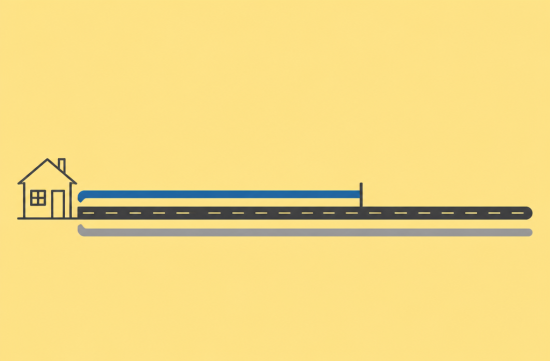
Let's consider a young couple looking at a $250,000 home in Springfield. Their credit score is decent, and they have just enough savings for a 3.5% down payment. In this case, most people think of FHA loans first.
However, when they receive the paperwork, they notice an item called MIP. When asked when this ends, the answer is often surprisingly, "until the loan is paid off."
Today, we will follow this couple's situation from start to finish. The reference is a notice from HUD issued in February 2023 (Mortgagee Letter 2023-05), and I have not found any new notices that change this rate table as of the posting time.
First, MIP is divided into two types: the upfront mortgage insurance premium (UFMIP) paid once at the time of the loan and the annual premium paid monthly.
The upfront premium is 1.75% of the base loan amount. Typically, it is added to the loan amount rather than paid in cash.
If the couple puts down 3.5%, the base loan amount becomes $241,250. Multiplying this by 1.75% gives an upfront premium of $4,221.88.
The annual premium is determined by the loan term, loan amount, and LTV (loan-to-value ratio). For a 30-year fixed loan with a loan amount of $726,200 or less and an LTV over 95%, the rate is 0.55%.
This couple has an LTV of 96.5%, so they incur the 0.55% rate. Based on the first year, the monthly premium will be about $110.57. While it decreases slightly as the balance reduces, the issue is the duration.
If the LTV exceeds 90%, the annual premium applies for the entire loan term. For a 30-year loan, that means 30 years, and even if home values rise in the meantime, it does not automatically end.
Interestingly, the same applies if they put down 5%. The rate drops slightly to 0.50% for an LTV of 95%, but the duration remains a lifetime.
The turning point is a 10% down payment. If the LTV falls below 90%, the rate is 0.50%, and after 11 years, the annual premium ends.
If they put down 10% on the same house, the base loan amount becomes $225,000. The upfront premium is calculated at $3,937.50, and the first year's monthly premium is $93.75.
Looking at the numbers, 10% is definitely more advantageous. However, if it takes a few more years to save the additional $25,000, they need to consider the changes in rent and home prices during that time.
For reference, FHA loans approved before June 2013 had different rules. If someone has an older loan, it's advisable to check the specific terms of their loan.
So, will the couple starting with a 3.5% down payment have to carry MIP for life? Not necessarily. The most common escape route is refinancing into a conventional loan.
With a conventional loan, if their equity exceeds 20%, there is no mortgage insurance (PMI) from the start. Even if they start with less than 20%, they can request cancellation once they pay down to 80% of the original home value, and it automatically ends at 78%.
Therefore, when home values rise and their equity approaches 20%, they consider refinancing. If the appraisal comes in well, they can switch to a loan without insurance premiums.
However, refinancing also incurs closing costs. And if current rates are higher than the original loan, eliminating the insurance might actually increase their monthly payment.
The second option is an FHA streamline refinance. This is a way to switch from one FHA loan to another, with simpler paperwork and appraisal processes.
This method does not eliminate MIP. However, if they switch within three years of the loan, they can get a portion of the upfront premium they initially paid deducted from the new loan's upfront premium.
The refund rate decreases over time, and after three years, it is no longer available. Since the lender handles this rather than the borrower applying directly, it's good to ask in advance if they qualify.
The third option is to choose a 15-year loan from the start. For loans under $726,200 and an LTV of 90% or less, the annual premium drops significantly to 0.15%.
Of course, a 15-year loan has higher monthly payments, which could be a burden for a young couple. If they save on premiums but find their living expenses tight, it defeats the purpose.
The FHA loan limit for single-family homes in Greene County, where Springfield is located, is $541,287 in 2026. Most areas in Missouri apply this national minimum, so in this price range, limit concerns are relatively minor.
The FHA is a great program that opens doors when credit scores or down payments are not sufficient. While this is certainly advantageous, the lifetime insurance premium can become a significant burden in the long run.
My advice to this couple is simple: before signing the contract, plan with their loan officer how many years MIP will apply and when to consider refinancing.
Rates and terms can vary based on the time of the loan and individual circumstances. Be sure to check the final numbers in the Loan Estimate provided by the lender.
 OrangeMan








 B.I.G. Victor |

 Amber H |
 uplifted |

 Dr. Kelso |

 silents |

 ramen |

 song bang |

 calvor |

 nexarin |
 action blog 101 |
 athome blog |
 Haha and Bomi Blog |
 Lee Ton |
 viba viba |
 Olivia's Blog |
 208 Master |
 crumb |
 blanke |
 Burbank Lee |
 tervox95 |
 silverado |
 Grow Your Gut Bacteria Well |
 Kim You Shin |
 Squid Q |
 gelatonew |
 river9 |
 ttano |
 Eagle in America for Five Years |