
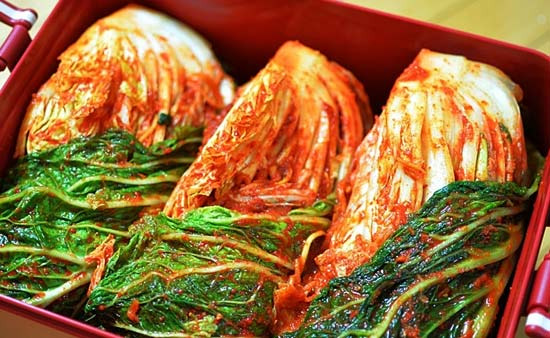
Fermenting kimchi at room temperature for a day and then at 10 ℃ for a week is a great way to naturally adjust the fermentation rhythm and bring out a deep and refreshing flavor.
Room Temperature for 24 Hours ― Start the Fermentation
-
At around 20 ℃ room temperature, lactic acid bacteria become active quickly.
-
After 24 hours, fine bubbles will form inside the cabbage, and it is normal for the kimchi broth to show slight bubbling.
-
At this stage, the pH begins to drop to around 5, which helps suppress the growth of initial spoilage bacteria.
10 ℃ for 7 Days ― Refine the Flavor with Gentle Fermentation
-
10 ℃ is a 'slow but deep' lactic acid fermentation stage. The umami and sweetness gradually concentrate without becoming overly sour.
-
The natural sugars from the cabbage and radish are broken down by lactic acid bacteria, harmonizing acidity and sweetness, while the flavors of garlic and ginger become clean and pronounced.
-
If you want to maintain a crunchy texture, taste it on the 5
6th day and switch to refrigeration (02 ℃) to stop fermentation.
Additional Tips to Remember
-
Maintaining a salinity of 2.5~3 % keeps lactic acid bacteria activity stable. If it's too salty, fermentation will be delayed, and if it's too bland, it will spoil quickly.
-
Using a dedicated container and packing the kimchi tightly minimizes air pockets, reducing surface spoilage and mold.
-
If you reduce the room temperature fermentation time to half (12 hours), you can maintain a crunchier state, and conversely, if you want a more sour taste, you can extend it to 36 hours.
-
Taste it once on the 3rd or 4th day of fermentation to check the level of fermentation that suits your taste, and adjust the fermentation period or temperature if necessary.
-
If the kimchi broth overflows or there is excessive bubbling, it is a sign of overheating fermentation, so it is advisable to lower the temperature by 1~2 ℃ and leave some space in the container.
-
Once you move to the storage stage, you can maintain quality at 0~2 ℃ for several months, and by portioning out only what you will eat into a separate container, you can reduce temperature fluctuations.
A Summary for Taste and Safety
Quickly start fermentation at room temperature, then slowly ferment at 10 ℃ and finish with refrigeration to keep the kimchi cool and deep in flavor while enjoying a crunchy texture for a long time. Adjust small temperature changes and fermentation times to find your optimal point.






 Helpful Life Stories |
 American Man in a Mask |
 Hajiwon Blog Hair Salon |
 Make My Day |
 TEXAS Fishing Boat |
  Korean Mom |
  My NYC |
  moo moo |
  Mr Oh |
  forevergee |
  festival |
  manchester |
  constant |
  Leapfrog Move |
  vibranto |
  Tora Tora |
  yellowbutter |
  Dolly |
  US Embassy |
  NYC saladbar |
  Finding Superfoods |
  lightyear |
  song bang |
  vexomo |
  Indiana Jones |