

At first glance, it may seem ordinary, but beneath the surface lies layers of Earth's history accumulated over millions of years. To understand this city, one must first examine its location and geological zones.
San Antonio is located at the boundary where the Edwards Plateau meets the South Texas Plains, right in the middle of the Balcones Fault Zone.
The Balcones Fault Zone is a massive fault area formed millions of years ago when the crust cracked and subsided.
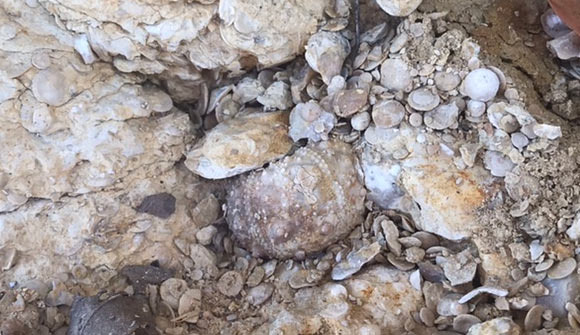
The primary rock that makes up the underground is limestone deposited in a shallow sea during the Cretaceous period. This limestone layer often contains marine fossils such as ancient shells and ammonites, which are frequently discovered at construction sites or quarries. Because limestone gradually dissolves in acidic rainwater, it has created karst topography over long periods.
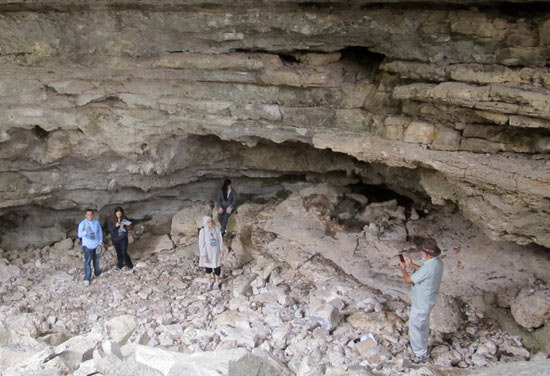
As a result, there are several large limestone caves in the San Antonio area, such as Natural Bridge Caverns and Cave Without a Name, along with sinkholes and small stalactite caves scattered throughout.
Within this limestone layer lies the Edwards Aquifer. The aquifer acts as a natural reservoir by absorbing rainwater through its honeycomb-like cracks and caves, providing essential water resources for the citizens of San Antonio for both domestic and agricultural use.
The recharge zone of the aquifer is thinly spread along the Balcones Fault Zone, prompting the city to strictly manage land development and pollution sources to protect the water. Deeper down lies the Trinity Aquifer, which is also utilized for groundwater development in the outskirts.
This area is not prone to large earthquakes, but due to past tectonic activity, gentle cliffs and offsets follow the fault lines, where surface water and groundwater meet, leading to the development of springs and caves. The hilly terrain to the northwest of San Antonio contrasts with the flat landscape of the South Texas Plains, resulting from this fault activity.
To the south of the Balcones Fault Zone, adjacent to southern San Antonio, the Eagle Ford Shale area is active in oil and gas production, primarily composed of deep elastic sedimentary rocks. Heading northwest to the Hill Country, thin layers of chert and clay are exposed above the limestone, leading to a barren plateau landscape with protruding surfaces.
Caves, springs, and fault cliffs also have a significant impact on the ecosystem. Springs that emerge from the limestone region maintain a constant temperature and flow, providing habitats for cave-endemic species like the endangered Texas blind salamander. At the same time, spring water is utilized as recreational and tourism resources, deeply embedded in the city's culture and economy.
Ultimately, beneath San Antonio lies limestone from ancient seas, with the Balcones Fault Zone and Edwards Aquifer shaping the landscape and water resources. Unlike the calm scenery above ground, the underground is a complex intertwining of faults, caves, and aquifers, making this area an even more attractive destination for geological and ecological exploration.







 Helpful Life Stories |
 American Man in a Mask |
 USA Pharmacy Pharmacist |
 Texas Migration Story |
 Texas Migration Story |
  Tonky |
  viroma |
  cookie |
  Live and that's it |
  Alright Twain |
  eatontown blog |
  HAWAII Korean Church News |
  Amore |
  linex |
  Balancework |
  laro90 |
  MEDBIO American Doctor Blog |
  SWAT TEAM BLK |
  DREAM BIG |
  frostbite |
  330 Forever My Love |
  El Dorado |
  dralix58 |
  Gorama Round |
  Skydiving |