
Many people mistakenly think that saving only for the down payment is enough when buying a home. However, when they receive the closing cost bill at the end of escrow, they are often surprised by the larger amount.
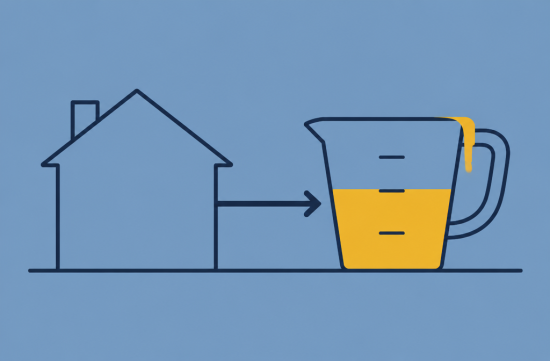
One way to reduce this burden is through seller credits. Simply put, it means that the seller agrees to pay a portion of the buyer's closing costs as stated in the contract.
If the term is unfamiliar, think of it this way: instead of lowering the home price, the price remains the same, and that money is redirected towards fees.
However, you can't request just any amount. Each loan type has a limit on how much the seller can contribute, and if you negotiate without knowing this, you might end up unable to use the full credit received.
First, let's look at the most common conventional loans. The Fannie Mae Selling Guide refers to these contributions as Interested Party Contributions, or IPC.
The limits vary based on the down payment percentage. For primary residences or second homes, if the LTV exceeds 90%, the limit is 3%; if it's between 75.01% and 90%, it's 6%; and if it's 75% or lower, it's up to 9%.
LTV refers to the loan-to-value ratio. This means that if you put down less than 10%, you can get 3%, and if you put down more than 25%, you can get up to 9%.
For investment properties, the limit is fixed at 2%, regardless of the down payment. If you're buying with the intention of rental income, it's realistic not to rely heavily on credits.
The important point is that this percentage is calculated based on the lower of the sale price or appraised value, not the loan amount. If the appraisal comes in low, the limit decreases as well.
For FHA loans, up to 6% of the lower of the sale price or appraised value is allowed. For first-time homebuyers with a low down payment, this 6% can be quite significant.
VA loans have a slightly different calculation method. The limit is 4% based on the home's fair market value, but the portion of closing costs covered by the seller does not count towards this 4%.
One rule that many people overlook is that credits cannot exceed the actual closing costs and prepaid expenses.
For example, if the closing costs are $20,000 but you receive a credit of $25,000, you cannot get the remaining $5,000 back in cash. According to Fannie Mae guidelines, any excess amount is treated as a reduction in the sale price, which will require recalculating the LTV.
You also cannot use credits to cover your down payment. Both Fannie Mae and FHA do not allow seller contributions to cover the minimum borrower contribution.
So, what can you use it for? Typical prepaid expenses include lender fees, title insurance, escrow fees, property taxes, and insurance premiums.
According to Fannie Mae guidelines, you can also use credits for up to 12 months of HOA fees after closing. This is something to keep in mind if you're looking at condos or townhomes.
Another way to use credits is to buy down the interest rate. In times like these, when interest rates are a burden, reducing your monthly payment can often be more beneficial than lowering the home price by a few thousand dollars.
Now, here are some tips for requesting credits. First, before making an offer, ask your lender for an estimate of the closing costs and the credit limits for your loan.
Second, it's better to specify a concrete dollar amount rather than a percentage. Instead of vaguely asking for 3%, present the actual amount you need based on the lender's estimate, making it easier for the seller to understand.
Third, use the inspection results as a negotiation tool. Instead of asking the seller to make repairs, it can be more manageable to receive credits for the repair costs, allowing you to oversee the quality of the work yourself.
Fourth, check how long the property has been on the market. If a listing has been active for a long time and the price has been reduced once or twice, the seller is more likely to accept a credit request.
Conversely, if there are multiple offers on a property, requesting credits may work against you. From the seller's perspective, an offer without credits may appear cleaner, even if the prices are the same.
Another common method is to raise the home price and receive credits accordingly. The Consumer Financial Protection Bureau (CFPB) explains that sellers often demand higher prices to cover credit costs.
This method only works if the appraisal matches the increased price. If the appraisal comes in lower than the sale price, the limit calculation will also decrease, and the buyer will ultimately need to cover the difference in cash.
The credit amount must be clearly stated in both the purchase agreement and the closing disclosure. Any separate cash transactions outside of the paperwork can lead to Fannie Mae rejecting the loan altogether.
Limits can vary based on the loan program and lender policies. Jumbo loans have different criteria depending on the lender, so be sure to check with your loan officer and agent about your specific situation.
Personally, I recommend requesting credits based on evidence after the inspection rather than starting with a high number. Requests that can be explained with numbers tend to hold up much longer in negotiations.
In summary, confirming your loan limits, specifying amounts based on lender estimates, and checking appraisal risks are key. Just keeping track of these three things can significantly reduce surprises at the closing table.
 MichaelKim
 PuddingJoyMan








 Something is popping in the situation |

 lumix88 |

 quiet river |

 Doori Ark |

 My Town My Way Blog |

 Agenda Center |

 Con Cheese |

 Sunny Fullerton |

 Until the Day It Gets Better |

 Raymond K. |
 gravity |
 714 Success Era Real Estate |
 Investment Beginner Company Information Encyclopedia |
 musicque |
 The Gelaton |
 ovelion |
 Chicagonian |
 Freedom Yea |
 AZ Road Master |
 glenix39 |
 orvella |
 vella |
 comets |
 Banana |
 Yes Dorian |
 Minnesota Sonata N |
 zentar |
 mykiwi blog |