
When working at a company, there are moments that everyone experiences at least once. Like when a manager casually says, "Just clock in for 8 hours and stay for an extra 30 minutes."
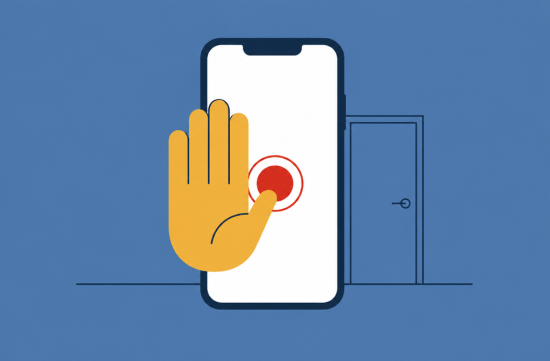
In that moment, the thought that crosses your mind is just one: Shouldn't I record this on my phone?
I remember fiddling with my phone in my pocket during a similar situation. But looking back, I'm glad I didn't press record then.
In the U.S., recording rules aren't just governed by federal law. Each state has different rules, and Florida is among the stricter ones.
First, let's look at federal law. 18 U.S.C. 2511(2)(d) allows recording if at least one party to the conversation consents.
This means that if I am directly participating in the conversation, my own consent is sufficient. This is commonly referred to as one-party consent.
However, if the recording is made for the purpose of committing a crime or illegal act, this exception does not apply. For example, recordings made for blackmail are not allowed under federal law.
The issue is that if state law is stricter than federal law, you must follow state law. This is where Florida comes into play.
Florida Statute 934.03 states that all parties to a conversation must consent beforehand for the recording to be legal. This is known as an all-party consent state.
If you violate this and intercept a conversation to record it, it is generally treated as a third-degree felony.
A third-degree felony in Florida can carry a maximum sentence of 5 years in prison and a fine of up to $5,000. I was honestly a bit shocked when I first saw these numbers.
It's not just criminal penalties either. The recorded party can also file a civil lawsuit for damages and attorney fees.
So, do all conversations within a company fall under this? Here, the important concept is reasonable expectation of privacy.
Florida law looks at whether the person conversing had a reasonable expectation that "this won't be recorded." The 1985 Florida Supreme Court case State v. Inciarrano also stated that this expectation must be objectively reasonable.
Therefore, a conversation held behind closed doors in a manager's office is likely to be protected. Conversely, statements made loudly in a public space where anyone can hear may be viewed differently.
But where that line is drawn ultimately comes down to the specifics of the case. If a reasonable person thinks, "This is a public space, so it should be fine," and they are wrong, the risk falls entirely on them.
What about other states? States like California, Illinois, Washington, Maryland, Massachusetts, and Pennsylvania are also classified as all-party consent states.
However, some states, like Illinois, have narrowed the scope to apply only to private conversations, so the lists can vary slightly depending on where you look. If you move around or frequently communicate with other states, be sure to check the laws of those states separately.
So, is it okay for a company to have a "no recording" policy? The National Labor Relations Board (NLRB) found in the 2015 Whole Foods case that a blanket ban on recording could infringe on employees' rights to engage in collective activities.
However, this does not provide a blanket exemption from state criminal laws. Remember that company policy issues and violations of Florida criminal law can be separate matters.
So what should you do? Here are some practical steps I've outlined.
First, if recording is absolutely necessary, ask openly. A simple, "I'm trying to remember accurately, can I record this?" gives you consent, and if they refuse, that in itself is a response worth noting.
Second, make it a habit to send a follow-up email. You can write something like, "As discussed today, I understand the instruction is to record 8 hours for my clock-out." Just include the date and details.
If the other party does not deny it in their reply, that can also serve as a strong record. It's best to send it from your company email and keep a copy in your personal email.
Third, keep daily notes. Write down the date, time, location, people present, and what was said as accurately as possible.
Fourth, if the issue is about wages, consult the federal Department of Labor's Wage and Hour Division, or if it's about discrimination or retaliation, reach out to the EEOC or the Florida Commission on Human Relations.
If you've already recorded, it's best to talk to an employment attorney before sharing that file with colleagues or on social media. Once you spread it, the problem could escalate.
Honestly, I sometimes find these rules frustrating. For powerless employees, recording can often be the only means of evidence.
Still, if the law is this way, I believe it's best to find the safest path within it. Before hitting the secret recording button, I would choose to send an email first.
This article is for general information. Actual situations can vary based on details, so be sure to consult a lawyer before making important decisions.
 KingCrabCamp
 BossEagle








 neroyo |

 American Food Information & Calories |

 Bald Eagle Brothers |

 sunny side |

 kodak |

 Well Done Sir |


 Taco Bell Candy Note Blog |


 Good Riddle |
 strawberry |
 US Regional Information Local News |
 USA Business News |
 Blondee |
 E whisper |
 Potato House |
 freshmint |
 Ansaso |
 Golado |
 babybay |
 honeycom |
 French Macarons |
 Exploring American Life Information |
 Sunshine Blog |
 Community Cross |
 Sayonara H |
 What can make money? |
 Information Search LifeMAN |
 morvex37 |
 neontrail |