
Last month, a close friend of mine hesitated for a while before speaking up over coffee. She said that since her kids are grown and it's time to wrap up her corporate career, she wants to try running her own store.
But she had one dilemma. Should she go with a well-known franchise or open a small independent store that reflects her own cooking style?
At that moment, we both laughed and said they both seemed good, but when I got home and started researching, I realized there were more factors to consider than I thought. So today, I want to go through those calculations together.
First, let's look at one number. According to the U.S. Bureau of Labor Statistics (BLS), among private establishments that opened in 2020, only 51.3% survived until March 2025.
For those that opened in 2024, the survival rate after one year was 77.7%. This means that out of five businesses that open, about one won't make it past the first year.
Seeing this number made me realize that starting a business isn't just about picking a flower pot; it's about finding the right ground to plant it.
Let's start with franchises. The biggest advantage is the already proven menu and operating methods, along with a recognizable sign.
However, money keeps flowing out. In addition to the initial franchise fee, interior design, and equipment costs, there are also monthly royalties and advertising fees.
Cross-referencing industry data, royalties typically range from 4% to 8% of sales, and many places set advertising fees at around 1% to 4%. Of course, this varies by brand, so it's just a rough estimate.
One thing that's easy to overlook is that royalties are based on total sales, not profits.
For example, if a store has monthly sales of $40,000 with a 6% royalty and a 2% advertising fee, that means $3,200 goes to the headquarters each month, totaling $38,400 in a year, regardless of whether the store is in the red that month.
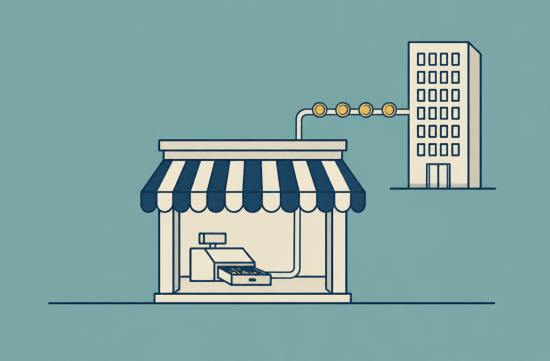
Honestly, I was a bit shocked when I first did this calculation. It's like a straw is already stuck in the river of sales.
Independent stores are the opposite. Without royalties, all the profits are yours, and you can change the menu and decor as you please.
But that freedom comes at a cost. You have to find suppliers, set prices, promote, and train employees all on your own from the start.
The first few months without brand recognition might just be a time of waiting for customers to stumble in. It feels like launching a nameless boat into the ocean.
If you ask whether franchises are safer, it's hard to say definitively. Each brand has different circumstances, making it difficult to generalize with one average number.
That's why it's essential to look at the Franchise Disclosure Document (FDD). According to Federal Trade Commission (FTC) regulations, the franchisor must provide this document at least 14 days before you sign a contract or pay any fees.
If the franchisor changes the contract terms, you must receive the revised contract at least 7 days before signing. If the franchisor is rushing you, that's a red flag to reconsider.
Within the FDD, Item 7 outlines the range of initial investment costs, Item 6 lists ongoing costs like royalties, and Item 20 shows how many franchises have opened and closed and whether ownership has changed.
Item 20 also includes contact information for current and recently departed franchisees. If I were you, I would call a few of them to ask about the actual support from the franchisor and how business went in the first year.
Item 19 contains sales or profit information, but whether it's disclosed is up to the franchisor. If this section is blank and the sales rep only verbally guarantees profits, it's wise to be cautious.
If you're considering a loan, there's one more thing. The SBA will reintroduce the franchise directory starting June 1, 2025, meaning that to qualify for an SBA loan, the brand must be listed in the directory.
Before signing a contract, check the SBA website to see if the brand you're considering is on the list.
When starting a business later in life, there are other factors to consider beyond just numbers. Is the operating hours manageable for your health, and what happens when it's time to pass the business on?
Franchise agreements often include conditions that require franchisor approval to sell the business or pay a transfer fee. Don't just look at the entrance door; make sure to check the exit door as well.
Also, check the renewal conditions when the contract expires and whether there are remodeling obligations. If you're putting in retirement funds, it's worth spending to have a lawyer and accountant review the documents.
Even if you choose an independent store, there are free resources available. Organizations like SCORE and local Small Business Development Centers (SBDC) offer free consultations for business plans, which can help ease the daunting task of navigating on your own.
This is what I told my friend. If she has skills she's already comfortable with and is confident in building a loyal customer base, then a small independent store might be the way to go. If she has no operational experience, paying fees for a proven system can be seen as a kind of tuition.
Personally, I would probably lean towards a small independent store. It seems like having my name on something and nurturing it slowly would give me more staying power than the money deducted from sales each month.
If you were to open a store right now, would you start under a familiar sign, or would you open a small door with your name on it?
 PentiumX
 SlavoBravo






 Exploring American Life Information |

 Franco Family |

 Home Run King Byeon Seung-yeop Blog |

 mistic |

 Hodong Prince Over Flex |

 seouljung |



 Vision XT |

 Shining Our Own World |
 Raymond K. |
 gravity |
 714 Success Era Real Estate |
 Investment Beginner Company Information Encyclopedia |
 musicque |
 The Gelaton |
 ovelion |
 Chicagonian |
 Freedom Yea |
 AZ Road Master |
 glenix39 |
 Something is popping in the situation |
 orvella |
 vella |
 comets |
 Banana |
 Yes Dorian |
 Minnesota Sonata N |
 zentar |