

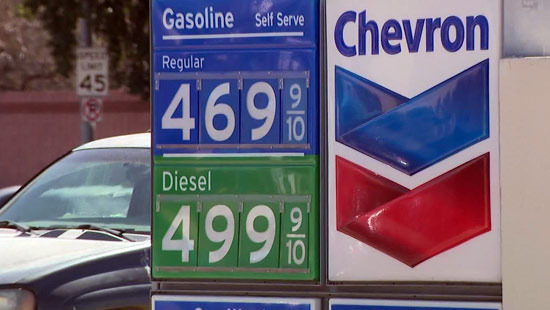
Oil prices in Phoenix are at $5, but when will they go down?
These days, the news seems to suggest that the more realistic answer is simply, "They won't go down."
From the news, it sounds like a resolution is just around the corner, but it seems to be the opposite. Especially looking at the current situation in Iran, it becomes clear why.
The death of Iran's leadership → supply chain disruption → a brief spike followed by stabilization...
This leads to certain expectations. However, Iran is not structured that way. It is a country designed to function even without a leader.
According to the constitution, a temporary power structure is immediately activated, and there is no room for a power vacuum to last long, even with expert meetings and the Revolutionary Guard involved.
So how does this relate to oil prices? It directly involves the Strait of Hormuz.A significant portion of the world's crude oil passes through here, and Iran is in a position to keep the option of "closing it" on the table.
In fact, this time, they changed their stance and reimposed controls within a day. They claimed to ease restrictions but quickly reverted to a hardline approach.
Looking at the current situation, there are warning shots fired at commercial vessels, oil tankers being turned back, and incidents resembling missile attacks occurring.
In response, the U.S. is expanding maritime enforcement.
This is the scenario that the market dislikes the most: uncertainty.
Many people mistakenly think that if there is no war, everything will be fine, but it's not the case that prices only rise when war breaks out.
Even maintaining vague tensions like now can keep prices rising.
This is because the market anticipates the worst-case scenario. Even if there is no actual blockage, the mere possibility of a blockage can drive prices up.
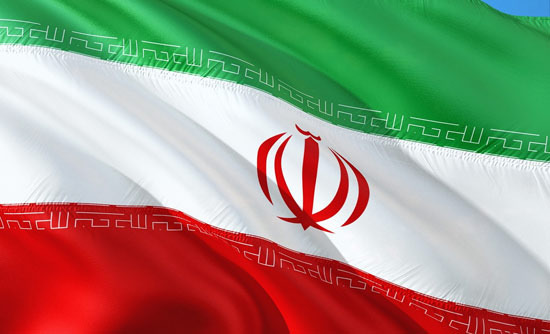
The key point here is that Iran is not a country where "if one person falls, everyone falls" structure exists.
The Revolutionary Guard (IRGC) essentially serves as the backbone of the country, with political, military, and economic connections all intertwined.
In simple terms, it's a system where the whole body moves without a head. Therefore, even when external pressures come in, the internal structure does not easily shake.
Moreover, even if the U.S. claims that its domestic production has increased, the prices in the global market ultimately adhere to international oil price standards.If Asia and Europe buy more to replace Iranian supplies, the inventory in the U.S. will also decrease.
So, the idea that "it's our country's oil, so it's fine" is not applicable.
The government's efforts to lower prices also have their limits. Releasing strategic reserves or using negotiation cards are short-term solutions.
However, the current situation is entangled with diplomacy, military, and energy, so it's not a problem that can be resolved all at once.
When talks of negotiations arise, military tensions immediately escalate, indicating a clear direction. It's a state of "maintained tension," not stability.
Looking at Iran, the U.S., and Israel, the tension could erupt at any moment, but it seems to be a strangely balanced structure where they maintain boundaries while moving.
Iran pressures with the card of the Strait of Hormuz, the U.S. responds with sanctions and maritime control, and Israel strikes precisely only when necessary. If they push each other completely, it would lead to full-scale war, but they are managing to adjust the intensity without going that far.
This is a very precarious balance of maintaining tension without crossing lines, but the real issue is that as this balance persists, we will feel the repercussions in oil prices and the economy.
 WhenISeeHer







 washington mom |
 Victory 1988 |
 El Dorado |
 lightyear |
 Moscow Kim |
 Toaster Pizza Magic Show |
 Kitchen Ideas |
 USA East News, Information |

 Arizona AZ Cowboy |
  apricotla |
  Soy Angelino |
  nati8 |
  NE Hodori Preik |
  celtics |
  Balancework |
  round1 |
  Way to easy |
  musicque |
  road98 |
  Churros Train Conductor |
  gleeful |
  Burbank Lee |
  Olivia's Blog |
  Bushing Around Life |
  Active |
  Cherokee Rose |
  Kor. Master |
  Holey Moley |