

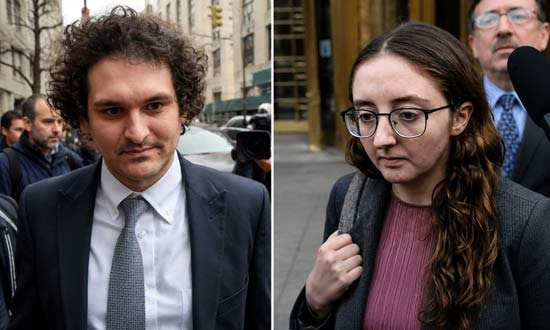
Just a few years ago, the name Sam Bankman-Fried (also known as SBF) was hailed as a savior in the cryptocurrency industry.
With his messy hair and worn shorts, he was known for pitching billions in investments while playing League of Legends.
People praised him as "the Warren Buffett of cryptocurrency," "a genius mathematician from MIT," and "a young entrepreneur practicing effective altruism."
However, in March 2024, the U.S. Southern District Court of New York sentenced him to 25 years in prison. Along with this, a forfeiture order of $11 billion was issued.
This marked the moment when the youngest billionaire in the world was recorded as a fallen criminal who orchestrated the largest financial fraud in history.
The reason the court imposed a 25-year sentence on Bankman-Fried was due to overwhelming evidence that he committed the crime while clearly aware it was illegal.
The judge strongly criticized him in the ruling, stating that he attempted to destroy evidence right up until his arrest and consistently lied in court, claiming it was "just a mistake."
In particular, the internal messenger communications and testimonies from associates revealed crucial evidence.
He directly instructed the structural fraud of diverting customer funds to pay off affiliate debts while publicly tweeting false claims that "customer assets are safe."
In other words, it was proven that he deceived customers with 'malicious intent' while fully aware of the damage his fraudulent actions would cause, rather than a mere management failure due to ignorance.
Those who remember the atmosphere at the time these issues arose will understand. Around 2021, the cryptocurrency market was almost in a frenzy.
Bitcoin and Ethereum were hitting all-time highs, and even obscure altcoins were skyrocketing by hundreds of percent in just a day.
Many investors jumped into the market, driven by FOMO (fear of missing out), without considering the actual value of companies or sustainable profit structures, simply because "it was going up."
At the center of this frenzy was the cryptocurrency exchange FTX, founded by Sam Bankman-Fried.
FTX rapidly grew to become one of the top three cryptocurrency exchanges in the world. The FTX logo appeared on Major League Baseball (MLB) umpire uniforms, and the home arena of the Miami Heat was renamed 'FTX Arena.' Super Bowl ads featured top football star Tom Brady, legendary basketball player Shaquille O'Neal, and tennis star Naomi Osaka.
Investors had no doubts.
"If a company is this famous and institutional investors are bringing in money, it must be safe, right?"
But the reality behind the glamorous facade was completely rotten.
The deposits that customers had safely stored in their FTX accounts were, in fact, not there.
According to facts revealed during the trial, Bankman-Fried illegally diverted billions of dollars of customer funds to accounts he owned or to a separate hedge fund called 'Alameda Research.' He used this blind money for risky leveraged investments, made substantial donations to politicians, and purchased a luxurious penthouse in the Bahamas. This was a clear case of embezzlement and fraud, treating customer assets as his own private property.
The problem is that when the market continues to rise and liquidity is abundant, this massive hole does not become apparent. It was no different from a Ponzi scheme structure that uses new incoming money to fill existing holes to prevent a bank run. However, when the interest rate hikes in 2022 brought about a crypto winter, the sandcastle-like empire collapsed in an instant.
November 2, 2022: A report from CoinDesk revealed that Alameda Research's financial statements were manipulated and that most of its assets were filled with worthless coins (FTT) issued by FTX.
Bank run: Customers, feeling anxious, rushed to withdraw about $6 billion (approximately 8 trillion won) in just a few days.
Bankruptcy filing: FTX, which had been surviving on fake books, had no money to withdraw, and just nine days after the revelation, on November 11, 2022, it filed for bankruptcy, unable to withstand the liquidity crisis. A company worth tens of trillions of won literally disintegrated.
Being smart and being wise are two different things
Many called Sam Bankman-Fried a genius, and indeed he was an elite who majored in physics and mathematics at the prestigious MIT. However, this incident proves once again that "being smart and being wise are completely separate issues."
Historically, the arrogance of such individuals has always been the same. The executives of Enron, which went bankrupt due to accounting fraud in 2001, were also among the top elites of their time, and Elizabeth Holmes of Theranos, who claimed to diagnose hundreds of diseases with a drop of blood, was also a promising Stanford graduate.
The problem begins the moment one believes they are smarter than the system and the market and can transcend laws and ethics. When the media's praise and trillions of won in money were in his hands, he completely lost his sense of reality.
This incident is particularly tragic not just because a genius young man fell, but because the lives of ordinary individual investors around the world who trusted him and entrusted their money have been shattered.Someone's retirement funds, children's college tuition, and a lifetime of hard-earned savings evaporated in an instant.
The victims simply believed they were investing in an innovative technology platform that would change the future. A 25-year sentence is certainly not a short time. By the time he serves his sentence and comes out into the world, the blockchain, financial markets, and the world will have changed beyond comparison to what they are now.
The titles of the youngest billionaire in the world, a behind-the-scenes power in politics, and the prince of cryptocurrency have all vanished. And one old lesson that financial history has taught us for hundreds of years remains alone.
 SunsetZone
 ThunderBoys
 CocoPastaHelp





 coloradoman |
 Montgomery Mom |
 GOGO SING |
 Hajiwon Blog Hair Salon |
 tartbear |
 newyorker 101 |
 Things to Do to Buy a House |
 Lunch and Dinner Mexican Taco |
 French fries |
 U.S. Weather Bureau News |
  novapixel |
  mortrix |
  ollege Mom |
  Esther 1983 |
  Arizona AZ Cowboy |
  fortbliss |
  Moscow Kim |
  My Two Way |
  toastyfox |
  FLORIDA Acus |
  tracker |
  TONTON COFFEE |
  sunrise |
  ultron78 |
  uplifted |
  Folding Instructions |
  same same life |
  USA Hyundai Kia |
  morvex37 |
  BOL SA RAM |