

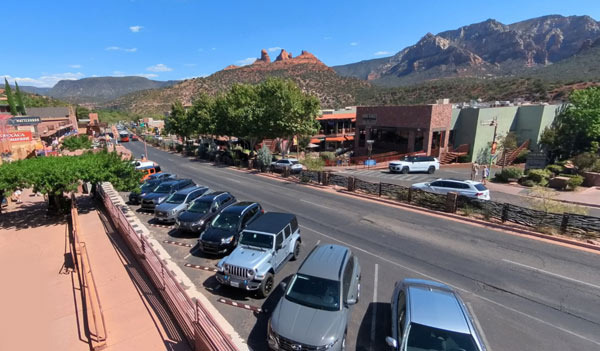
Sedona, Arizona, is famous as a must-visit place for those planning a trip to Arizona.
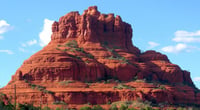
This quiet resort town, located in Yavapai County, Arizona, creates an overwhelming atmosphere with its massive red rocks surrounding it. From a distance, it feels as if the city is gently placed within a natural fortress made of red sandstone, and as you get closer, each path seems like a living natural museum.
Sedona is close to famous cities like Flagstaff to the north and Phoenix to the south, and it is also very near the Grand Canyon, making it easy for travelers to plan their routes, which is why Americans often visit as part of a package tour. However, Sedona has a somewhat unique atmosphere that cannot be simply described as a tourist destination.
Perhaps because this place has long been regarded as sacred land by Native Americans, searching for it reveals an abundance of strange energies and words like vortex, but there is no need to question whether that is true or not. The scenery before your eyes is overwhelming enough, giving the feeling of standing before a grand natural altar, which makes people want to clear their minds and try meditating.
The history of Sedona began in the early 1900s when people started settling near Oak Creek Canyon, forming the town.
When a post office was established, they needed to name the town, and the story of naming it Sedona after the postmaster's wife is still often mentioned in local history.
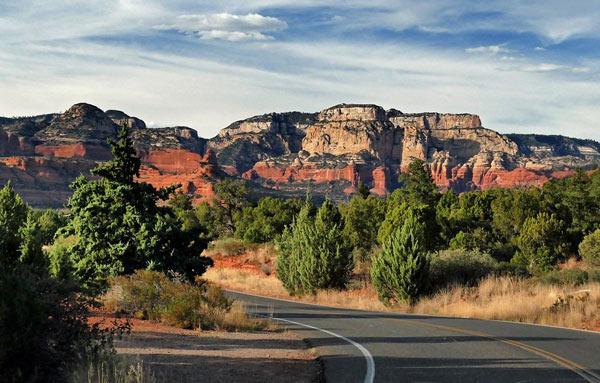
Today, Sedona is a resort town that attracts more retirees than young people, featuring many upscale villas, vacation homes, and retirement communities, becoming a place where people come to live quietly against a natural backdrop.
Surprisingly, the proportion of Asian residents in this area is quite high. There are many people of Japanese and Korean descent, and it is not difficult to find Korean shops or churches when you go into town. The city is divided into East Sedona and West Sedona, with East being centered around upscale residential areas and resorts, while West is where commercial activities are concentrated, with relatively more restaurants and shopping facilities.
However, due to the small size of the city, there are no large supermarkets, so residents often go to nearby Cottonwood or Oak Creek Village for shopping. Sedona is located at an elevation of over 1300 meters, so it has more fan-shaped cacti than the tall saguaro cacti commonly seen in Phoenix, and the climate is generally cooler than in Phoenix.
The red rocks, heavy tranquility, subtle mystique, and leisurely atmosphere combine to make Sedona feel like a place that goes beyond being a mere tourist destination, providing a sense of comfort to the heart. Perhaps that is why, in the face of nature's greatness, one unconsciously takes a deep breath and allows themselves to take a moment to relax.




 Kitchen Ideas |
 Toaster Pizza Magic Show |
 U.S. Weather Bureau News |
 Tonky |
  viroma |
  cookie |
  Live and that's it |
  Alright Twain |
  eatontown blog |
  HAWAII Korean Church News |
  Amore |
  linex |
  Balancework |
  laro90 |
  MEDBIO American Doctor Blog |
  SWAT TEAM BLK |
  DREAM BIG |
  frostbite |
  330 Forever My Love |
  El Dorado |
  dralix58 |
  Gorama Round |
  Skydiving |