
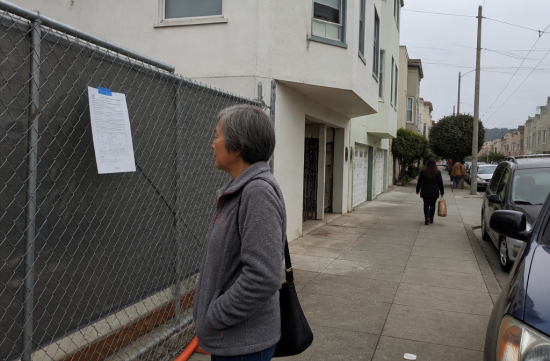
Last month, I received a call from an old friend living in Inner Richmond. They asked if the new condo being built across the street on a two-unit lot was due to the new zoning. This is a common question among homeowners in Sunset and Richmond these days.
To get straight to the point, yes, it is. The San Francisco Family Zoning Plan was signed by Mayor Larry on December 12, 2025, and took effect on January 12, 2026. Now that ten months have passed, it's time to discuss the actual results.
If the term zoning sounds unfamiliar, think of it as a set of rules that determines how many stories and units can be built on a piece of land. This plan modifies that set of rules primarily for the western and northern neighborhoods.
Many people ask why this neighborhood was chosen. According to the Planning Department, new housing has been concentrated in a few eastern neighborhoods, while the west has been constrained by outdated low-density regulations. If the state government fails to meet its housing goals, it risks losing eligibility for housing funds.
According to SPUR, the goal of this plan is to create conditions for building an additional 36,200 housing units by 2031. However, this is just a limit on what can be built, not a promise of actual supply.
So, what specifically has changed in our neighborhood? Along major transit corridors like Geary, Judah, and Taraval, as well as commercial streets like California and Balboa, multi-family buildings of six to eight stories are now permitted. Some corner lots or larger parcels may even allow for slightly taller buildings.
On the other hand, single-family home streets in the alleys have seen less change than expected. The Planning Department has stated that 77% of the parcels subject to the plan will not see any height changes. If your home is a few blocks away from a major street, the likelihood of your neighbor suddenly building an eight-story structure is low.
It's important to understand the local program called Housing Choice SF. Simply put, it's a city bonus system where if you participate, you can receive a higher building height in exchange for giving up state density bonuses.
Using this program effectively removes the limit on the number of units. This means that even on a four-story building, you can fit several smaller units.
If you are a landlord with tenants, this point is crucial. Buildings with two or more rent-controlled units are not allowed to use this local bonus program. This effectively narrows the path for demolishing rent-controlled buildings and rebuilding.
Demolition itself remains complicated. To demolish multi-family or rent-controlled housing, approval from the Planning Commission is required, and according to Planning Department data, only an average of 18 units have been demolished per year since 2012.
The tenant protection ordinance that was also pushed forward requires that any demolished protected units must be rebuilt as the same type, and it includes provisions for maximum relocation compensation. However, the final wording may have changed, so it's essential to check the current regulations with the Rent Board and Planning Department.
Now, let's look at the actual results. According to a report by BizNow at the end of May 2026, only two multi-family projects have been approved and are underway under these criteria in the four and a half months since implementation.
One is a nine-unit building on Crestline Drive, and the other is an eight-unit condo at 230 Anza Street in Inner Richmond, which was the very case my friend mentioned, built on a vacant two-unit lot.
The reason for this slow progress is simple. With high interest rates, rising labor costs, material costs, and insurance premiums, the Planning Department has acknowledged that construction costs have risen faster than rents. If the numbers don't add up, no one will break ground.
According to Zillow data cited in the same article, the average apartment rent in San Francisco was $3,950 in May 2026, an increase of $455 from the previous year. If rents continue to rise like this, development calculations may change, so I am keeping an eye on next year's trends.
Lawsuits are still ongoing. In January, Naverhoods United SF and others filed a lawsuit claiming that the environmental review (CEQA) was inadequate, while in February, housing advocacy groups sued the city, arguing that the plan was too weak.
As of September 2026, according to HousingWire, neither lawsuit has reached a conclusion, and the zoning changes remain in effect in the meantime. Depending on the ruling, some aspects may be adjusted.
Many are also concerned about property taxes. In California, under Proposition 13, reassessment occurs when there is a change in ownership or new construction, so taxes won't automatically increase just because zoning has changed. However, keep in mind that if you expand or rebuild, that portion will be reassessed.
So, what should you do first? First, enter your address on the Planning Department's Family Zoning map to check height and zoning changes directly.
Second, if you have a corner lot or a large parcel along a major street, you may receive purchase letters from developers. Rather than rushing, it's wise to consult with an appraiser or real estate attorney to evaluate the development value.
Third, if you have a building with tenants, you need to check whether rent control applies and the demolition regulations. Mistakes here can lead to higher legal costs.
Fourth, if a development application comes in for a neighboring parcel, the Planning Department will announce it and schedule public hearings. You can provide feedback at that stage, which may be considered.
In my opinion, the concern that the western neighborhoods will suddenly become high-rise forests is overstated based on current numbers. Conversely, the expectation that my home value will immediately skyrocket is also premature.
Having observed this market for a long time, I've noticed that significant regulatory changes are always reflected in prices slowly over several years. However, since tax and legal conditions vary for each individual situation, I recommend confirming everything with an expert before making decisions.
If I had a parcel along a major street, I would wait to see next year's interest rates and the pace of the first projects rather than rushing to sell. There doesn't seem to be a reason to hurry just yet.
 ShutUpSlump
 SandraBulldog




 B.I.G. Victor |
 Amber H |
 uplifted |
 Dr. Kelso |

 silents |

 Moscow Kim |

 mykiwi blog |

 U.S. Military Recruitment Information |

 Nuchuhan Exploration BLOG |
 The Emperor Must Grow |
 action blog 101 |
 athome blog |
 calvor |
 Haha and Bomi Blog |
 Lee Ton |
 viba viba |
 Olivia's Blog |
 208 Master |
 crumb |
 blanke |
 Burbank Lee |
 tervox95 |
 silverado |
 Grow Your Gut Bacteria Well |
 Kim You Shin |
 Squid Q |
 gelatonew |
 river9 |
 ttano |
 Eagle in America for Five Years |