

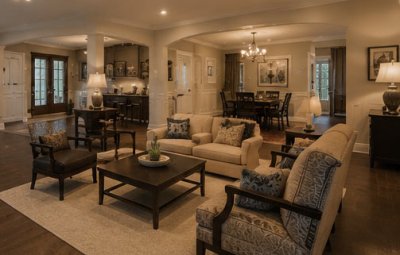
The price is around $304,072. This is the average home value in Hagerstown according to Zillow. One family had prepared their down payment to match this number perfectly. However, just before closing, they realized that the money they had prepared was insufficient after receiving the closing cost statement.
According to Zillow, the average home value in Hagerstown is $304,072, which has increased by 0.7% over the past year. Movoto data indicates that the median sale price in June 2026 is projected to be $330,000. The average time to pending is 15 days, and the average time to actual sale is 48 days, which is an increase from 38 days a year ago.
The first concern is likely how much to prepare for the down payment. However, closing costs need to be calculated separately. Typically, they range from 2% to 5% of the sale price. For a home priced around $330,000, this could be between $6,600 and $16,500. If you only prepare the exact amount for the down payment, you may find yourself in a situation where you need to scramble for additional funds just before closing.
You also need to consider property taxes. The average effective tax rate in Maryland is around 1.00%. For a home priced around $300,000, the annual tax could be about $3,000. Hagerstown has a relatively lower burden compared to other areas in Montgomery County, but it is an item that should not be overlooked in your budget.
Some families are moving to Hagerstown from other states. They may miss certain aspects when comparing property taxes or closing cost practices from their previous state. Since closing cost practices can vary by county, it is safer to obtain an estimated closing cost statement from your lender or title company before making an offer.
There are still cases where people go to see properties without pre-approval. Credit scores and debt ratios should be organized before signing a contract. It is also advisable to compare rates from at least three lenders at this stage.
There are instances where buyers focus on matching the down payment and closing costs and end up using all their reserves. It is safer to keep separate funds available for expenses that arise immediately after moving in.
In areas with relatively lower prices, it can be easy to feel like you have a generous budget, but that excess can lead to neglecting calculations for closing costs or reserves. Just because a home is priced around $300,000 does not mean that additional costs will automatically decrease. It is necessary to develop the habit of calculating down payment, closing costs, and reserves separately.
The fact that the time to sell has increased compared to a year ago means that there is more room for negotiation from the buyer's perspective. One option is to request that the seller cover part of the closing costs. However, the acceptance of such negotiations can vary depending on the local market situation, so it is advisable to discuss this with your agent in advance.
There are still cases where buyers barely manage to match the down payment and closing costs without leaving any reserves. Although the lower price range may seem less burdensome, small expenses that arise immediately after moving in occur similarly regardless of price range. Basic systems like boilers or plumbing will need attention at some point, regardless of the home price.
For families moving from out of state, it can be easy to assume that Hagerstown's relatively low prices provide a cushion. However, if that cushion is only used to increase the down payment, the calculations for closing costs and reserves may be pushed aside. It is important to write down the necessary funds for each item and develop the habit of preparing them in order. It is also advisable to complete the process of comparing estimates from at least three lenders at this stage.
Hagerstown is considered a relatively less burdensome area within the Washington DC commuting zone. This allows for a more generous budget, but it is essential to calculate closing costs in advance to ensure that plans do not fall apart. This article is not investment or legal advice, and it is recommended to consult with a professional before making any actual contracts.
 OceanCore80
 CoolPotato






 |
| 
 Premium Gas Camp |
 CA Real Estate |
 cheesepup |
 breezem |
 romeo JU |
 maryland park |

 Granola |
  joyfull yang |
  Olivia's Blog |
  Living in America and Writing Essays |
  Piano Teacher Blog |
  bearcup |
  explorer |
  dictionary |
  Mr Bull Jung |
  radiant |
  Georgia 88 |
  Great TOWN NEWS |
  Open Flex Mind |
  Hartford Blog |
  unified |
  Generation X |
  ringwinds |
  American Food Information & Calories |
  Hawaii Maui Kahului |
  calvorn |