

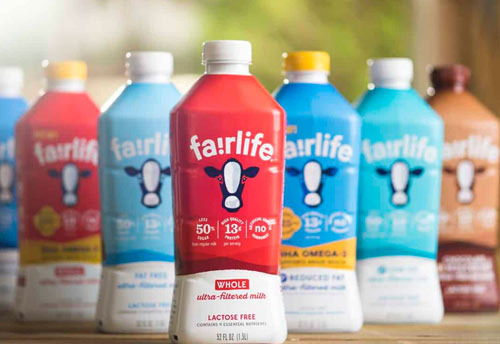
Until now, when I heard hacking news, I usually thought, "Oh, another data breach," or "I should probably change my password."
I believed that hacking only involved stolen emails, phone information, or credit card data.
But after seeing the news about Coca-Cola's milk brand Fairlife, I honestly felt a bit creeped out.
"They can't produce milk because they've been hacked?"
At first, I didn't understand what that meant. If a computer gets a virus, why does the factory stop working?
The news explained that modern milk factories are massive automated systems controlled by hundreds of computers and servers.
From receiving the milk, pasteurizing it, bottling it, labeling it, to sending it to the warehouse, everything is managed by computers.
So if a hacker breaks into the factory's computers, even if the people are fine, the machines can't operate.
What's even more surprising is that hackers don't just aim to steal information.They can completely halt production and say, "If you send money, we'll reopen the factory." It's like a new form of corporate extortion.
In old movies, the villain would cut the factory's power, but now we live in an era where a single laptop can shut down a factory.
Reading this news made me think about my own work.
When managing websites, clients sometimes say, "Isn't it enough if the homepage looks good?"
But in reality, behind the homepage, there are servers, emails, databases, backups, and security programs all interconnected.
If just one of these fails, the company's operations can come to a standstill in an instant.
In the past, I viewed security as just an expense.
But now, it feels more like a concept similar to getting insurance.
It's best if nothing happens, but when an incident does occur, the difference made by the investment becomes immediately clear.
I even imagined something funny. If there had been hackers 30 years ago, they would have shouted, "I hacked a computer!" but now it's more like, "Should I take a milk factory offline today?"
As technology advances, the world has become more convenient, but hackers have upgraded too.
What struck me most from this news is that hacking is no longer just an issue for IT companies.
Food companies, hospitals, airlines, and factories all operate in this computer-driven era.
Ultimately, cybersecurity is becoming less about protecting computers and more about safeguarding our daily lives—what we eat, drink, and use.
As I get older, seeing news like this makes the term "computer hacking" feel less relevant than the idea of "an incident that could halt our lives."
 SnowballUnion
 sunsetroadbuilder1941




 Korean Mom |
 novapixel |
 Peter Pan Pet |
 horse |
 Sunset Oregon |
 humpday sonata |
 Piano Teacher Blog |
 Kkikki Ppappa Shout Out Loud |
 U.S. Weather Bureau News |
 American Airlines Mileage |
  Tonky |
  viroma |
  cookie |
  Live and that's it |
  Alright Twain |
  eatontown blog |
  HAWAII Korean Church News |
  Amore |
  linex |
  Balancework |
  laro90 |
  MEDBIO American Doctor Blog |
  SWAT TEAM BLK |
  DREAM BIG |
  frostbite |
  330 Forever My Love |
  El Dorado |
  dralix58 |
  Gorama Round |
  Skydiving |