

These days, when you visit parent meetings or local coffee shops in Dallas, conversations inevitably end up focusing on 'smartphones.'
In our parents' generation, the biggest concern was "What time will you be home?" but now we live in a completely different world.
We worry about whether our kids are closing their doors and using their phones to look at who knows what, or if they are downloading mysterious apps, because the unseen space can be the scariest.
I too often feel overwhelmed by the flood of new technologies and platforms, thinking, "There's so much information about raising kids that it's hard for parents to keep up."
Amidst this, a piece of news has caught the attention of Texas parents.
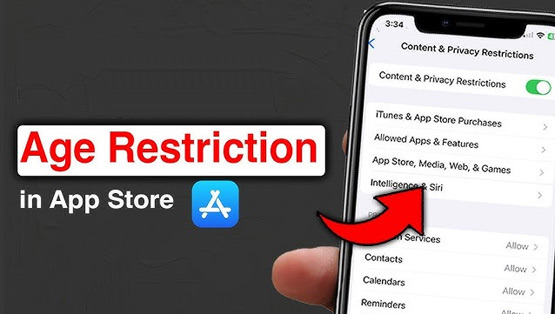
The U.S. Supreme Court has rejected requests from big tech companies and civic groups to temporarily halt the implementation of Texas's new 'App Store Age Verification Law.'
In simple terms, this means that in Texas, children must obtain parental consent to download or make purchases in apps.
Of course, there are significant opposing voices arguing that this infringes on freedom of expression.
There are concerns that the government could interfere with educational apps, news, and beneficial information, blocking what children can see and hear.
The argument from minor and student groups that "we will handle our children's education, so the government should not overstep" is not without merit.
However, the stance of the Texas Attorney General's office and supporting parents is firm: "The reality has already crossed the line by a long shot."
In fact, if you visit downtown Dallas or a supermarket, you'll see elementary school kids each holding a smartphone.
They do their homework online and communicate about assignments and play through messaging apps, so it's not feasible to just take their phones away and say, "Don't use your smartphone!"
The problem arises when the phone bill shows hundreds of dollars in charges for game items.
There's a cry that "Big tech companies are using our children as a means to make money, and at the very least, parents should be informed about what apps are being downloaded."*
That said, I honestly don't feel completely secure about this law.
There's a nagging feeling in the back of my mind.
To verify age and obtain parental consent in the app store, we ultimately have to provide our family's personal information to companies 'even more' through the process of verifying IDs or linking parental accounts. This dilemma becomes more complicated the more I think about it.
Interestingly, this concern is not just a lonely battle in Texas.
Many states across the U.S. are currently toying with legislation to restrict minors' online activities, and the IT industry is rushing to the courts to block these measures.
Honestly, the government cannot completely take over the role of parents. No matter how good a system is created, there is no stronger safety measure than a parent's warm interest, looking their child in the eye and asking, "What apps are fun these days?"
Smartphones have now become the widest study room for our children, while also being the most dangerous playground.
The debate surrounding this Texas law seems to be asking where we should find balance on the seesaw between 'children's safety' and 'freedom.'
 TemuBoss
 HappyDuck
 joyfulroadtraveler2000







 Anjollinya Blog |
 Anova US Beauty Information |
 anchor |
 Korea Tiger News |
 Alpha and Omega World |
 xylora |
 Aura-Infused WACAM |

 NEXT ROUND |
 Texas Migration Story |
  saffronroute |
  korvex93 |
  Mini Mee |
  Darnignac |
  vanilla |
  selvon |
  brownie |
  Star Blog |
  The Day the Sun Rises |
  sweetpop |
  California Kangaroo |
  zanero |
  station |
  Static |
  Star Way |
  American Blog Forge |
  MMORPG Games |
  Then you must be spring |
  Spicy Immigration Life |
  zenvor16 |