
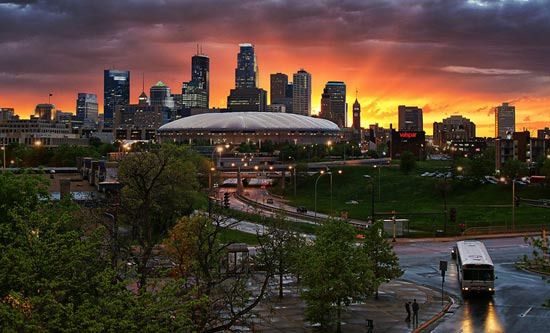
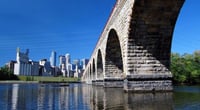
The downtown of Minneapolis has a skyline that is more impressive than expected.
In fact, when you are here, the city feels quite vibrant with many tall buildings. At the center of the city stands the IDS Center, towering at 792 feet, about 241 meters high. Completed in 1972, this building is the tallest in Minnesota and remains a landmark. Its unique glass curtain wall design was very innovative for its time and still symbolizes the Minneapolis skyline today.
Surrounding it are buildings like Wells Fargo Center, Capital One Tower, and US Bank Plaza. During the day, office workers bustle about on their commutes, and in the evening, the typical Midwestern urban scene unfolds as the after-work crowd disperses, leaving the area quiet. However, the downtown of this city is not just a business district.
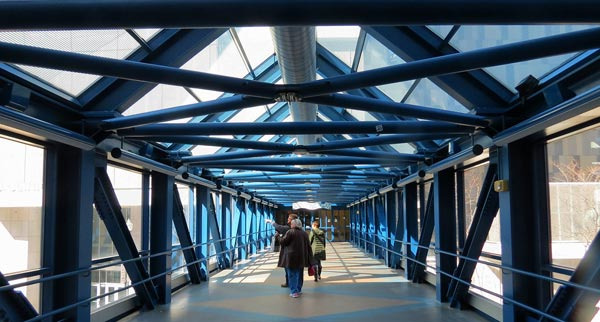
Thanks to the unique structure visible between the skyscrapers, the Skyway System is a point of pride for Minneapolis. This glass corridor, about 9 miles or 14 kilometers long, connects buildings, allowing movement indoors while avoiding the harsh winter cold. Even if it's -20 degrees Fahrenheit outside, you can walk inside in a shirt holding a coffee, making it an incredibly convenient structure.
As a result, Minneapolis residents venture out for lunch even during snowstorms.
Another point of pride is the US Bank Stadium. Completed in 2016, this stadium is the home of the NFL team Minnesota Vikings, featuring a truly unique asymmetrical design that combines glass and steel. One side of the roof is made of transparent glass, allowing natural light in even during winter, and from the outside, it resembles a giant Viking ship. It has a seating capacity of about 66,000, making it one of the largest in the northern United States.
When the Super Bowl was held here in 2018, the nation's attention turned to Minneapolis, and since then, this city has been known as the "football city that even blizzards cannot stop." Another landmark is the Target Center, home to the NBA team Minnesota Timberwolves and the WNBA team Minnesota Lynx, which opened in 1990 and has continuously undergone renovations to become an entertainment hub in the city center.
Directly across is Target Field, where MLB Minnesota Twins games are held in the summer. When baseball season starts, the downtown area is filled with fans dressed in purple and red. On game days, the streets are filled with the smell of hot dogs, and bars and restaurants are bustling. In winter, there's football, in spring, basketball, and in summer, baseball; the rhythm of sports changes with the seasons in this city.
Minneapolis has a high cultural density for its size. The stadiums serve not just as sports facilities but also as gathering spaces for the community. Street performances take place before and after games, and breweries and food trucks line the area near the stadium. Many young people come not just for the games but to enjoy the atmosphere. Additionally, the stadium features works by local artists, creating a space where sports and art coexist.
Meanwhile, these facilities have played a significant role in urban regeneration. Previously, some parts of downtown east were neglected, but with the establishment of US Bank Stadium, hotels, condos, and cafes have sprung up around it, completely changing the atmosphere. Now, the area around the stadium is one of the most vibrant in Minneapolis.
The charm of downtown Minneapolis lies in its functional urban structure and people-centered design rather than just its flashy buildings. The Skyway, created by the combination of harsh winters and indoor culture, and the sports venues where citizens gather each season have become symbols that bind this city together. In the icy winter, it is a place where the warmth and cheers of people thrive; that is downtown Minneapolis.


 candytip |
 Gold Bar |
 Pirate Ship Popcorn Maker |
 Montgomery Mom |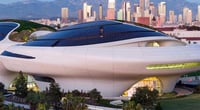
 Anjollinya Blog |
 Minnesota Lakes and Clouds |
 quatspace |
 U.S. Weather Bureau News |
 chiobase |
  Atlanta Mama |
  Baguette Blog |
  US Embassy |
  Korean Mom |
  My NYC |
  moo moo |
  Mr Oh |
  forevergee |
  festival |
  manchester |
  constant |
  Leapfrog Move |
  vibranto |
  Tora Tora |
  yellowbutter |
  Dolly |
  NYC saladbar |
  Finding Superfoods |
  lightyear |
  song bang |