
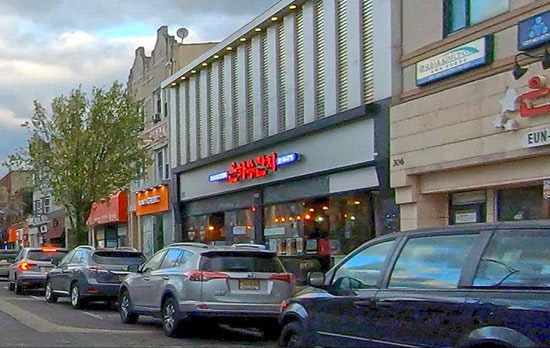
Palisades Park, New Jersey, commonly referred to as Palisades Park, did not become a densely populated Korean area overnight. There weren't numerous Korean shops lined up from the beginning, nor were there an abundance of Korean signs. The history of this area is better viewed as the story of a small community that slowly developed as people who left their hometowns relied on each other next to the vast city of New York.
Starting in the late 1970s, Koreans began to settle here, at a time when places like Flushing in Queens or Manhattan's Koreatown were already known. However, due to high living costs and business expenses in New York, as well as a complicated housing environment, the quieter and more affordable New Jersey area started to catch their attention. Palisades Park was close to Manhattan, yet offered a more relaxed living environment and relatively low rental costs for shops. In short, it was seen as a place that was 'comfortable to live in and viable for business.'
As the 1980s rolled in, Korean shops began to emerge one by one. Initially, small businesses like laundries, grocery stores, and small chicken shops were at the forefront. Families who immigrated from Korea set up shops with the money they had painstakingly saved, and customers naturally increased through word of mouth. At that time, Korean students and workers also made this area their base, and the establishment of Korean churches further solidified people's networks.
The 1990s marked the period when Palisades Park truly grew into a Korean town. Korean restaurants, rice cake shops, karaoke bars, and cafes began to proliferate, completing the living infrastructure with the emergence of Korean markets. During this time, the number of Korean workers commuting to Manhattan increased dramatically, leading to a surge in housing demand and a steady rise in local real estate prices. As the commercial area expanded, professional service sectors like accounting, insurance, law, and real estate brokerage also took root.
With an environment where Korean was spoken, both Korean business owners and customers found it easier, and the characteristic of being a 'neighborhood in America where Korean is as comfortable as English' became established. It became a place where newcomers to the U.S. could resolve everything from street signs to hospital guidance and banking in Korean.
Since the 2000s, Palisades Park has transformed from merely a good place for business into a symbolic neighborhood rich in Korean culture. As generational changes occurred, young second-generation Koreans and professionals moved in, and not only traditional small shops but also modern cafes, trendy restaurants, and franchise businesses emerged. At the same time, this area began to play a central role in Korean political, educational, and community activities connecting New Jersey and New York.
With local events, Korean association activities, and public services taking root, it has become not just a 'starting point for immigrants' but a 'city where Koreans settle and pass on generations.'
Today's Palisades Park is not just a small base chosen by Korean immigrants in New Jersey, but a true Korean town equipped with cultural, economic, and settlement foundations. This area, balancing the pace of New York and the comfort of American life, embodies the realistic history of how Koreans live in America.


 ultron78 |
 garlic bread |
 Sugar Cream Door Bulletproof Noodles |
 urbanmint |
 |
| 
 Margarine Daebimama |
 squidogame |
 eatontown blog |
 Living in New Jersey blog |
 Google Idea |
  Finding Superfoods |
  lightyear |
  song bang |
  vexomo |
  Indiana Jones |
  meloncat |
  novapixel |
  mortrix |
  Esther 1983 |
  fortbliss |
  Moscow Kim |
  My Two Way |
  toastyfox |
  FLORIDA Acus |
  tracker |
  TONTON COFFEE |
  sunrise |
  uplifted |
  Folding Instructions |