

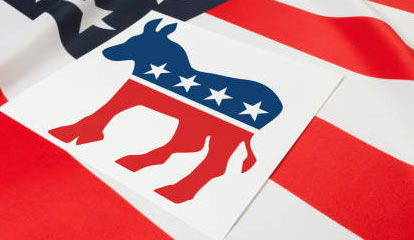
"Isn't the Republican Party the one that freed the slaves? Lincoln was a Republican, right?"
That's correct. President Lincoln was a Republican and led the abolition of slavery after the Civil War.
But look at American politics today.
The Democratic Party is closer to progressivism, leftism, minority protection, and welfare expansion, while the Republican Party is closer to conservatism, small government, religious values, and gun ownership advocacy.
It's quite natural to wonder, "When and how did this change happen?"
In fact, the political landscape we see today is the result of gradual changes that began in the mid-20th century.
And the key point is that it was the 'support base' and 'policy direction' that changed, rather than the party names.
Until the late 1800s, the Republican Party was composed of Northern industrial capitalists and progressive idealists. The Democratic Party was a coalition of Southern agricultural landowners and conservative supporters of slavery.
The South was a Democratic stronghold, while the North saw the rise of the Republican Party. At that time, the Democratic Party was actually 'conservative,' and the Republican Party was 'progressive.'
However, as time passed, American society began to boil over with racial issues.
In the 1960s, the Civil Rights Movement led by Dr. Martin Luther King Jr.
During this time, Democratic President Lyndon B. Johnson pushed through the Civil Rights Act, which flipped the situation.
Southern whites: "The Democratic Party has betrayed us!" Northern progressives: "Oh, the Democratic Party respects human rights?"
From this point on, Southern white conservatives began to leave the Democratic Party and move to the Republican Party.
On the other hand, African Americans and progressives began to support the Democratic Party.
This process in the 1960s is often referred to by political scientists as the "Southern Realignment" or "Party Switch."
The Republican Party of Lincoln's era had anti-slavery, federal unity, and progressive idealism, but today's Republican Party emphasizes low taxes, small government, religious conservatism, and border control as core values.
In the meantime, historical events like Roosevelt's New Deal, Truman's desegregation orders, and Kennedy and Johnson's push for civil rights made the Democratic Party increasingly progressive.
The Republican Party also solidified its conservatism during the Reagan era of the 1980s.
Reagan popularized the philosophy of small government with his statement, "Government is the problem."
Ultimately, the current landscape shows the Democratic Party emphasizing progressive values, protection of social minorities, and diversity and inclusion, while the Republican Party focuses on traditional values, religious centrality, free markets, and personal responsibility.
In other words, while the party names remain the same, the people they represent and their policy directions have changed.
So, the question, "The Republican Party freed the slaves in the past, so why do African Americans support the Democratic Party now?" may seem strange on the surface, but historically, it is a very natural outcome.
Politics is not static; it is like a constantly changing organism.
People change, generations change, and the issues society faces continue to evolve. Political parties are constantly readjusting to reflect that.
So, while it is important to recognize what a party did in the past, what matters much more is who they represent now and what values they advocate.







 washington mom |
 Victory 1988 |
 El Dorado |
 lightyear |
 Moscow Kim |
 Famous Attractions in the United States |

 Finding Superfoods |

 U.S. Military Recruitment Information |
  Sunshine Blog |
  Minnesota Small Business |
  Strawberry Pancake Warrior |
  amolayo |
  korvon |
  Que Buena |
  virexo |
  silverpath |
  Komet Park |
  reliable |
  vexo90 |
  As Always Today |
  veltar87 |
  United States National Administrative Organization Stories |
  springwaltz |
  dense |
  Tiger Milk Foam Research Institute |
  Oreore Mushroom |
  optimistic |
  Good Good |