
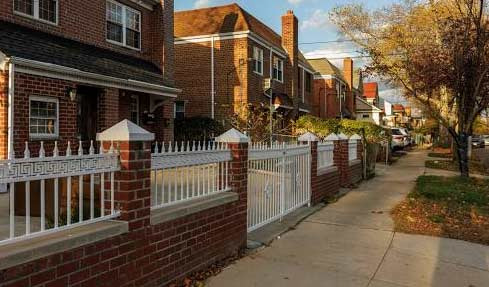
When discussing the Korean community in New York, Flushing is an essential location. Nowadays, with the significant increase in the Chinese population, many view Flushing as the center of the Chinese community, but for Koreans, Flushing still holds a special significance. For Koreans who have lived in New York for a long time, Flushing is not just a residential area but a space filled with the history and memories of immigrant life.
Since the influx of Korean immigrants into New York began in earnest in the 1970s and 1980s, Flushing naturally became one of the main settlement areas for Koreans. At that time, it was relatively affordable compared to Manhattan, had convenient transportation, and provided a family-friendly living environment. The Korean community that formed has grown over the decades and has become an important pillar of the New York Korean community today.
Currently, the Korean population in the Flushing area is estimated to be over 10,000. While this number may be smaller than areas like Palisades Park or Fort Lee in New Jersey, it is still regarded as one of the representative Korean business districts in New York in terms of business scale and living infrastructure.
The center of the Flushing Korean business district is around Northern Boulevard and Union Street. Walking through this area, you can easily spot signs in Korean. Various businesses, including Korean restaurants, cafes, bakeries, hospitals, pharmacies, travel agencies, insurance companies, accounting firms, and real estate offices, are densely packed. In particular, the service infrastructure is well established, allowing for a lifestyle where one can get by using only Korean.
Food culture is also an important part of the Flushing Korean community. There are many restaurants operating that offer a variety of dishes, so even those who have just immigrated from Korea do not feel a strong sense of nostalgia. From sundubu jjigae, seolleongtang, naengmyeon, jokbal, bossam, chicken, to various snacks, there has also been a recent increase in Korean dessert cafes and franchise-style stores. When many Koreans living in New York suddenly crave Korean food, Flushing is often the first place that comes to mind.
The shopping environment is also quite good. Various Korean grocery stores, including H Mart, are in operation, making it easy to purchase food and household items sold in Korea. From kimchi and side dishes to Korean snacks, ramen, and health foods, most items can be found, significantly reducing the inconveniences of immigrant life.
Religious communities also play an important role in the Flushing Korean community. Various Korean churches are established throughout the area, helping not only with religious activities but also with the settlement and networking of immigrants. For newcomers to the U.S., churches often serve as important venues for obtaining local information and forming new relationships.
The high educational aspirations of the Korean community can also be easily observed in Flushing. There are many SAT prep centers, college consulting firms, and tutoring academies, with many Korean parents placing great importance on their children's education. In fact, there are quite a few families that move to the Queens area specifically for its excellent public schools. On weekends, it is common to see students commuting to their academies.
Compared to the past, the demographic composition of Flushing has changed significantly. With the substantial growth of the Chinese population and businesses, the expression "the largest Korean town in New York" has somewhat weakened. However, this does not mean that the Korean community in Flushing has diminished. On the contrary, thanks to the business networks and living infrastructure accumulated over decades, it continues to maintain a strong influence.
The residential environment is also an attractive factor for Koreans. Compared to Manhattan, it is possible to secure relatively larger living spaces, and public transportation, including subways and buses, is convenient. Additionally, due to the diverse cultural backgrounds of the residents, the area offers a relatively open and adaptable atmosphere for immigrants.
Flushing is not just a neighborhood with a large Korean population. It is an important stage in the history of Korean immigration in New York, where countless Koreans have started businesses, built families, and raised children. While the appearance of the area has changed slightly over time, the symbolic position of Flushing within the New York Korean community remains unchanged. If asked to name a single representative Korean community in New York, many people would still mention Flushing without hesitation, and that is precisely why.




 moo moo |
 ultron78 |
 garlic bread |
 Sugar Cream Door Bulletproof Noodles |
 urbanmint |
 nova nova |
 Living in the Eastern United States |

 Whisper |
 MintO |
  Tonky |
  viroma |
  cookie |
  Live and that's it |
  Alright Twain |
  eatontown blog |
  HAWAII Korean Church News |
  Amore |
  linex |
  Balancework |
  laro90 |
  MEDBIO American Doctor Blog |
  SWAT TEAM BLK |
  DREAM BIG |
  frostbite |
  330 Forever My Love |
  El Dorado |
  dralix58 |
  Gorama Round |
  Skydiving |