
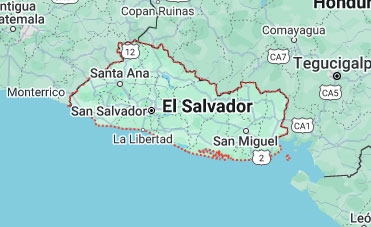
With the declaration of a 'war on crime', El Salvador in Central America has implemented strong anti-gang policies, resulting in a sharp decrease in homicide rates.
The news that El Salvador's homicide rate has dropped by 70% is gaining international attention.
President Nayib Bukele's strong security policies and large-scale crackdowns targeting gangs are cited as major factors.
In 2022, the Bukele government declared a state of emergency and announced a war on violent crime. Through this, police and military have implemented tough measures against gangs, leading to the arrest of numerous gang members.
Gustavo Villatoro, the Minister of Justice of El Salvador, stated in a press conference the day before, "This is the lowest homicide rate in the last 30 years, a historic record," adding, "It is also the lowest figure in the Americas, excluding Canada."
In particular, thorough control over major gang activity areas has been implemented, and there are evaluations that citizens' sense of security has increased. El Salvador's security policies are becoming a model for neighboring countries suffering from drug trafficking violence.
On the same day, Ecuador's President Daniel Noboa announced plans to build two large-scale prisons in a radio interview, stating, "They will have the same goals as those built by the El Salvador government."
Noboa's government explained that this is a measure to prevent gang conflicts within prisons, which have resulted in about 460 deaths since 2021, and also announced plans to deport about 1,500 foreign inmates from Colombia and Venezuela to address prison overcrowding.
However, these policies have faced criticism. There are ongoing controversies over wrongful arrests and human rights violations due to restrictions on civil rights and hardline measures.
International human rights organizations have expressed concerns that the government's response lacks transparency and fairness.
Meanwhile, the majority of El Salvador's citizens view these policies positively, believing they have had a tangible effect on improving security. This is expected to positively impact tourism and economic development as well.
El Salvador's success story is also being recognized as a new model for addressing security issues in Latin American countries. However, many believe that in order to maintain long-term stability, social and economic improvements must accompany security measures.







 Weekend Movie Blog |
 Beauty, Health, Lifestyle Blog |
 coloradoman |
 Superman Cat Blog |
 novapixel |
  Gorama Round |
  Skydiving |
  dreamport |
  Yellow Snowman |
  Toaster Pizza Magic Show |
  velvetnom |
  Anytime Journey |
  Mrs. Duluth |
  jaxter |
  Atlanta Mama |
  Baguette Blog |
  US Embassy |
  Korean Mom |
  My NYC |
  moo moo |
  Mr Oh |
  forevergee |
  festival |
  manchester |
  constant |