

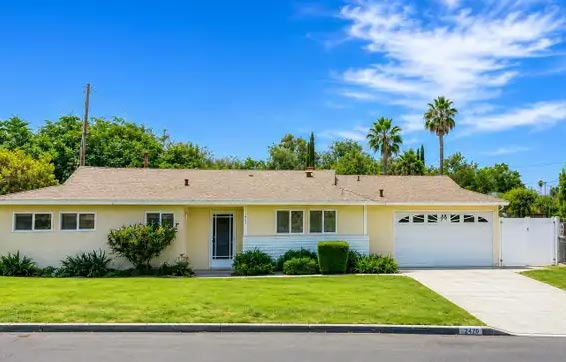
If you want to rent a 3-bedroom house in Thousand Oaks, you should expect to pay around $3,600 a month these days.
However, if you look to buy a similar-sized house, the average price is around $950,000. It's not in the middle of LA, but in a relatively quiet suburb, and housing prices are still quite high.
Especially for Korean families considering moving to this area for their children's schooling, it can be a dilemma whether to rent or buy a home.
In such cases, a commonly referenced number in the U.S. is the Price-to-Rent Ratio. Simply put, it shows how many times the home price is compared to a year's worth of rent. Comparing the $950,000 house in Thousand Oaks to the $3,600 monthly rent gives a ratio of about 22.
Typically, if this number is below 15, buying a home is considered a good option, while a ratio above 21 suggests that renting is relatively better. So, a ratio of 22 indicates that, based on current prices, renting is slightly more favorable in this area.
When you actually calculate the monthly expenses, the difference becomes even clearer. Let's say you buy the $950,000 house and make a 20% down payment, which would be $190,000, borrowing the remaining $760,000 from the bank.
If you borrow this money at a fixed interest rate of 6.75% for 30 years, you would pay about $4,929 a month in principal and interest. Adding in property tax, which averages about $871 a month, and homeowners insurance at around $150, your total monthly housing cost would be about $5,950.
Since rent is $3,600, that means there's a difference of about $2,350 a month. Additionally, owning a home incurs repair costs. Whether the air conditioning breaks down or there's a roof issue, you have to cover all repairs yourself since there's no landlord. If you're in a housing complex with HOA fees, that would be an additional cost as well.
Another factor to consider is the $190,000 down payment. If you don't buy a house and instead invest that money, assuming an average annual return of about 6%, you could earn over $11,000 a year. This is referred to as Opportunity Cost, which means considering the potential investment returns you forgo by putting down a large sum for a home.
However, this doesn't mean that renting is the only correct answer. Thousand Oaks is a popular area for families looking to settle down long-term for their children's education. If you plan to live here for about 10 years while your child continues school, the significance of building equity in your home by paying down the mortgage outweighs short-term fluctuations in home prices.
On the other hand, if you might move to another city within 3 to 5 years for work or if your child is about to enter college, the situation changes. Buying and selling a home incurs real estate agent fees and various costs, so if you plan to live there for just a few years, renting might be more convenient.
It's also good to look at surrounding areas. Westlake Village tends to have higher home prices than Thousand Oaks, while heading towards Simi Valley offers more budget-friendly options. However, in the U.S., schools assigned can vary based on the address, so you shouldn't decide solely based on home prices.
Ultimately, the ratio of 22 in Thousand Oaks doesn't mean "you shouldn't buy a home." It simply indicates that, based on current prices and rent, renting is slightly more advantageous. If you're not yet familiar with life in the U.S., it might be more practical to rent for 1 to 2 years to experience the schools, commute, and neighborhood atmosphere before making a decision on a $950,000 home.
The amounts mentioned are rough calculations based on market conditions in the first half of 2026. Actual home prices, rent, property taxes, insurance, and loan rates can vary based on the home and personal circumstances, so it's advisable to recalculate with the latest conditions before finalizing any contracts.
 MikyungMom
 QuitRL







 wendra |
 moonshine 7 |
 golfmaster |
 Tesla X |
 Another Eden Channel BLOG |
 Old English |
 US Embassy |
 Thou Thou |
 US Home Buying Information Home Insurance |
 K-POP TV News |
  UNI Lover |
  zen zeng |
  oh my salami |
  coloradoman |
  business life |
  candytip |
  churrotop |
  swiftlane |
  allstar realty |
  mystery |
  dermoon |
  UCLA Captain |
  lattecu |
  dynamite |
  frostingline |
  Hakuna Matata |
  Your Curiosity Resolved |
  Way to easy |
  Chino Min |